In this article

Written by Sameer
Reviewed on
Traditional belief vs gemmology: anything on this page about luck, protection, planets, healing or religious tradition describes traditional and cultural beliefs — not proven effects, religious rulings or medical advice. A stone's identity, hardness, treatment and origin are gemmology, which a lab can test; the references at the end of the page cover that side.
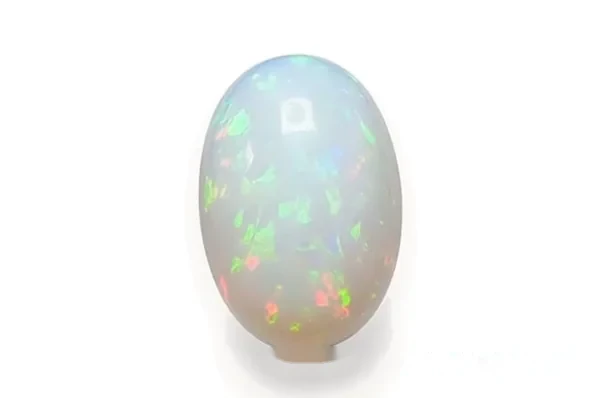
October gets two birthstones, and they could hardly be more different. Opal is the traditional one: a soft form of silica that holds water and throws flashes of rainbow colour. There is no Urdu name for it in common use, so here it is just called opal. Tourmaline came in with the modern list. It is a hard crystal that occurs in more colours than any other gem. Below is how we would choose either, and how to look after an opal so it lasts.
Opal
The main kinds
- Black opal has a dark body, which makes the colour flashes look dramatic. It is the most valuable kind.
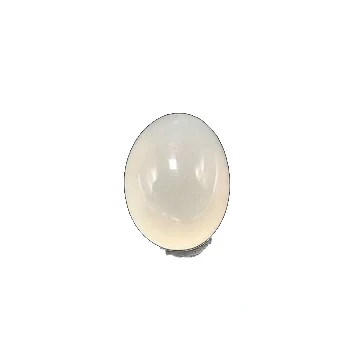
- White or crystal opal has a light or see-through body and is more common.
- Fire opal is transparent orange to red, prized for that body colour, and sometimes shows no play-of-colour at all.
What makes one opal worth more than another
Opal is valued on its play-of-colour, the moving flashes you see when you tilt it. Three things decide it. First, which colours show: red is the rarest, then orange and green, while blue and violet are the most common. Second, how much of the face is covered. Third, the pattern, where broad, bold patches usually beat a fine pinpoint sparkle. Turn the stone all the way round before you decide. Flat, colourless patches are common and bring the value down.
Doublets, triplets and outright fakes
A thin slice of opal glued onto a dark backing is a doublet. Add a clear dome on top and it is a triplet. Either can pass for solid black opal at a small fraction of the price. Look at the stone from the side: a perfectly straight, flat join line gives it away. There are also lab-made and plastic imitations, often with a pattern that is too regular, like snakeskin. Just ask the seller straight out whether the stone is solid.
Looking after opal, the most delicate stone we sell
Opal is only 5.5 to 6.5 on the Mohs scale, and it has water inside it. If it dries out or goes through a sudden change of temperature, it can craze, which means a web of fine cracks on the surface. Keep it away from heat, long hours in direct sun and years in very dry storage. Never put it in an ultrasonic or steam cleaner; a soft damp cloth does the job. If you can, choose earrings or a pendant rather than a ring for daily use, because opal chips more easily than most people expect.
Tourmaline
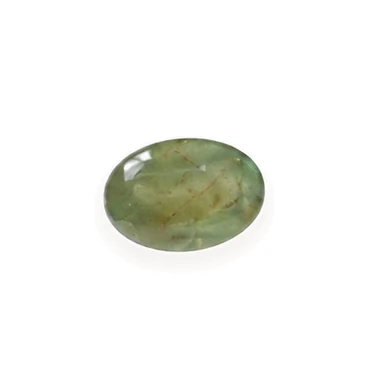
The pleasure of tourmaline is the range. You can find pink, red, green and blue, plus the two-tone "watermelon" stones that are pink in the middle and green around the edge. Look at how strong and even the colour is first, then clarity, which should be good. Tourmaline is strongly pleochroic, meaning the colour looks deeper from some angles than others, so a good cutter orients the stone to show its best colour from the top. At 7 to 7.5 on the Mohs scale it copes with daily wear far better than opal. The usual imitation is coloured glass, and if the depth of colour shifts as you turn the stone, that is a good sign you are holding real tourmaline.
Every listing on our opal and tourmaline category pages shows the price of that one stone.
Which one makes the better present?
Opal is the romantic choice. No two look alike, so it feels personal, but it suits someone who will be gentle with it. Tourmaline is the sensible gift: it wears well, you can get it in the person's favourite colour, and it is happy in a ring.
October and the Vedic system
The October pairing is a Western idea. In Vedic practice opal belongs to Venus (Shukra) and is chosen from the birth chart, not the calendar. Our page on gemstones by rashi explains both approaches, and the birthstone guide tells the story of how the list came about.
Getting opal or tourmaline from us
Every opal and tourmaline we list is photographed as it is and priced on its own, and the stone in the pictures is the stone you receive. Have a look at the opal collection or the tourmaline collection. Pay Cash on Delivery once you have opened the parcel and checked the stone, and return it within 7 days if it isn't right. Delivery costs a flat Rs. 500 per order and in Karachi usually takes 1–2 working days. For advice on settings, message us on WhatsApp.
References