In this article
- What you will need
- Method 1: measure a ring that fits
- Method 2: a paper strip or thread
- Method 3: ask a local jeweller
- Making the reading accurate
- Gemstone rings need a little more thought
- Ring size systems, briefly
- Can a stone ring be resized later?
- Mistakes we see often
- Sizing for a surprise
- Sending us your size
- خلاصہ

Written by Sameer
Reviewed on
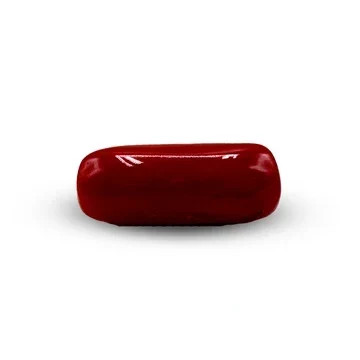
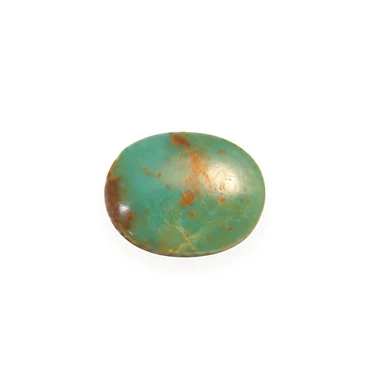
If you want an accurate ring size at home, the best method is to take a ring that already fits the finger in question and measure its inside diameter. No ring to hand? Wrap a narrow strip of paper around the finger, mark where it meets, and measure that length in millimetres. Either number can then be converted with our ring size guide. Send it to us along with the stone you have picked, whether that is an Aqeeq, a Feroza or something else.
What you will need
- A ruler or tape with millimetre markings. A child's school ruler is fine.
- A strip of paper roughly 5 mm wide and 10 cm long, or a length of thread that doesn't stretch.
- A fine-tipped pen.
- A ring that already fits, if you have one.
Work in millimetres. The gap between one ring size and the next is a fraction of a millimetre, so a guess in centimetres or inches is far too rough. Once you have your number, our ring size guide turns it into the sizes jewellers use, so we won't reproduce the whole chart here.
Method 1: measure a ring that fits
This is the most dependable way to do it at home, because that ring has already proved itself on your finger.
- Pick a ring you wear on the same finger of the same hand where the new ring will go.
- Lay it flat on the ruler.
- Measure the inside diameter, straight across the middle from one inner edge to the other. Leave the metal out of the measurement.
- Measure a second time at right angles to the first, in case the ring has been pushed slightly out of round. Go with the bigger number.
If that ring fits but feels a touch tight or a touch loose, tell us that as well. A ring that "more or less" fits is often half a size off.
Method 2: a paper strip or thread
This is the one to use when there is no ring to copy.
- Wrap the paper around the base of the finger, right where the ring will sit.
- Make it snug, not tight. It should still slide over the knuckle with a little effort.
- Mark the spot where the paper overlaps itself.
- Lay the strip flat and measure from the end to your mark in millimetres. That gives you the circumference.
- Divide the circumference by 3.14 to get the diameter. A 54 mm strip, for example, works out to roughly 17.2 mm.
Paper beats thread. Thread stretches and presses into the skin, which gives you a reading that is too small. If thread is all you have, wrap it once without tugging and line it up against the ruler carefully.
Method 3: ask a local jeweller
Most jewellers in our bazaars keep a set of sizing rings and a ring stick, and plenty of them will size your finger in a minute if you ask nicely. Note down the number and which system it is in, then send it to us. Before a wedding, or for a heavy ring, this is the best route, since that is when an exact fit matters most.
Making the reading accurate
Your fingers aren't the same size all day. A few simple habits help:
- Measure late in the day. Fingers are usually at their smallest in the morning and a little bigger by evening.
- Measure at normal room temperature. Cold makes fingers shrink, and a humid Karachi summer makes them swell. Don't measure right after a hot shower or exercise.
- Take three readings on separate days if possible, and use the average.
- Think about the knuckle. If your knuckle is a lot wider than the base of your finger, choose a size that gets over the knuckle, even if it sits a bit loose below it.
- Use the correct hand. For most people the dominant hand is slightly bigger. If the ring is for your right hand, measure your right hand.
Gemstone rings need a little more thought
A ring with a stone is not the same as a plain band. Two things change the fit:
- Band width: a wide band covers more finger and feels tighter than a narrow band of the same size. Over about 6 mm wide, many jewellers advise going up half a size.
- A heavy top: a big stone such as a large Aqeeq or Sulemani agate makes the ring top-heavy, and if it is loose it will keep turning round. A snug fit keeps the stone where it should be, on top.
Small faceted stones like Neelam or Pukhraj usually sit on a slimmer band, so your normal size will do.
If your tradition says a stone should be worn on a particular finger, measure that finger and no other. The ring finger and little finger can be two or more sizes apart.
Ring size systems, briefly
Countries size rings differently. Some use whole and half numbers, some use letters, and some simply give the inside circumference in millimetres. Many jewellers here have their own numbered sizing rings, and a "size 12" in one shop may not match a "size 12" in the next. That is why a millimetre measurement is the safest thing to send us. A diameter or circumference in millimetres means the same thing everywhere and converts to any scale. Our ring size guide sets the conversions out side by side.
When a jeweller gives you a number, ask which system it belongs to. Better still, ask for the inside diameter of the sizing ring that fitted.
Can a stone ring be resized later?
Usually, but not always without fuss. A jeweller can generally take a plain silver or gold band up or down a size or two. Once there is a stone in it, things get harder:
- The heat from soldering can harm sensitive stones, so the jeweller may have to take the stone out first. This applies especially to Feroza, opal, pearl and coral.
- If stones are set all round the band, there is very little room to resize without disturbing them.
- Stretching a ring thins the metal, and that weakens it right under the stone.
Getting it right first time saves a lot of bother. For a ring holding a valuable stone, a quick visit to a local jeweller for sizing is well worth it.
Mistakes we see often
- Measuring the outside of the ring. It is always the inside diameter.
- Pulling the paper too tight. The finished ring then won't go over the knuckle.
- Using a ring from another finger. Even the same finger on the opposite hand can be different.
- Borrowing someone else's size. Your husband's or brother's size tells you very little about yours.
- Rounding down. Between two sizes, go up. A slightly loose ring can be fixed with a sizing bead; a tight one has to be stretched or cut.
Sizing for a surprise
A surprise ring for an engagement, Eid or an anniversary is a lovely idea. To get the size without giving the game away:
- Borrow a ring they wear on the same finger for a few minutes and measure the inside diameter.
- Press that ring into a bar of soap or a lump of soft clay, then measure the inner circle it leaves.
- Ask a sister, mother or close friend, who may already know or can find out quietly.
- If in doubt, go bigger. Making a ring smaller is usually easier than making it larger.
For help picking the stone itself, see our birthstone gift guide for Eid and weddings.
Sending us your size
We are still putting our ring collection together, but we can arrange a setting for you over WhatsApp. Please send:
- The stone you've chosen, with the link to its listing.
- Your measurement in millimetres and which method you used.
- Which finger, and which hand.
- The metal you prefer. Our article on silver vs gold ring settings may help you decide.
We confirm the size with you before anything is made. Stones go out by insured, tracked courier from Karachi, usually arriving within the city in 1–2 working days and in other cities across Pakistan a little later, with Cash on Delivery and 7-day returns. Full details are on our delivery page.
Shop the stones: aqeeq · feroza · sapphire · yellow sapphire · sulemani agate · ruby.
References