In this article

Written by Sameer
Reviewed on
If you walk into any gem shop in Karachi and ask what men wear, feroza will be near the top of the answer. Most men here set it in silver and wear it on the little or ring finger, following family and Islamic custom. Tradition ties the stone to protection and success. There is no fixed rate for it: the price comes from colour, matrix, hardness, treatment and size. Below we take each of those in turn, and you can see our natural feroza stones at any point.
What feroza actually is
Feroza is the Urdu and Persian name for turquoise, an opaque blue to blue-green mineral made of copper and aluminium phosphate. Copper gives the sky blue; iron pulls it towards green. It is around 5 to 6 on the Mohs scale, softer than quartz, and porous, so over the years it can soak up oil, sweat and perfume.
The name most buyers here know is Nishapuri feroza, after the old mines near Nishapur in north-east Iran. That material set the standard for the even, clean "sky" blue that families across the subcontinent still look for. Turquoise is mined in other countries too, and once cut, stones from different places can look almost identical. So what you can see in the stone tells you more than any origin a seller names.
What feroza is traditionally worn for
Men in Iran, Central Asia and the subcontinent have worn feroza for centuries, and the beliefs around it are old and widely held. We set them out here as tradition, not as promises.
- Protection. Many families believe feroza shields the wearer from nazar and from harm on the road, which is why travellers and riders were said to wear it. See our page on stones worn for protection.
- Success. In popular telling, the Persian name is connected with firuz, meaning victorious, and the stone is linked with success at work and respect among people.
- A warning stone. An old belief says feroza pales or changes colour when trouble is coming. In reality, colour change in turquoise comes from oils, soap and sunlight getting into a porous stone, which is a good reason to look after it.
- Islamic tradition. Feroza appears in some Shia narrations as a recommended ring stone, and Muslim men across Pakistan wear it. Our page on feroza in Islamic tradition explains what is narrated and how it is worn, without giving rulings.
On Western birthstone lists turquoise is one of December's stones; our December birthstones guide sets it beside tanzanite and lapis lazuli. In Vedic astrology feroza is not one of the nine classical planetary gems, and astrologers disagree about which planet, if any, it supports. If your reason for wearing it is astrological, ask your own astrologer and read our overview of planets and their gemstones.
Which finger to wear it on
There is no single rule. These are the customs we see most often in Pakistan.
- Little finger (chhungli). Many Muslim men wear their ring here, following narrations that describe the Prophet's ring on this finger. Both right and left hands are narrated, and each family keeps its own practice.
- Ring finger (anamika). A common choice when feroza is worn simply for luck or protection, and comfortable for a medium-sized oval.
- Index finger. Some men wear a bold feroza here as a statement ring. Some scholars discourage rings on the index and middle fingers, so check with your own scholar if that matters to you.
Whichever finger you pick, the ring should sit flat and not spin round. Our ring size guide shows how to measure at home with a strip of paper.
Silver or gold?
For most men here the answer is silver, for two reasons.
The religious reason
The widely followed Islamic teaching is that men do not wear gold, while silver is allowed. That is why nearly all Muslim men in Pakistan go for a silver setting. If you are unsure where you stand, ask a scholar you trust; we do not give rulings.
The practical reason
Turquoise blue looks fresh and cool against white silver. Silver is also easier to adjust, polish and resize. A closed-back setting protects a porous stone from soap and skin oil, while an open back lets the stone touch the skin, which some wearers prefer for traditional reasons. Ask which one you are getting.
Gold is a perfectly good choice for women's jewellery and for non-Muslim buyers, and some men pick a silver ring with a gold-tone finish purely for the look. Once you have chosen a stone, we can arrange a silver ring setting over WhatsApp.
How a feroza's price is decided
We do not publish price lists, because no two feroza stones are worth the same. Every stone in our shop is priced on its own, based on the points below.
Colour
An even, saturated sky blue with no green in it is what buyers in Pakistan want most. Greenish, pale or patchy stones cost less. The colour should look the same across the whole face of the stone.
Matrix
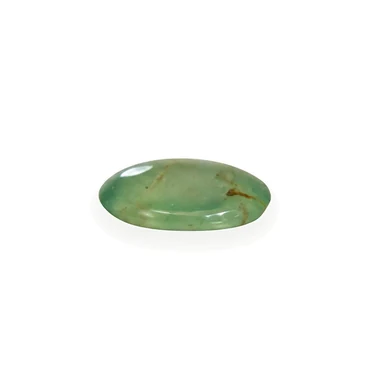
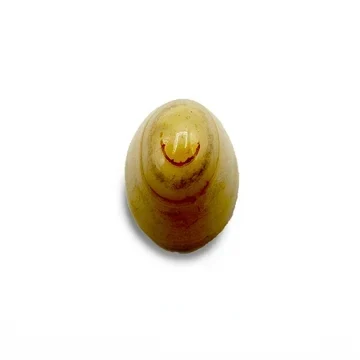
Matrix is the brown, black or golden vein of host rock running through turquoise. Most buyers here want a clean blue ring stone with little or no matrix, so clean stones usually cost more. That said, a fine, even spider-web matrix has its own fans and can be valued highly.
Hardness and polish
Dense, hard turquoise takes a glassy polish and keeps its colour. Soft, chalky material looks dull, absorbs oil and goes green with time. A good polish is one of the clearest signs of better material.
Treatment
A lot of turquoise on the market is stabilised, meaning it has been soaked in resin to harden it and fix the colour. Stabilised feroza is real turquoise and wears well, but naturally hard, untreated stones cost more. Dyed and reconstituted turquoise sit lower again. We state known treatments on every listing.
Size, shape and cut
A bigger stone of the same quality costs more, and well-shaped ovals and cushions with a smooth, even dome are worth more than lopsided or thin cabochons. A man's ring often needs a stone big enough to sit boldly on the hand, which pushes the price up.
Origin and reputation
Stones sold as Iranian or Nishapuri often carry a premium for their name. Origin is hard to prove by eye, so judge the stone first by colour, polish and matrix, and treat an origin claim as a bonus.
If you want to browse by budget, use the shop filters:
Our article on judging feroza quality goes further into matrix and stabilisation if you want to compare stones side by side.
Catching fake feroza
Turquoise is one of the most copied stones in the bazaar. The usual fakes are dyed howlite or magnesite (white stones coloured blue), reconstituted turquoise (powder bound with resin), and plain plastic or glass. Dye collects in cracks and veins, so look for darker blue lines. Plastic feels warm and light. Rubbing the back with a cotton bud dampened with a little nail polish remover may lift dye, but only try that on a stone you already own. Our guide to real versus fake gemstones has more checks.
Looking after a feroza ring
Take the ring off before wudu, before washing with soap, before cooking and before putting on attar or perfume, or accept that the colour will slowly shift. Wipe it with a soft dry cloth. No ultrasonic cleaners and no harsh chemicals. Keep it apart from harder stones such as sapphire and topaz so it does not get scratched.
Other stones men look at
If you like the idea of a blue protective stone but want something tougher, men here also consider lapis lazuli (lajward) for its deep blue, and aqeeq, a traditional ring stone with its own Islamic heritage. Our page on aqeeq for men explains that tradition. All our natural feroza stones are here, each photographed on its own.
Buying feroza from Authentic Gems
Every stone we sell is natural, photographed by itself and listed with its weight and any known treatment. We confirm each order by phone or WhatsApp and dispatch within 1 working day by insured, tracked courier. In Karachi, whether you are in DHA, Gulshan-e-Iqbal or North Nazimabad, parcels usually arrive in 1 to 2 working days; Lahore, Islamabad, Rawalpindi and other major cities usually take 2 to 4, and smaller towns up to about 7. See our delivery details. With Cash on Delivery you open the parcel and check the stone in front of the rider before paying, delivery is a flat Rs. 500 per order, and our 7-day returns cover a change of mind. Read how we check every gemstone for more.
Send us a photo of your hand or your finger size on WhatsApp and we will suggest a stone size that suits a man's ring.
Shop the stones: feroza · lapis lazuli · aqeeq.
The beliefs described here are traditions, shared for interest. They are not guaranteed outcomes, religious rulings or medical advice.
References