In this article
- Nephrite prices from our listings
- Nephrite or jadeite? Make sure it's the same thing
- Colour
- Evenness and flaws
- Translucency
- Polish and cut
- Size
- Origin
- Treatment and imitations
- How nephrite wears over the years
- Per carat or per ratti: reading a quote
- Comparing two nephrite quotes
- Shopping by budget
- Why nephrite feels different in your hand
- Pricing traps
- Buying nephrite from Authentic Gems
- خلاصہ

Written by Sameer
Reviewed on
Nephrite is one of the two minerals sold as jade, and it is the one most buyers in Pakistan actually come across. It is tough, quiet-looking and usually much cheaper than jadeite, which makes it a sensible pick for a ring you will wear every day. Even so, prices vary a lot, and the reasons aren't always obvious from a photo.
This page explains what moves the price of nephrite: its colour, how even that colour is, how much light gets through it, the small dark spots many stones carry, and how well it has been polished. It also covers per-ratti pricing, how to make sure two sellers are quoting the same material, and which budget bands suit nephrite. Our nephrite collection shows every stone with its own photo and weight.
Nephrite prices from our listings
We build the table below from the nephrite stones currently listed in our shop and update it every month. It shows the lowest, typical and highest price per stone, with the same figures per carat and per ratti.
| Weight | Weights | Stones | Per carat | Per ratti |
|---|---|---|---|---|
| 6 – 10 carat | 6.4 – 9.8 ct | 11 | Rs 440 – Rs 460 | Rs 400 – Rs 420 |
| Over 10 carat | 19.6 – 21.5 ct | 3 | Rs 450 – Rs 450 | Rs 410 – Rs 410 |
Use it to check whether another quote is in a sensible range, then use the sections below to work out where a particular stone should sit. The monthly gemstone price guide covers other stones the same way.
Nephrite or jadeite? Make sure it's the same thing
Nephrite and jadeite are both sold as jade, and in Pakistan both may be called yashab. They are different minerals with very different price levels. Fine jadeite, especially bright green, can cost many times what nephrite of a similar size does. Most of what is sold as jade in Pakistani markets is either nephrite or something that is neither mineral at all.
Before you compare prices, ask the seller which mineral they are offering. Our jade buying guide explains the difference, and our jade collection is listed separately from nephrite so you can see both. The upcoming jade price guide covers jadeite pricing.
Colour
Nephrite comes in lots of colours, and colour sets most of its price.
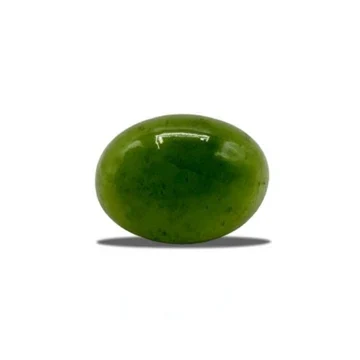
- Rich, even green, often called spinach green, is the classic colour and what most people want in a ring. A deep, lively green costs more than a dull or greyish one.
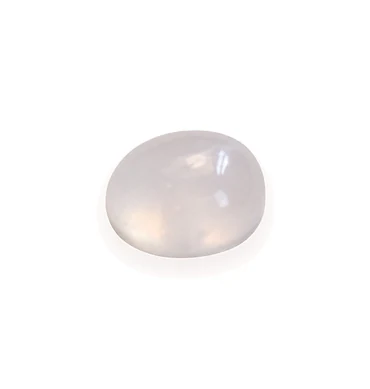
- White to cream nephrite, called mutton-fat in the trade when it has a soft, oily lustre, is highly prized by collectors, especially when it is pure and even.
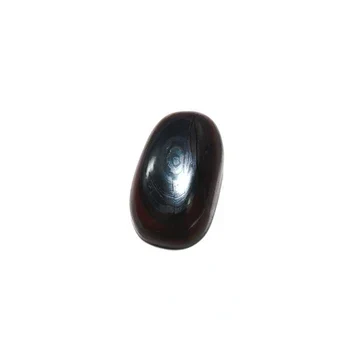
- Black nephrite takes a beautiful polish and is popular for men's rings.
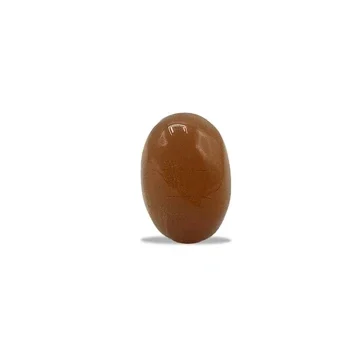
- Grey, brown and olive nephrite is the most common and the most affordable.
Look at the colour in daylight. Green nephrite can look much brighter under shop lights than it does outside.
Evenness and flaws
Many green nephrites have small black spots in them, which are tiny crystals of other minerals. A few small spots are normal. Stones with no spots and even colour are worth noticeably more; stones with many big spots, streaks or patchy colour are worth less.
Other things to look for:
- Pale or brownish patches where the colour shifts.
- Fine cracks that reach the surface.
- Pits or soft spots that didn't take the polish.
Translucency
Hold a good nephrite up to a light and its edges glow a little. That translucency gives the stone depth and adds to its price. Fully opaque stones look flatter and are usually cheaper. For green nephrite, aim for gentle translucency with even colour. Very translucent nephrite is less common and priced higher.
Polish and cut
Nephrite is only about 6 to 6.5 on the Mohs scale, but its tightly interlocked fibres make it extremely tough. It rarely chips or breaks, which is why people have carved it for thousands of years. That same fibrous structure means it needs patient polishing to get a smooth, even shine; rushed work leaves an orange-peel texture.
- A smooth, even lustre with a crisp reflection adds value.
- Cabochons and flat tablets are the usual ring shapes.
- Carved pieces are priced on the skill of the carving as well as the stone.
- Beads for tasbih and bracelets are priced by the strand, and matching colour across every bead costs more. See our tasbih page.
Size
Nephrite is found in big boulders, so size doesn't push the price per ratti up sharply. A large stone with even colour and no spots is less common, though, and is priced to match. A big stone with blotchy colour isn't worth a premium. Our listings include ring stones like the 6.35 carat nephrite and bigger pieces like the 20.75 carat nephrite.
Origin
Nephrite is mined in several countries, including Canada, Russia, China and New Zealand. Some origin labels carry a premium with collectors, but they are hard to confirm without testing. For most buyers, the colour and evenness of the stone in front of them matter far more than any label.
Treatment and imitations
Most nephrite is untreated apart from waxing, a routine finishing step that improves the surface lustre. Dyeing does happen, especially on pale stones, and it should be disclosed and priced lower.
The more common problem is a different material sold as jade or nephrite. Serpentine, including the pale green stone the trade often calls "Pakistani jade", is softer and cheaper. Green aventurine quartz, dyed quartzite and glass also get sold as jade. Each of these should cost far less than real nephrite. Our upcoming guide to real and fake jade covers the checks, and our nephrite page explains how to tell nephrite from serpentine.
How nephrite wears over the years
Because it is so tough, nephrite is one of the few gem materials that can survive the occasional knock that would chip quartz or crack an emerald. That makes it very good value for an everyday ring. Its lower hardness means fine scratches can build up over years, especially if it is kept with harder stones, but a jeweller can polish them out. Untreated nephrite keeps its colour for good; dyed stones can fade in strong sun, which is one more reason to ask about treatment before paying.
A soft cloth and mild soapy water are all it needs. Avoid harsh chemicals, which can strip the wax finish and leave the surface dull until it is rewaxed. Our gemstone care guide covers storage.
Per carat or per ratti: reading a quote
In Pakistan, nephrite ring stones are often quoted per ratti, and carvings and beads per piece. The standard gemstone ratti is 0.91 carat, about 0.182 grams. The jeweller's sunari ratti is smaller, about 0.1215 grams or roughly 0.61 carat. A 20.02 carat stone is 22 standard ratti but about 33 sunari ratti, so the unit makes a real difference. Use our carat to ratti converter to compare.
Comparing two nephrite quotes
- Confirm the mineral. Nephrite, jadeite or something else?
- Compare the colour in daylight and check for black spots.
- Ask about treatment, especially dyeing.
- Agree on the unit: carats, or which ratti.
- Check the polish in a photo showing a reflection.
- Separate stone and setting if a ring is included.
- Check the return terms before you pay.
Shopping by budget
- under 5,000 rupees: smaller stones, and greyish or spotted greens; a good place to begin.
- 5,000 to 20,000 rupees: bigger ring stones with better colour and fewer spots.
- 20,000 to 50,000 rupees: fine, even green or white stones in useful sizes.
- over 50,000 rupees: exceptional nephrite, or jadeite rather than nephrite.
Our green gemstones page gathers green stones at every budget.
Why nephrite feels different in your hand
Experienced buyers often recognise nephrite by touch before they look closely. It is fairly dense, so it feels a little heavier than quartz or glass of the same size, and it stays cool against your skin a moment longer. Its polish has a soft, oily or waxy lustre rather than the glassy shine of quartz. These are useful first clues, not proof. A seller who can describe how a stone feels and shines, and who is happy for you to have it tested, usually knows the material.
Pricing traps
- Jadeite prices for nephrite. If a stone is sold as jade at a high price, ask for the mineral to be confirmed.
- Nephrite prices for serpentine. Pale, soft, very even green material sold as jade is often serpentine, which should cost much less.
- Dyed colour sold as natural. Unusually bright or patchy green, gathered in cracks, can point to dye.
- Size over colour. A big, blotchy stone isn't better value than a smaller, even one.
If you're unsure, our upcoming guide to wearing jade and the jade buying guide help you decide what to look for before you pay.
Buying nephrite from Authentic Gems
Every nephrite we list has its own photo, weight and price, and we state any treatment we know of. Cash on Delivery is available anywhere in Pakistan: you open the parcel in front of the rider, check the stone, then pay. We confirm each order by phone or WhatsApp and dispatch within 1 working day by insured, tracked courier. Karachi deliveries usually take 1–2 working days, Lahore, Islamabad and other major cities 2–4, and smaller towns up to about 7, and unused stones can be returned within 7 days. If you want the mineral confirmed, you are welcome to have the stone tested independently. For a daylight photo of any stone, message us on WhatsApp.
Shop the stones: nephrite.
References