In this article
- Jade prices in our listings
- Start here: which jade is it?
- What pushes the price up or down
- Per carat, per ratti and per piece
- Comparing two jade quotes
- Shortlisting jade by budget
- Ring stones, beads and tasbih are priced differently
- Is jade good value?
- Yashab in tradition
- Buying jade from Authentic Gems
- خلاصہ

Written by Sameer
Reviewed on
Few stones have a price range as wide as jade. One word, yashab, covers a plain green ring stone you could buy on a whim and translucent jadeite that goes at auction for more than a house. Most of the jade sold in Pakistan sits at the affordable end, but that huge spread is exactly why quotes vary so much. It is easy to pay a jadeite price for nephrite, or a jade price for a stone that is not jade at all.
Below we explain how jade is priced, show the price table from our own listings, and walk through turning a bazaar quote into a number you can compare with any other.
Jade prices in our listings
This table is built from the jade we have listed and refreshes every month. It gives the lowest, typical and highest price per stone, with the same range per carat and per ratti.
| Weight | Weights | Stones | Per carat | Per ratti |
|---|---|---|---|---|
| 3 – 6 carat | 5.9 – 6.0 ct | 3 | Rs 600 – Rs 600 | Rs 550 – Rs 550 |
| 6 – 10 carat | 6.1 – 9.5 ct | 9 | Rs 600 – Rs 850 | Rs 550 – Rs 750 |
| Over 10 carat | 10.7 – 11.6 ct | 6 | Rs 600 – Rs 600 | Rs 550 – Rs 550 |
When stones differ in size, compare them on the per-carat column. The monthly gemstone price guide shows every category set out the same way.
Start here: which jade is it?
Two separate minerals are sold as jade, and their prices are nowhere near each other.
- Nephrite is the jade you will mostly see in Pakistani shops. It is fibrous and very tough, usually spinach green, olive, grey-green or creamy white, with a soft, oily lustre. Its prices are within reach of most buyers.
- Jadeite has a granular structure and can come in brighter greens, lavender and other colours, with a glassier shine. Ordinary jadeite is affordable as well, but fine translucent green jadeite ranks among the most expensive gem materials in the world.
A fair quote names the mineral. If yours does not, ask. We also list nephrite on its own in the nephrite category, and our jade buying guide for first-timers explains how to tell the two apart, and how to spot look-alikes such as serpentine and aventurine quartz.
What pushes the price up or down
Colour
In jadeite the most valued colour is an even, saturated green, pure or with a slight blue tint, with fine lavender coming next. In nephrite buyers look for a deep, even spinach green or a clean, creamy white. In both minerals, patchy colour, grey or brown tones and black spots lower the price. The more evenly the colour runs through the whole stone, the more it is worth.
Translucency
Jade dealers talk about how deep the light goes into a stone. Put good jade in front of a lamp and it glows. Poor jade stops the light dead and looks like painted rock. Translucency alone can double or triple the price of two otherwise similar pieces, and it is the point buyers miss most often in photos. Ask for a backlit picture or a short video.
Texture
Texture is the fineness of the grain. Fine-grained jade takes a smooth, glowing polish. Coarse jade shows a grainy surface under a loupe and a duller shine. Two stones of the same colour can be far apart in price on texture alone.
Clarity
Cracks, especially those that reach the surface, cut both value and strength. Natural black or brown inclusions are less of a problem in nephrite, where buyers expect them, than in a stone being sold as fine jadeite.
Treatment
For jadeite, treatment can change the price enormously. The trade sorts it into three types:
- Type A: natural jadeite with nothing more than a surface wax. This is the material that earns fine prices.
- Type B: bleached in acid and then filled with resin. It looks cleaner at first but can go cloudy or brittle with time, and is worth a small fraction of Type A.
- Type C: dyed, and often B-treated as well. Again, worth much less.
Nephrite is treated less often, though dyeing and waxing do happen. A dyed piece should be sold as dyed and priced to match. Only a lab can confirm untreated jadeite for certain, but our guide to real vs fake jade goes over the warning signs you can pick up yourself.
Cut, size and thickness
Jade ring stones are nearly always cabochons. A well-shaped cabochon with a pleasing dome and enough depth to hold its colour costs more than a thin, flat slice that looks pale. Bigger stones cost more, but with nephrite the rise per carat is gentle because large pieces are not scarce. With fine jadeite, size pushes the price up steeply.
Per carat, per ratti and per piece
In Pakistan most jade ring stones are sold by the piece or by the ratti. The standard gemstone ratti is 0.91 carat, about 0.182 g. Some jewellers quote in sunari ratti, which is smaller, roughly 0.1215 g or 0.61 carat, so find out which you are hearing. A sunari per-ratti figure looks cheaper for the same total.
To put two quotes on the same footing:
- Price per carat = total price ÷ weight in carats
- Price per standard ratti = price per carat × 0.91
- Weight in ratti = carats ÷ 0.91
As a weight-only example, a 10.85 carat yashab comes to about 11.9 standard ratti. Our carat to ratti converter will do the sums for you.
Carvings, bangles and beads are almost always priced per piece, because the carving labour is a big part of the cost. Comparing a carved piece with a plain cabochon on price per carat will only mislead you.
Comparing two jade quotes
- Is it the same mineral? Nephrite and jadeite cannot be swapped on price. Confirm which one is on offer.
- Is the treatment the same? Untreated, wax only, or B/C treated. Get it in writing.
- Is the unit the same? Bring both to price per carat and check which ratti was used.
- Is it a loose weight? The weight should be for the stone alone, not a stone already set in a ring.
- Is the quality comparable? Look at colour evenness, translucency and texture in daylight photos taken the same way.
- Can you inspect and return? A seller who lets you check before paying is carrying the risk instead of you.
A "jadeite" price far below every other quote is the textbook sign of B-treated material or a look-alike. And if someone offers you "Pakistani jade", ask what mineral it actually is, because that name gets used for several green stones that are not jade.
Shortlisting jade by budget
The shop's price filters let you narrow jade by what you want to spend. The bands describe price, not quality, so look at every stone on its own merits.
- The lowest price band: smaller ring stones and everyday nephrite. Look for even colour and a clean polish.
- The second band: bigger cabochons, a deeper and more even green, and better translucency.
- The third band: notable size, or fine colour and texture.
- The top band: fine material, where we strongly suggest independent testing.
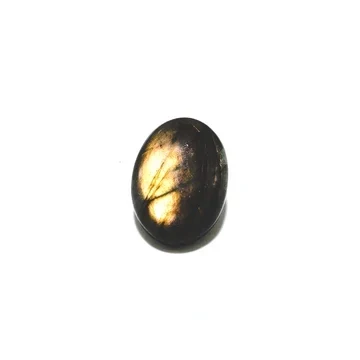
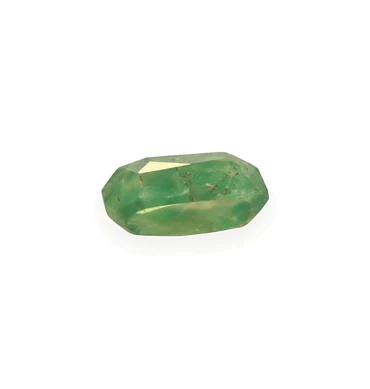
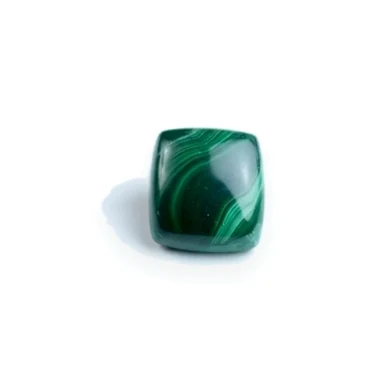
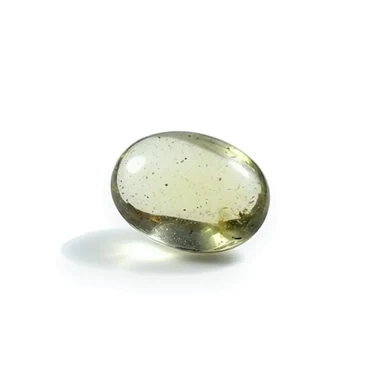
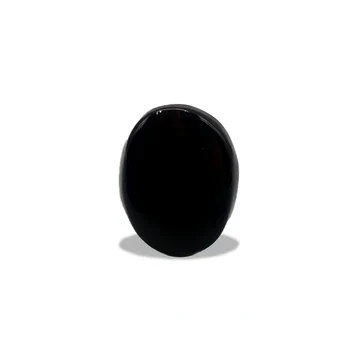
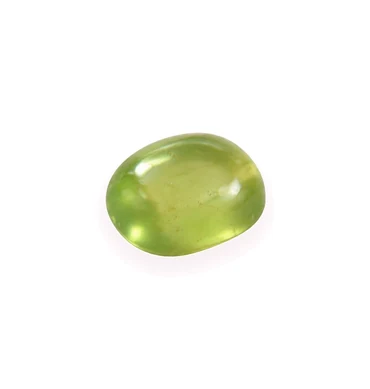
Two of our current yashab listings show how stones of almost the same weight can look quite different: a 10.74 carat jade and a 10.85 carat jade. In the photos, compare their colour and how much light passes through. The full range sits in the jade category.
Ring stones, beads and tasbih are priced differently
The same jade can be priced three ways depending on what it has become. A ring cabochon is judged on one face, so the colour and translucency on top matter most. Beads and tasbih are judged on how well many pieces match. A string where every bead shares the same shade and polish costs more than one with a few fine beads among many average ones, and drilling and finishing add labour on top. Carvings are priced mostly on the carver's skill. So if you are weighing up a jade tasbih, set it against other strings with the same bead size and count, not against loose stones. Our gemstone tasbih guide shows how to judge a string.
Is jade good value?
For most people, nephrite is one of the best-value stones you can wear every day. It is so tough that it resists chipping better than most gems of a similar hardness, so a ring stone or pendant holds up well. Its hardness is around 6 to 6.5 on the Mohs scale, which means harder stones and grit can still scratch it. Keep it apart from other jewellery and clean it with mild soap and water. Our how to wear jade guide covers settings and day-to-day care.
If you are deciding between jade and another green stone, have a look at green agate or moss agate, which give a different look at a similar level, or browse all the green gemstones.
Yashab in tradition
Jade has a long history in Chinese and Central Asian culture, and people in this region have carried and worn yashab for generations. Some families believe it brings calm and protection. These are traditions, not promises, and they apply just as much to a modest nephrite as to a costly jadeite, so they are not a reason to pay more for a stone. Our post on jade benefits goes into the beliefs.
Buying jade from Authentic Gems
Every jade stone we list is shown on its own, with its own photographs and weight, and we state the mineral and any treatment we know of. You are welcome to have any stone tested independently. We are based in Karachi: we confirm your order by phone or WhatsApp and send it out within one working day by insured, tracked courier. Karachi orders usually arrive in 1–2 working days; Lahore, Islamabad, Rawalpindi and other major cities in 2–4; smaller towns in up to about seven. Delivery is a flat Rs. 500 per order. Pay by Cash on Delivery once you have opened the parcel in front of the rider and checked the stone, and return it within 7 days if it does not suit you. For help choosing, message us on WhatsApp.
Shop the stones: jade.
The beliefs described here are traditions, shared for interest. They are not guaranteed outcomes, religious rulings or medical advice.
References