In this article

Written by Sameer
Reviewed on
Traditional belief vs gemmology: anything on this page about luck, protection, planets, healing or religious tradition describes traditional and cultural beliefs — not proven effects, religious rulings or medical advice. A stone's identity, hardness, treatment and origin are gemmology, which a lab can test; the references at the end of the page cover that side.
People come to us asking about yashab in all sorts of shapes: a plain green cabochon for a ring, a bangle for a daughter, a carved pendant, a tasbih. And almost every one of them asks the same thing first: which hand, which finger? The honest answer is that jade has no single rule. Chinese custom says one thing, South Asian astrology says another, and many families here just do what their elders did.
So in this guide we lay those customs out side by side and call them what they are, traditions rather than rules or promises. Then we get to the part nobody has to take on faith: how to set a jade so it stays put, and how to look after it while you wear it.
Start by knowing what kind of jade it is
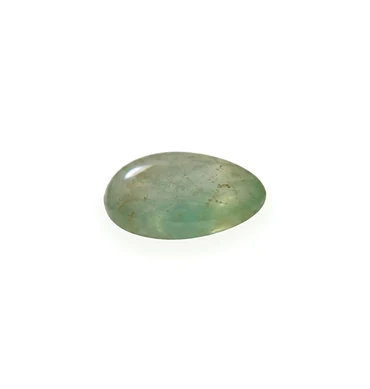
"Jade" is a trade word that covers two separate minerals. Nephrite is the one you will see most, in spinach greens, olive and creamy shades, and it is astonishingly tough. Jadeite is rarer and is the one that can show that bright, glassy emerald green people imagine when they hear the word. In Pakistan both get sold as yashab, and so do a fair number of other green stones that are not jade at all. Our jade buying guide goes through the difference and the usual look-alikes, and we keep nephrite in its own nephrite category.
Why does this matter for wearing? Because it changes how the stone should be set and cleaned. Treated jadeite, which the trade calls B-jade, has been bleached and filled with polymer resin. It asks for gentler handling than an untreated stone.
Which hand: what the different customs say
The Chinese view
Jade's oldest home is Chinese culture, where it has been carved and worn for thousands of years. The custom you hear most often is that jade rings and bangles go on the left hand. The usual reasoning is practical: the left hand does less heavy work, so the stone takes fewer knocks. Some add that the left side is nearer the heart. There is also the idea that the left hand "receives" and the right hand "gives", which is why a stone worn for protection or calm is said to belong on the left.
The way it is done here
In Pakistan and India, a ring worn for astrological reasons usually sits on the right hand, or on whichever hand you work with, because tradition treats that as the active side. A lot of families simply put a new stone on the same hand as their existing rings. If you already have an aqeeq or a feroza on your right hand, moving the jade to the left balances things out and shares the knocks between both hands.
Neither is wrong. Follow the custom that means something to you, or pick the hand that fits the way you work.
Which finger
Jade is not among the nine classical navaratna stones of Vedic astrology, so the old texts do not give it a planetary finger. Over time, practice has filled that gap in a few different ways.
- Little finger (Mercury): some astrologers treat green jade as an uparatna, a substitute stone, for emerald, which belongs to Budh, the planet Mercury. On that reasoning they suggest the little finger, which tradition ties to Mercury, for someone who cannot stretch to an emerald. Our Gemini and Virgo pages cover the two Mercury signs.
- Ring finger: a common pick when jade is worn for general wellbeing or as a family keepsake, mostly because a ring sits comfortably there and people can see it.
- Middle finger: some choose it for a bigger, heavier jade ring, since the middle finger carries a bold stone well.
- Index finger: less usual for jade, though a few people wear a signet-style jade ring here.
These are customs too. If an astrologer has told you to wear jade, wear it on the finger they name. If not, choose the finger where the ring fits well and is least likely to get banged about.
Metal, day and time
Metal
Most of our customers set yashab in silver. It costs less, its cool tone suits green, and the Mercury tradition prefers it. Gold looks lovely with jadeite and with darker nephrite, and it is the classic metal for Chinese-style rings and bangle fittings. In practical terms either is fine; jade does not react with either metal. Our comparison of silver versus gold ring settings covers cost and wear, and the chandi ring page we are preparing goes deeper into silver.
Day and time
People who follow the Mercury link traditionally first put on green jade on a Wednesday, Budh's day, usually in the morning after bathing. Chinese custom fixes no day, although jade is a common gift at New Year, at a birth and at weddings. Many families in Pakistan simply pick a day they feel is blessed, a Friday for example.
Cleansing customs
Some people rinse a new stone in clean water, or leave it overnight in a bowl of water or raw rice before wearing it, to "settle" it. That does no harm to untreated jade. With treated B-jade, though, skip any long soaking.
What jade is traditionally worn for
In culture after culture, jade is linked with calm, steadiness, long life and protection. Chinese tradition connects it with virtue, and it is often given to babies and to newly married couples. The English name goes back to an old Spanish phrase meaning "stone of the loin", from a belief that it helped the kidneys. That is history, not health advice, and jade is not a medicine. Our jade benefits post goes through these beliefs, and the calm and focus page lists other stones people wear for similar reasons. They remain traditional beliefs, and no stone can guarantee any result.
Getting the ring setting right
Jade is nearly always cut as a smooth cabochon, so a good setting is mainly about protecting the edge and holding the stone firmly.
- Bezel setting: a rim of metal runs around the whole edge. For a ring you will wear every day this is our first suggestion, because it shields the edge from chips and keeps the stone tight.
- Prong setting: shows off more of the stone and lets light in from the sides, which helps translucent jadeite glow. Ask for at least four solid prongs and have them checked now and then.
- Open or closed back: astrologers often want an open back so the stone touches the skin, and an open back also lets light pass through a translucent stone. A closed back protects a thin stone and is perfectly fine if belief is not part of your reason.
- Thickness: a well-domed cabochon with some depth is stronger, and shows its colour better, than a thin flat slice.
Tell your jeweller not to hammer the stone or force it into a tight seat. Nephrite will usually shrug it off, but jadeite and treated jade can crack under that kind of pressure. Our upcoming stone setting service page explains how we can help, and the ring size guide helps you get the fit right first time.
Bangles and pendants
A jade bangle should need a little coaxing to get over the hand and should not spin loosely afterwards, otherwise it will hit every door frame you pass. Measure across the widest part of your hand with the fingers held together. For daily wear, a pendant is the safest way to carry jade, since it takes far fewer knocks than a ring ever will.
Jade alongside your other rings
It is very normal here for a man to wear two or three stone rings, often an aqeeq, a feroza and one more. Jade sits happily with any of them. The practical points count for more than any rule:
- do not put jade on the finger right next to a ring with a hard faceted stone such as sapphire or topaz, which will scratch the jade every time you close your hand;
- if one hand already carries most of your rings, wear the jade on the other to spare it some knocks;
- keep heavy rings on the stronger middle and ring fingers, and lighter ones on the little finger.
If you follow an astrologer, ask whether they are happy for jade to be worn with your other stones, as some have firm views on combinations. Our upcoming guide to the gemstone ring for men covers wearing several rings in more detail.
Looking after it day to day
Jade's reputation is for toughness, not hardness. Nephrite resists breaking better than almost any gem, but at roughly 6 to 6.5 on the Mohs scale it can still be scratched by quartz dust, and in a Karachi home that dust is on every surface. A few simple habits keep the polish looking fresh.
- Take it off for heavy work, the gym and gardening, anywhere knocks and grit are likely.
- Put it on after perfume and creams. Oils slowly dull the surface.
- Clean it gently in lukewarm water with a drop of mild soap and a soft brush, then dry it with a soft cloth.
- Keep it out of ultrasonic and steam cleaners, above all if it is treated jadeite, where heat and vibration can harm the resin.
- Keep treated jade away from heat, including hot water, kitchen steam and a jeweller's torch.
- Store it on its own, away from harder stones such as sapphire, topaz and quartz that can scratch it.
For more on cleaning, see our gemstone care guide.
Buying yashab from Authentic Gems
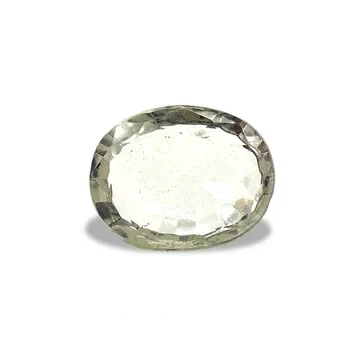
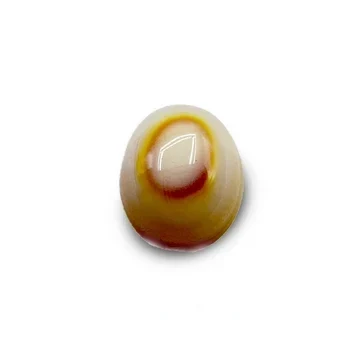
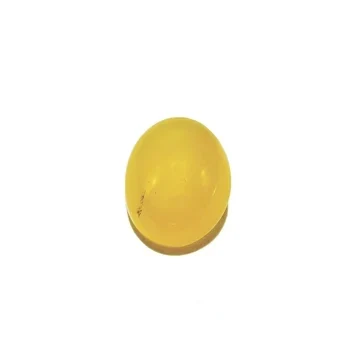
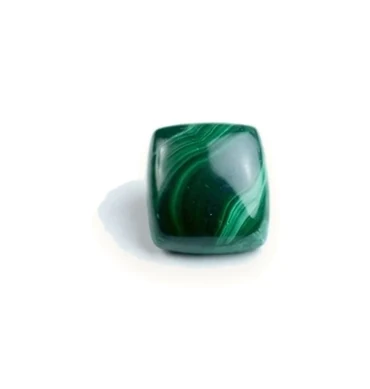
In our jade category every piece of natural yashab is photographed on its own, carries its own weight and price, and has any known treatment stated. Stones like this 10.74 carat yashab and this 10.85 carat yashab are comfortable ring sizes. A certificate is available if you ask, and independent testing can be arranged. We send from Karachi, where delivery usually takes one to two working days, and on to Lahore, Islamabad and the rest of Pakistan with Cash on Delivery. Open the parcel in front of the rider, check the stone, and only then pay.
Browse the stones: jade.
The beliefs in this article are traditions, shared for interest only. They are not guaranteed outcomes, religious rulings or medical advice.
References