In this article

Written by Sameer
Reviewed on
With opal, the price follows the fire you can see. A stone with bright, broad flashes spread across the whole face is worth far more than one with a faint shimmer near the edge, even when they weigh the same. After that come the type of opal, how dark its body is, the pattern of the flashes, and whether the stone is solid or assembled.
Opal is one of the stones people ask us about most, often on an astrologer's advice for Venus or as an October birthstone, and it is also one of the easiest to overpay for. Below we go through each thing that moves the price, how per-carat and per-ratti quotes work, and how to compare offers. Our own opal prices are in the table, updated each month from our listings.
Our opal prices
This table is built from the opals we currently list. Each is photographed alone and priced on its own, so the table shows a real spread: lowest, typical and highest price per stone, then per carat and per ratti.
| Origin | Weights | Stones | Per carat | Per ratti |
|---|---|---|---|---|
| Australia | 1.8 – 11.3 ct | 34 | Rs 750 – Rs 9,600 | Rs 700 – Rs 8,700 |
| Ethiopia | 1.5 – 25.7 ct | 22 | Rs 1,200 – Rs 8,300 | Rs 1,100 – Rs 7,600 |
| Other / origin not stated | 1.0 – 6.2 ct | 31 | Rs 1,750 – Rs 7,600 | Rs 1,600 – Rs 6,900 |
Opal per-carat figures jump about more than most stones, because a small stone with strong fire can outprice a bigger one with weak fire. Use the table to place a quote, then look hard at the stone itself. The monthly gemstone price guide compares opal with other stones.
Start with the type of opal
"Opal" covers several quite different materials, and their prices can't be compared directly. Before anything else, ask which one you are being offered.
Ethiopian (Welo) opal
Most precious opal sold in Pakistan is Ethiopian. It usually has a white to light body with bright, multicoloured fire, often sold as "multi fire", and it gives a lot of colour for the money. Many Welo opals are hydrophane, meaning they soak up water and can go temporarily clear or lose their fire when wet, then come back as they dry. Our guide to Ethiopian opal prices covers this type in detail.
Australian opal
Australian opal includes white (light) opal, black opal and boulder opal, where the opal sits inside brown ironstone. Fine black opal is the top of the market. Solid Australian stones generally cost more than Ethiopian stones with similar size and fire. See the Australian opal price guide.
Fire opal
Mexican-type fire opal is valued for its transparent orange to red body. Some shows play-of-colour; much of it doesn't. It is priced on body colour and clarity, so it doesn't belong in the same comparison as a white multi-fire stone.
Common opal
Opal with no play-of-colour, such as pink or blue common opal, is a much cheaper material. It makes perfectly nice jewellery, but it isn't what an astrologer usually means by opal.
What sets the price within a type
How bright the fire is
This is the biggest single factor. Fire you can see from arm's length in ordinary room light is worth far more than fire that only appears under a torch. Dealers grade brightness on a simple scale from faint to brilliant, and each step up lifts the price noticeably.
What colour the fire is
Red flashes are the rarest and most prized, then orange, then green and blue. A stone that shows the full range across its face scores higher than one that only flashes green.
Pattern
Broad flashes and rolling bands of colour usually fetch more than fine pinpoint fire. Named patterns such as harlequin, a mosaic of square patches, are rare and priced to match.
Body tone
The same fire looks stronger against a dark body, which is why black opal costs more than white opal of equal brightness. Among Ethiopian stones, a crystal body clear enough to see into, with fire floating inside, is valued above a milky one.
Coverage and direction
How much of the face shows fire, and from which angles. A stone that flashes face-up across most of its surface beats one that only lights up when you tilt it.
Cut and dome
Opal is normally cut as a cabochon. A good dome shows the fire well and is thick enough to set. A thin, flat stone is fragile and cheaper. A very deep back adds weight you pay for without adding any fire.
Stability and cracks
Opal contains water. Some stones dry out and develop fine surface cracks, known as crazing, and a crazed stone has lost most of its value. Ethiopian opal can also change its look when wet. Ask whether a stone has been kept for some time without crazing, and walk away from any opal with visible cracks.
Solid, doublet or triplet?
A thin slice of opal glued to a dark backing is a doublet; add a clear quartz or glass cap on top and it becomes a triplet. Both are legitimate when declared, and both cost far less than a solid stone with the same face size. The trouble starts when they are sold as solid. Look at the side with a loupe: a straight join line, a perfectly flat black base, or a glassy dome sitting over the fire all point to an assembled stone. Our opal real or fake guide covers this, and synthetic opal too.
Per carat and per ratti
Opal is quoted per stone, per carat and per ratti here, and the ratti is where people get caught.
- 1 carat is 0.2 grams.
- The gemstone ratti used in Pakistan is 0.91 carat, about 0.182 grams.
- The jewellers' sunari ratti is about 0.1215 grams, roughly 0.61 carat.
Opal is light for its size, so it looks bigger than a sapphire of the same weight. That is nice for the eye, but it also means per-carat figures can look high for stones that are physically quite large. Convert every quote to carats with the carat to ratti converter, work out the total, and only then compare.
If your astrologer has named a weight, say five or six ratti, ask which ratti they mean. The two scales give you very different stone sizes.
Comparing opal quotes
- Same type? Ethiopian, Australian, fire and common opal shouldn't be compared with one another.
- Solid? Ask in writing whether it is solid natural opal, not a doublet, triplet or synthetic.
- Video in normal light. Photos under strong spotlights flatter opal. A short clip turning the stone in room light shows the true fire.
- Exact weight, and which ratti. Convert to carats.
- Any crazing or cracks? Ask for a close-up of the surface.
- Treatment. Some opal is smoked or dyed to darken the body. That should be declared and priced lower.
- Return terms. Opal is a stone you want to see in person. A return window and Cash on Delivery with inspection protect you.
Budget bands in the shop filters
- Under 5,000 rupees: small Ethiopian stones with modest fire, or common opal. Fine for a first opal or a pendant.
- 5,000 to 20,000 rupees: the busiest band for Ethiopian multi-fire stones in ring sizes. Compare brightness carefully here, because quality varies most for the least difference in price.
- 20,000 to 50,000 rupees: bigger or brighter Ethiopian stones, crystal bodies, and entry-level solid Australian opal.
- Over 50,000 rupees: fine Australian material and exceptional Ethiopian stones. A lab report is worth arranging at this level.
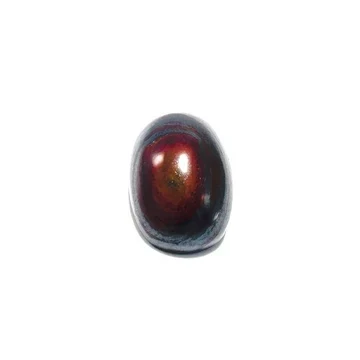
Two of our current stones show the range: the 1.50 carat Ethiopian opal and the 1.90 carat Ethiopian opal. Compare their fire, then see where they sit in the table.
Calibrated, freeform and what each costs
Opal is cut to save as much fire as possible, so plenty of stones come out freeform or in odd millimetre sizes. Calibrated ovals in standard ring sizes, like 10 by 8 or 12 by 10 millimetres, waste more rough in cutting and often cost a little more per carat for the same fire. They are also easier and cheaper to set, because a jeweller can use a ready-made mount. A freeform stone can be good value if you don't mind having a setting made around it.
Matched pairs for earrings cost more than two single stones of similar quality, because the cutter has to find two pieces with the same body tone and fire. If you want a pair, ask to see both in one video so you can judge whether they really match.
Very large opals aren't always worth proportionally more. A big Ethiopian stone with patchy fire can cost less per carat than a small one blazing across its whole face. Judge the fire first and treat size as the second question.
Costs after you buy
Opal is 5.5 to 6.5 on the Mohs scale, softer than quartz, so ordinary household dust can scratch it over time. A ring needs a bezel or a closed setting with a raised rim, and pendants or earrings are gentler on the stone. Keep it away from heat, strong sun and sudden temperature changes, and clean it only with a damp soft cloth. Never put it in an ultrasonic cleaner. Those habits protect what you paid. Our guide on how to wear opal covers setting and finger customs, and wearing opal covers its place in tradition.
Buying opal from Authentic Gems
Every stone in our opal collection is natural, photographed on its own and priced on its own, with known treatment stated. If you want an independent lab report on a stone, ask before you order. We send from Karachi by insured, tracked courier with Cash on Delivery: Karachi usually in 1 to 2 working days, Lahore, Islamabad and the other big cities in 2 to 4, and the rest of Pakistan within about a week. Open the parcel and check the fire before paying the rider, and you have 7 days to return it. For a short video of any stone in room light, message us on WhatsApp.
Shop the stones: opal.
References