In this article
- In brief
- Where opal sits in tradition
- Choosing the finger and the hand
- Silver, white gold or yellow gold
- Friday and the first time you wear it
- Find out which opal you have first
- Wudu, attar and everyday water
- Getting the setting right
- Weight in ratti
- Looking after it day to day
- A checklist before you set your opal
- خلاصہ

Written by Sameer
Reviewed on
Traditional belief vs gemmology: anything on this page about luck, protection, planets, healing or religious tradition describes traditional and cultural beliefs — not proven effects, religious rulings or medical advice. A stone's identity, hardness, treatment and origin are gemmology, which a lab can test; the references at the end of the page cover that side.
The traditional answer is simple. Opal goes on the ring finger or the middle finger of the right hand, in silver or another white metal, and you put it on for the first time on a Friday, the day of Venus (Shukra). What the tradition does not tell you is that opal is one of the softest stones people set in rings, that it carries water inside it, and that the Ethiopian opal most buyers in Pakistan are shown can drink in wudu water, attar and hand cream.
That is why wearing opal well comes down mostly to the setting and a handful of daily habits. Below we give the customs first, clearly as customs, and then the practical side that keeps the colour flashing for years.
In brief
- Finger: the ring finger is most common; some astrologers name the middle finger.
- Hand: normally the right.
- Metal: silver, white gold or platinum, the traditional metals for Venus stones.
- Day: Friday, preferably in the morning.
- Setting: a full bezel, with the stone sitting low.
- Care: no heat, oils, perfume or long soaking; take an Ethiopian opal off before wudu.
Where opal sits in tradition
In Vedic astrology the classical gem for Venus is the diamond. Opal has become its most popular substitute (uparatna), partly because it costs a fraction of the price and partly because its milky body and flashes of colour are felt to carry the same planet's qualities: beauty, creativity and harmony in marriage. Plenty of families here also buy opal just because it is the October birthstone, or for Libra and Taurus, the two signs ruled by Venus.
All of this is belief. We do not promise that an opal will do anything for you, and we would be careful of anyone who does. Our article on opal, Venus and play-of-colour goes deeper into the tradition and the gem itself. Here we stay with the question of how to wear it.
Choosing the finger and the hand
Opal causes more disagreement over fingers than most stones. The ring finger (anamika) is what you will hear most, since diamond and its substitutes usually go there. A sizeable group of astrologers ties Venus to the middle finger and recommends that instead, and a few prefer the little finger. If you are wearing the stone for astrological reasons, ask whoever read your chart to name both the finger and the hand, and then stay with their answer.
The right hand is the normal choice, though some practitioners put a woman's stone on the left. If the ring is simply jewellery, wear it on the hand you use less. An opal lasts much longer on the hand that is not pushing doors, lifting shopping bags and holding a motorbike handlebar through Karachi traffic.
Silver, white gold or yellow gold
White metals are the classic partner for Venus, so silver, white gold and platinum are what astrologers usually recommend. Silver is easily the most common choice in Pakistan, and it happens to flatter a white or crystal opal: the cool metal makes the colour flashes stand out more.
Most astrologers do not actually forbid yellow gold, and it can look warm and handsome around a darker opal or one with orange fire. If your adviser has no opinion on metal, choose by what looks good. Men who wear only silver for religious reasons will find opal sits very naturally in a silver band. Our guide to silver versus gold settings compares the cost and how each metal holds up.
Friday and the first time you wear it
Friday belongs to Venus, and tradition says to put an opal on for the first time on a Friday morning, soon after sunrise. Some astrologers add that the moon should be waxing. Many families also rinse the ring in raw milk or clean water before it is worn.
This is where custom and the stone pull in different directions. A quick rinse does no harm to solid Australian-type opal. Soaking an Ethiopian opal in milk is a poor idea, though: the stone can take up the liquid, go cloudy or lose its colour play for a while, and the fat in milk can leave a stain behind. If the custom matters to you, a short dip in plain water and careful drying is the safer version. Doublets and triplets should never be dipped at all.
Find out which opal you have first
Everything about wearing and caring for opal depends on the type. Sellers, online and in the bazaar, often just write "opal", so ask the question.
Ethiopian opal
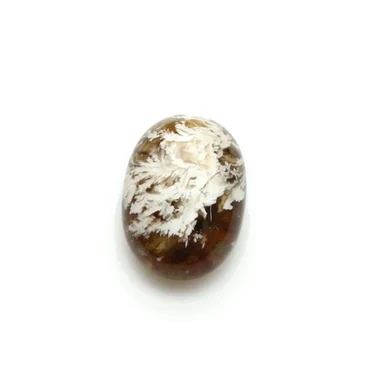
Most of the precious opal sold in Pakistan is Ethiopian, and much of it is hydrophane, which means it soaks up water easily. Leave it in water and it can turn see-through or milky and lose its play-of-colour. As it dries out, over a few hours or a day or two, the colour normally comes back. Oil, perfume and lotion can also be absorbed, and they do not always leave cleanly. Several stones we have at the moment are Ethiopian, for example this 1.50 carat Ethiopian opal and this 1.90 carat Ethiopian opal.
Solid Australian-type opal
Solid opal from the older Australian fields is usually not hydrophane and copes with water better. It still dislikes heat and sudden swings in temperature.
Doublets and triplets
These are thin slices of opal glued onto a backing, sometimes with a clear cap on top. Water can creep into the glue line and fog or lift the layers, so they must never be soaked. Sold honestly as what they are, they are perfectly fair products, but you should know if your stone is one.
Our planned guide on Ethiopian opal, real or fake will cover how to tell them apart.
Wudu, attar and everyday water
This is the question almost every opal wearer in Pakistan runs into, and the answer depends on what type of stone you have.
- Ethiopian hydrophane opal: the easiest habit is to slip the ring off before wudu and put it back once your hands are dry. Five washes a day means the stone is wetted and dried again and again, and soap residue can be drawn in. This is one reason many people choose an opal pendant instead.
- Solid, non-hydrophane opal: a short splash of cool water is generally fine. Dry the ring afterwards.
- Doublets and triplets: take them off before any washing at all.
Attar needs its own warning. A lot of people dab it on the wrist and fingers, and on a porous opal that oil can leave a brownish tint that does not go away. Put your attar on first, let it settle, wash your hands, and only then put the ring on. Treat hand cream and hair oil the same way. As for wearing a ring during prayer, or whether water must reach under it in wudu, ask a scholar you trust.
Getting the setting right
Opal is 5.5 to 6.5 on the Mohs scale, softer than quartz. Everyday dust is full of quartz, so an opal on a ring finger slowly loses its polish and gathers fine scratches. A hard knock can also chip or crack it. That puts a lot of responsibility on the setting.
- Full bezel: a rim of metal all the way round the stone. For daily wear nothing protects it better.
- Low profile: keep the stone close to the band so it is not the first thing to hit a wall.
- Skip thin claws on an everyday ring. They focus pressure on small points and snag on clothes.
- Open or closed back: astrologers often ask for an open back, and it lets light into a crystal opal. A closed back keeps soap and water off the underside, which suits hydrophane stones. Talk it through with whoever is making the ring.
Make sure the setter knows the stone is opal. Sudden heat can crack it, so all soldering and resizing should be finished before the stone goes in. If you would like us to arrange the ring, see our stone setting service. Pendants and earrings face far less wear, which is why many jewellers suggest one of those for a first opal.
Weight in ratti
When opal is worn as a Venus substitute, astrologers often give the weight in ratti. In Pakistan the gemstone ratti is 0.91 carat, while the goldsmith's sunari ratti is about 0.61 carat. On the gem standard, a "3 ratti" opal comes to roughly 2.73 carats. Our carat to ratti converter helps, and it is worth agreeing the unit with the seller up front. With opal, the brightness of the colour counts for much more than the weight, so a smaller, livelier stone is usually the better buy.
Looking after it day to day
- Heat and sun: do not leave opal on a car dashboard, near the stove, or out in strong summer sun for long. Heating or drying it quickly can cause crazing, a web of fine cracks.
- Sudden changes: walking from a hot street into an air-conditioned room is not usually a problem, but never drop a warm opal into cold water.
- Housework: take the ring off for cleaning, cooking and gardening.
- Cleaning: wipe it with a soft, slightly damp cloth, then dry it. No soapy soaks, and never an ultrasonic or steam cleaner.
- Storage: a soft pouch, away from harder stones. Months in a very dry cupboard are not ideal; ordinary room conditions suit it fine.
Our general gemstone care guide says more about storage. If an opal goes dull after years of wear, a cutter can usually polish it back.
A checklist before you set your opal
- Find out whether the stone is Ethiopian, solid non-hydrophane, or assembled.
- If you follow an astrologer, confirm finger, hand, metal and weight with them.
- For a ring you will wear daily, go for a full bezel and a low profile.
- Decide how you will handle wudu, attar and hand cream.
- If the custom matters to you, plan to wear it first on a Friday morning.
Every stone in our opal collection is photographed by itself, so what you see is what arrives. We deliver with Cash on Delivery: Karachi usually in 1 to 2 working days, Lahore, Islamabad and the other big cities in 2 to 4, and the rest of Pakistan within about a week, for a flat Rs. 500. You open the parcel in front of the rider and check the opal before paying, and unused stones can be returned within 7 days. A certificate is available on request, and you are welcome to have any stone tested at an independent lab.
See the stones: opal.
The beliefs mentioned on this page are traditions, shared for interest. They are not guaranteed outcomes, religious rulings or medical advice.
References