In this article

Written by Sameer
Reviewed on
People in Pakistan buy neelam for very different reasons. Some just want a good blue stone for a ring. Many more come to us with a note from their astrologer: a weight in ratti, and a few conditions like "unheated" or "Ceylon". Every one of those conditions changes what the stone costs, and a couple of them change it a lot. This guide walks through what you are really paying for in a blue sapphire, how carat and ratti quotes match up, and how to put two offers side by side without getting caught out.
You will not find rupee figures typed into this article. Prices move, and a number written once goes stale. What stays true is the reasoning behind them, so that is what we explain here.
What our own listings show
Sapphire is one of the biggest sections in our shop, so looking across it gives a fair picture of how natural blue sapphire is priced. The summary below is drawn from our own sapphire listings.
| Origin | Weights | Stones | Per carat | Per ratti |
|---|---|---|---|---|
| Ceylon (Sri Lanka) | 1.2 – 4.4 ct | 31 | Rs 2,100 – Rs 57,000 | Rs 1,900 – Rs 52,000 |
| Kashmir | 1.8 – 4.5 ct | 23 | Rs 2,600 – Rs 7,900 | Rs 2,400 – Rs 7,200 |
| Afghanistan | 2.4 – 40.4 ct | 8 | Rs 950 – Rs 11,000 | Rs 850 – Rs 10,000 |
| Nigeria | 2.7 – 12.4 ct | 5 | Rs 3,700 – Rs 7,500 | Rs 3,400 – Rs 6,800 |
| Australia | 1.9 – 2.4 ct | 2 | Rs 7,800 – Rs 8,700 | Rs 7,100 – Rs 7,900 |
| Other / origin not stated | 1.0 – 42.6 ct | 95 | Rs 500 – Rs 56,000 | Rs 460 – Rs 51,000 |
At the cheaper end you will find small stones, pale stones and stones with obvious colour zoning. At the top end are bigger stones with a rich, even blue and good clarity. For other gems, see our gemstone price guide.
Five things that decide the price
1. Treatment
Most blue sapphire on the market has been heated. Heat treatment is permanent and accepted across the trade, and it is how a large share of good blue sapphire gets its colour. A fine-coloured neelam that has never been heated is much rarer and costs more, and plenty of astrology buyers ask for exactly that. Only pay for "unheated" when a lab report says so.
Two other treatments are worth a lot less. Beryllium (lattice) diffusion pushes colour deep into the stone at extreme heat. Surface diffusion leaves only a thin skin of colour, which can disappear if the stone is ever recut. Both have to be disclosed, and neither should cost what a heated sapphire costs. Glass-filled sapphire also turns up, though less often than glass-filled ruby.
2. The blue
The sapphires people pay most for have a strong, velvety medium-to-dark blue that stays blue under ordinary room lights. Move away from that in either direction and the price drops:
- Too light: pale, greyish or watery blue looks washed out and sells for much less.
- Too dark: inky stones that look black indoors are common from some sources, and they cost less than their size suggests.
- Green or grey undertone: any secondary green or grey lowers the value compared with a clean blue.
- Colour zoning: stripes of stronger and weaker blue. If you can see them looking down on the stone, the price should reflect that.
3. Clarity
Sapphire is generally cleaner than ruby, so you can afford to be a bit fussier. Fine silk is fine, and sometimes it softens the colour nicely. Feathers that look like fingerprints, cracks that reach the surface and dark crystals sitting in the middle of the face all bring the price down. For most budgets, a stone that looks clean at arm's length is a sensible goal.
4. Size
The rate per carat goes up as stones get bigger, because large, clean, well-coloured rough is hard to find. Going from a 2 carat to a 4 carat neelam of the same quality can more than double the total, since you are paying a higher rate on twice the weight. If your astrologer has set a minimum weight, ask whether a cleaner stone just over that weight would do, instead of a bigger stone of lower quality.
5. Origin
Kashmir sapphire is the old benchmark, but you will almost never see it in normal trade. Sri Lanka (Ceylon) is known for brighter, lighter blues and is the origin most of our customers ask about. Madagascar, Burma, Thailand and Australia also supply the market, and the last two often produce darker stones. Origin should only change the price when a lab report confirms it. Our article on where blue sapphire comes from goes through each source.
Cut: the sixth factor nobody mentions
Sapphire rough is often cut where it is mined, and the cutter is usually trying to save weight rather than make the stone look its best. A deep, bulky bottom adds carats that you pay for but never see from above. An off-centre culet can drag a colour zone into the middle of the face. Go too shallow, though, and the stone shows a pale, see-through window when you tilt it. When comparing two neelam of about the same weight, ask for length and width in millimetres. The one that looks bigger face-up for its weight is usually the better buy, as long as the colour holds.
A badly cut stone can be recut, but it loses weight in the process, and its price per carat should then go up to match the better look. If a well-proportioned stone is priced per carat the same as a badly cut one, the well-cut stone is the better value.
Carat and ratti for neelam
Lab reports state weight in carats, and one carat is 0.2 grams. Astrologers and many shops in Pakistan talk in ratti instead. The standard gemstone ratti is 0.91 carat, so a 5 ratti neelam is 4.55 carats and a 7 ratti neelam is 6.37 carats.
Some jewellers use the sunari ratti, about 0.1215 grams or roughly 0.61 carat. Seven sunari ratti comes to only about 4.27 carats. So if your astrologer said 7 ratti, find out which ratti they meant before you buy, because the gap is a whole size of stone. Our carat to ratti converter does both.
To turn a rate per carat into a rate per standard ratti, multiply by 0.91. To go the other way, divide by 0.91.
How bazaar dealers quote
A lot of dealers price neelam by the ratti and then multiply by the weight. It is an old way of trading and perfectly fair if everything is clear. Before you agree to a rate, check:
- which ratti they are using;
- that the weight is the loose stone only, not the stone in a ring;
- that the rate is for the stone you are being sold, not a nicer one they showed you first;
- what treatment they are stating, and that they will write it down.
In the end, ask for one total price for one stone, with the weight written on the receipt. That is the only figure that really counts.
Comparing two neelam offers
- Use the same unit. Convert both to price per carat at 0.91 carat per ratti, unless the seller confirms a different ratti.
- Compare like treatment with like. A report-backed unheated stone, a heated stone and a diffused stone are three different products.
- Stay in the same size band. Put a 3 carat stone against another of about 3 carats, not against a 1 carat.
- Look at colour in the same light. Ask each seller for a video under normal indoor lighting. A sapphire that goes dark indoors is worth less than one that keeps its blue.
- Check zoning from the top. Ask for a photo looking straight down, on white paper.
- Agree the return terms. Know what happens if a lab report says something different from what you were told.
When a "Ceylon unheated" stone is priced far below everyone else, the reason is nearly always a missing report, a different treatment, a different ratti, or a look-alike like blue spinel, iolite or glass. Our upcoming piece on real and fake sapphire covers the checks.
Ask these before you pay
An honest seller will answer all of these without hesitating. Get the answers on WhatsApp so you have them in writing.
- Is this natural sapphire, and has it been treated in any way?
- What is the exact weight of the loose stone, in carats?
- Can I see a video in daylight and under indoor light?
- Is any zoning or inclusion visible from the top?
- Can I take it to an independent lab for testing?
- What are the return terms if it turns out not as described?
Browse by budget
The fastest way to see what each budget gets you is to use the price filters in the shop and look at what comes up.
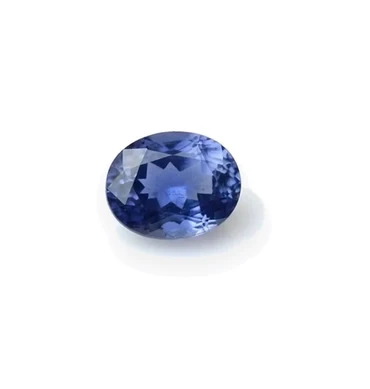
Then go to the sapphire category and compare stones of similar weight. Take this 1.50 carat neelam and this 1.60 carat neelam. They are almost the same weight, so any difference in price comes down to colour, clarity and treatment, all of which you can see in the photos and read in the descriptions.
Sapphire in other colours
Blue is just one colour of sapphire. Yellow sapphire (pukhraj) follows its own pricing logic, which we explain in what makes one pukhraj cost more than another. Purple sapphire has its own purple sapphire category. If you want your stone set, the upcoming neelam ring price guide explains how the setting adds to the cost.
Buying neelam from Authentic Gems
Every sapphire we list is natural, photographed by itself and priced by itself, and we disclose any treatment we know about. You are welcome to have a stone tested at an independent lab. We confirm each order by phone or WhatsApp and send it out within 1 working day by insured, tracked courier. Here in Karachi it usually reaches you in 1 to 2 working days. Lahore, Islamabad, Rawalpindi and other big cities take about 2 to 4, and smaller towns up to around 7. Pay Cash on Delivery after opening the parcel and checking the stone in front of the rider, and if it is not right, you have 7 days to return it. For the traditional side of wearing neelam, read blue sapphire benefits. These are beliefs, so go by an astrologer you trust.
Browse the stones: sapphire.
The beliefs described here are traditions, shared for interest. They are not promised outcomes, religious rulings or medical advice.
References