In this article
- Aquamarine prices in our listings
- What decides the price of aquamarine
- How ratti quotes work in our markets
- Comparing two aquamarine quotes
- Two cases where the sums change
- Look-alikes that throw the price off
- What each budget band holds
- Examples from our stock
- Certificates and the cost of setting
- Buying aquamarine from Authentic Gems
- خلاصہ

Written by Sameer
Reviewed on
Ask any dealer what an aquamarine (beruj) is worth and the first thing they will do is look at the blue. How deep is it, and how pure? Only after that do clarity, size and cut come in. It surprises people, but a small stone with a clear, strong blue can cost more per carat than a much bigger one that is pale. Origin and treatment matter as well, just not as much as most buyers assume.
On this page you will find a table taken from our own aquamarine listings, then a factor-by-factor explanation, how ratti quotes work in Pakistani markets, and a way to compare two offers so you never pay deep-blue money for a pale stone.
Aquamarine prices in our listings
The table gives the lowest, typical and highest price per stone in the aquamarine we currently hold, with the same three figures per carat and per ratti. It comes from stones we actually have, not from estimates.
| Weight | Weights | Stones | Per carat | Per ratti |
|---|---|---|---|---|
| Under 3 carat | 1.2 – 2.7 ct | 5 | Rs 1,000 – Rs 19,500 | Rs 900 – Rs 17,500 |
| 3 – 6 carat | 3.2 – 5.5 ct | 5 | Rs 1,300 – Rs 2,100 | Rs 1,200 – Rs 1,900 |
| 6 – 10 carat | 6.1 – 8.8 ct | 3 | Rs 1,000 – Rs 1,700 | Rs 900 – Rs 1,550 |
| Over 10 carat | 12.5 – 65.9 ct | 19 | Rs 380 – Rs 1,650 | Rs 350 – Rs 1,500 |
When you compare, read the per-carat and per-ratti columns, not the per-stone totals. A large pale aquamarine can carry a big total and still be cheap for its weight, and a small deep blue one can be the reverse. For other gems, see our gemstone price guide for Pakistan.
What decides the price of aquamarine
1. Colour, and the depth of the blue above all
Aquamarine runs from nearly colourless with just a breath of blue, through a clear medium sea blue, and now and then to something deeper. The richer and cleaner the blue, the higher the price. A stone with a green or grey cast sits below one of equal depth that reads as a pure blue. The palest stones, which can pass for clear glass once they are on your hand, are the cheapest.
It is also the hardest thing to judge from a picture. Phone cameras and screens love to make pale aquamarine look bluer than it is. Ask the seller for daylight photos on a white background, with something white beside the stone for comparison.
2. Clarity: clean to the eye is the normal standard
Emerald is aquamarine's cousin in the beryl family, but unlike emerald, aquamarine is usually clean enough that you see nothing inside without a loupe. That is the baseline buyers should expect. Inclusions you can see, such as feathers, fine tubes or a cloudy patch, should pull the price down clearly. Heavily included or milky rough normally goes into cabochons or beads, which sell for a small part of the faceted price.
3. Size: big stones are common, big deep-blue stones are not
Aquamarine crystals can grow very large, so big clean stones turn up far more often than they do in neelam or zamurd. That is why the per-carat price rises more gently with size than it does for many gems. The rare thing is strong colour at a large size. A big stone with a good blue is priced well above a big pale one, and its per-carat figure climbs with it.
Small aquamarines have the opposite problem. Beryl's colour is spread through the whole stone, and a small stone has less depth to show it, so small cuts often look paler than larger ones from the same crystal.
4. Cut: life across the face, and no window
A well-cut aquamarine looks bright from edge to edge. A badly proportioned one has a "window", a see-through patch in the centre where light runs straight out the back. Shallow cutting saves weight and shows the colour weakly. Very deep cutting holds on to weight but makes the stone look dark and small for its carats. A good cut adds to the price; a cut that keeps weight at the expense of looks should bring it down.
5. Origin
Our own northern mountains, around Skardu and the Shigar valley, are a well-known source of aquamarine crystals, and our Skardu aquamarine origin page tells that story. A lot of the aquamarine in our markets also comes across from Afghanistan, with some from Africa and South America. Origin can change how a stone is sold, but colour and clarity matter far more than the country. Only a laboratory can offer an origin opinion, and even a lab cannot always do it.
6. Treatment
Many aquamarines are gently heated to take away a greenish tint and leave a cleaner blue. The result is stable and permanent, the trade accepts it widely, and it should always be disclosed. Some buyers pay extra for an unheated stone with natural blue, but for most people the colour on the hand matters more than how it got there. Either way, ask the seller to write the treatment down.
How ratti quotes work in our markets
Plenty of sellers in Pakistan quote aquamarine "per ratti", particularly when someone is buying a set weight on an astrologer's advice. The standard gemstone ratti here is 0.91 carat. The goldsmith's sunari ratti is lighter, about 0.61 carat. Quote the same stone per sunari ratti and the rate looks cheaper per unit, even though the total has not changed. Always ask which ratti is meant, and convert to carats with our carat to ratti converter before you compare anything.
A few things to keep in mind when you hear a ratti rate:
- One rate does not fit every size. A dealer's ratti rate for a deep blue stone of several carats ought to be higher than for a small one. If someone gives you the same rate for every size, the quality probably is not the same either.
- The weight must be the cut weight. It should be the finished loose stone, not the stone inside a ring, and not the weight of the rough.
- Work it out yourself. Get the total in writing and divide by the carat weight. That single number is the fairest thing to compare.
Comparing two aquamarine quotes
- Bring both to price per carat, using the real cut weight.
- Put the colours next to each other in daylight photos against white. A cheaper stone that is clearly paler is not a bargain.
- Look at clarity in the photos. Ask for a close-up. Inclusions you can see should mean a lower price.
- Check for a window. Ask for a face-up photo over printed text. If you can read the text through the middle, the stone is cut shallow.
- Ask about heating and have the answer written down.
- Ask what the price includes. Is a certificate part of it or extra? Is the setting separate? Is delivery insured?
- Check the terms. Can you see the stone before paying? Can you return it if it is not as described?
Two cases where the sums change
Buying to an astrologer's weight
Some people are told to wear a fixed number of ratti. That locks the size, so the only places left to save are colour and clarity, and that can push a buyer towards a big, pale stone. If the weight is stretching your budget, ask your adviser whether a smaller stone with better colour would do. Many will say yes, and the ring will look better for it.
Matched pairs
Earrings and paired designs need two stones that agree in colour, size and cut. Finding a good match takes time and leaves odd stones behind, so a pair usually costs more than two similar single stones. Compare a pair quote with other pair quotes, not with one stone's price doubled.
Look-alikes that throw the price off
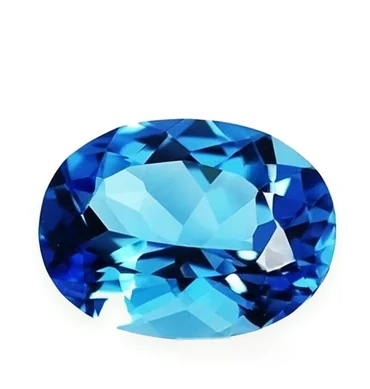
The usual stand-in is blue topaz. It costs less, it is hard to tell apart in a photo, and its blue is generally brighter and more electric than aquamarine's soft sea colour. A "deep blue aquamarine" at a very low price is quite often blue topaz. That is a good stone in its own right, and we sell it in our blue topaz range, but it should carry its own name. Glass and synthetic spinel imitations are around too. Our article on aquamarine tradition and sensible choices gives three quick checks, and a lab test settles any doubt.
What each budget band holds
The shop filters let you browse our whole range by price:
Broadly, the lower bands hold smaller or paler aquamarines and cabochons. The middle bands hold clean faceted stones of light to medium blue in ring sizes. The upper bands hold larger stones, deeper colour, or both. Whatever band you are in, pick colour first and size second. A slightly smaller stone with a better blue looks better in a ring than a bigger, paler one.
Examples from our stock
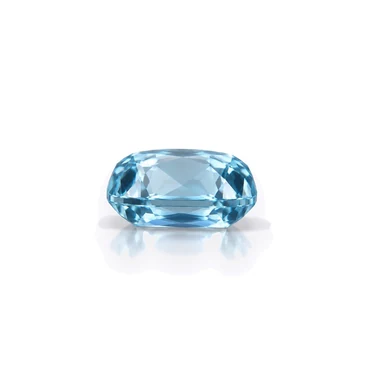
Every stone in our aquamarine collection has its own price and its own photographs. To get a feel for the range, put a small ring stone like this 2.7 carat light blue Afghan aquamarine beside a larger piece such as this 12.90 carat Afghan beruj, and notice how the per-carat price moves with size and colour.
Certificates and the cost of setting
A certificate is available on request, and you are free to have any stone tested at an independent lab. For a mid-priced aquamarine, a test is worth it if blue topaz is on your mind at all. Our lab-certified aquamarine page explains how that works.
Leave room in the budget for the ring itself. Aquamarine sits at 7.5 to 8 on the Mohs scale and looks lovely in silver or white gold; silver leaves more of your money for the stone. We can arrange the ring through our stone setting service.
Buying aquamarine from Authentic Gems
We are in Karachi, so orders across the city, from Clifton and DHA to Gulistan-e-Jauhar and Bahria Town, usually arrive in 1 to 2 working days. Lahore, Islamabad, Rawalpindi and the other major cities usually take 2 to 4 working days, and smaller towns up to about seven working days. Every parcel goes by insured, tracked courier for a flat Rs. 500. With Cash on Delivery you open the parcel in front of the rider and look at the stone before paying, and unused stones can be returned within 7 days. If the aquamarine is a March birthstone gift, our March birthstone page has more on choosing one.
See the stones: aquamarine.
References