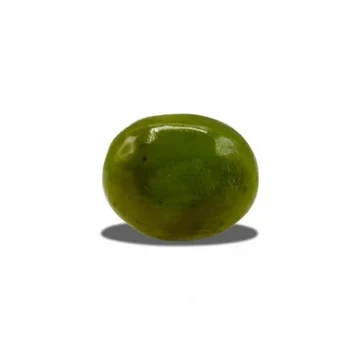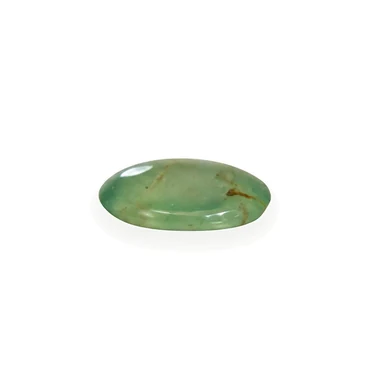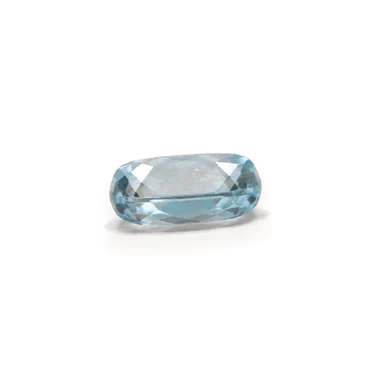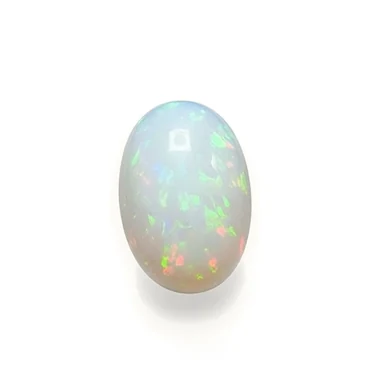

In this article

Written by Sameer
Reviewed on
The quick version: put a natural emerald under a 10x loupe and you will almost always find something inside it: wispy healed fractures, small crystals, and in some stones three-phase inclusions. The green is seldom perfectly even either. If a stone is flawless, deep green and cheap, it is far more likely to be synthetic, glass or dyed. And since nearly every emerald sold has had oil or resin put into its fractures, the real questions are which filler and how much.
In Urdu the stone is zamurd; astrologers call it panna. With ruby and sapphire it makes up the classic trio of precious coloured stones, and of the three it is the one copied most often and the one buyers misunderstand most, usually because they expect it to be clean. Below we explain what emerald is, how to read what is inside it, how to separate it from imitations and synthetics, what treatments mean for price and care, and how panna is worn in Vedic tradition.
What an emerald actually is
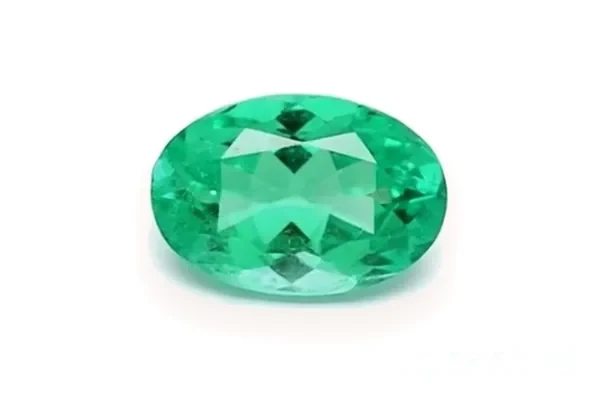
Emerald is green beryl (beryllium aluminium silicate), coloured by chromium, vanadium or both. The same mineral in blue is aquamarine, and beryl that is only lightly green is sold as green beryl, not emerald.
| Property | Emerald |
|---|---|
| Mineral | Beryl |
| Source of colour | Chromium and/or vanadium |
| Mohs hardness | 7.5–8 |
| Toughness | Fair to poor, as most crystals carry fractures |
| Specific gravity | About 2.7 |
| Usual treatment | Clarity enhancement with oil or resin |
| Urdu and trade names | Zamurd, panna |
On hardness alone emerald holds up well against everyday scratches. The catch is that it grows in rough geological conditions, so most crystals are full of small fractures. A knock that a sapphire would shrug off can chip an emerald, which is why emerald rings tend to get protective settings and gentle handling.
The jardin: what you see inside
Dealers call emerald's inclusions its jardin, the French word for garden. In most stones inclusions knock the price down hard; in emerald a certain amount is expected. Through a 10x loupe you might see:
- Three-phase inclusions: a tiny pocket holding liquid, a gas bubble and a little salt crystal. They are typical of Colombian stones and very hard to imitate.
- Two-phase inclusions and fingerprints: liquid-and-gas pockets and healed fractures that look like veils or wisps of smoke.
- Mineral crystals: flakes of mica, pyrite, calcite, or dark needles of amphibole or tourmaline, common in Zambian and some Pakistani rough.
- Growth tubes: thin parallel channels running down the length of the crystal.
Clean emeralds do exist, but they are rare, they are expensive, and they should come with a lab report. At an ordinary price, the word "flawless" should make you more careful, not less.
Natural, synthetic or imitation: reading the loupe
| What you see | Most likely |
|---|---|
| Three-phase inclusions, slightly patchy green, natural-looking fingerprints | Natural emerald |
| Round gas bubbles, swirls, softened facet edges | Glass imitation |
| Very clean, intense green, low price | Synthetic emerald or glass |
| Zig-zag or chevron growth lines | Hydrothermal synthetic |
| Veil-like flux inclusions in a very even stone | Possibly flux-grown synthetic; a lab must confirm |
| Pale body with colour gathered in the cracks | Dyed quartz or dyed beryl |
| Flashes of colour along fractures as you tilt it | Natural emerald with resin filling |
Two checks you can do on the spot
- Chelsea filter. Look at the stone through this small filter under strong light. Many chromium-coloured emeralds turn red or pink, while most glass and many imitations stay green. Some natural stones, especially vanadium-rich ones, and some synthetics break the rule, so take the result as a pointer only.
- Touch and weight. Beryl feels cool and fairly heavy in the hand. Glass warms up quickly on the skin.
For an emerald of real value, only a gem laboratory can settle the question. Our guide to spotting fake gemstones covers more home tests, and the authenticity page explains how we check our own stones.
Colour, and where the stones come from
The colour people chase is a vivid green to slightly bluish green, medium to medium-dark in tone, spread evenly through the stone. Darker than that and the stone goes lifeless; lighter and it slides towards green beryl.
- Colombia: the classic reference, a warm, pure to slightly bluish green, often with three-phase inclusions.
- Zambia: usually a cooler bluish green, often quite clean for the size.
- Swat, Pakistan: famous for a strongly saturated green. Crystals are mostly small, so fine Swat stones are usually under two carats.
- Panjshir, Afghanistan: well regarded material that can look a lot like Colombian.
- Brazil: a wide spread, much of it commercial grade.
Same rule as every gem: a stone with good colour from a lesser-known mine beats a dull one from a famous mine. And origin only counts when a lab report states it.
How emeralds are treated
Most emeralds are clarity-enhanced. A colourless substance is worked into the fractures that reach the surface so they show less. What matters is the filler used and how much of it there is.
- Colourless oil, traditionally cedarwood oil. The long-accepted method. It is not permanent: heat, solvents and ultrasonic cleaning can dry it out or remove it, but a good lapidary can re-oil the stone. Labs usually grade the amount as minor, moderate or significant.
- Resins and polymers. More stable than oil but more argued over. They must be disclosed, and a heavily resin-filled emerald should cost well below a lightly oiled one.
- Coloured oil or dye. Adds green the stone does not really have. Hidden from the buyer, it is plain deception, and it usually shows as colour concentrated along the fractures.
Authentic Gems states known treatments on every emerald listing. For astrological wear, tradition prefers a stone with no oil or only minor oil, and resin-filled stones are best avoided.
What moves emerald prices
The price per carat climbs with a purer, stronger green, with fewer and less visible inclusions, with a lighter degree of clarity enhancement, and with size, since big clean crystals are scarce. A documented origin can add a premium. Small, bright Swat stones often command a high per-carat rate for their colour even at modest weights.
Each stone in our emerald collection is listed separately with its own price, so you can divide price by carat weight to get the per-carat rate.
Panna in Vedic tradition
Vedic astrology ties panna to Budh, Mercury, the planet of intellect, speech, communication, trade and study. It is traditionally advised for Mithun (Gemini) and Kanya (Virgo), the two signs Mercury rules, and astrologers sometimes suggest it for Vrishabh (Taurus), Tula (Libra), Makar (Capricorn) and Kumbh (Aquarius) after reading the chart. People who believe in it wear it for clearer thinking, a better memory and confidence when speaking, so it is popular with students, writers and business people. These are traditional beliefs, not promised results.
| Custom | What tradition says |
|---|---|
| Finger | Little finger of the working hand |
| Metal | Gold by custom; silver and panchdhatu are also used |
| Day | Wednesday morning |
| Weight | Often 3 carats or more, as the astrologer advises |
| Mantra | "Om Budhaya Namah" |
Go by your astrologer's guidance. Our 7-day return policy gives you time to confirm; keep the stone unused and unset until you are certain. The sign-by-sign list is in gemstones by rashi.
Looking after an emerald
- Keep it away from ultrasonic and steam cleaners, hot water and solvents. They can strip the oil and may crack the stone.
- Wipe it with a soft cloth dampened in cool or lukewarm water, then dry it straight away.
- Store it alone in a soft pouch so harder stones cannot scratch it.
- Take an emerald ring off for housework, sport, gardening and swimming.
- Get the setting checked now and then. If fractures start to show, a lapidary can re-oil the stone.
The full routine is in our gemstone care guide.
Buying zamurd from Authentic Gems
We sell natural emeralds only. Each listing is one stone, photographed as it is, with its treatment stated where known, and every stone is checked by us before it goes online. If you want an independent lab report, ask us before ordering. If you love green but have a smaller budget, look at peridot (zabarjad) or green tourmaline. From our base in Karachi, orders to Karachi usually arrive within 1 to 2 working days, while Lahore, Islamabad and the other major cities usually take 2 to 4. Every parcel goes by insured courier with Cash on Delivery, and you check the stone in front of the rider before paying. Questions? Message us on WhatsApp.
References