In this article

Written by Sameer
Reviewed on
The short version: a 10x loupe, a window and a bit of common sense will weed out most fakes. Natural stones usually have small inclusions and colour that is not quite even. Glass tends to show round bubbles and swirls. And any vivid, flawless stone offered at a very low price deserves a hard second look. These home checks catch most glass and plenty of cheap imitations, but they will not reliably catch a good synthetic or a hidden treatment. For a stone of real value, or one you are buying for astrological wear, an independent laboratory report is the only proof that counts.
Below we cover what "fake" actually means, the safe checks you can do yourself, the specific signs to watch for in the stones our customers ask about most, the so-called tests you should never try, and when paying for a lab report makes sense.
Four kinds of "fake"
A stone that is not natural is not automatically a fraud. The trouble starts when it is sold as something it is not.
| Type | What it is | Example | Fair when... |
|---|---|---|---|
| Imitation | A different material that just looks alike | Glass, plastic, cubic zirconia, dyed quartz sold as emerald, garnet sold as ruby | Sold under its own name at its own price |
| Synthetic (lab-grown) | Same chemistry and structure as the natural gem, made in a factory | Flame-fusion ruby and sapphire (made since the early 1900s), hydrothermal emerald | Clearly labelled synthetic; never acceptable for astrological wear |
| Treated natural | A real stone whose look has been improved | Heated sapphire, oiled emerald, dyed agate | The treatment is disclosed and reflected in the price |
| Composite | Pieces joined or filled to pass as one stone | Opal doublets and triplets, lead-glass-filled ruby, reconstituted turquoise | Clearly described as a composite |
Our gemstone buying guide goes through which treatments the trade accepts and which ones change what a stone is worth.
Six checks that will not harm the stone
1. Begin with the price
It does not sound scientific, but it is the best first filter we know. Large, vivid, eye-clean precious stones are rare in every country. A big flawless "neelam" or "yaqoot" priced like a bazaar trinket is almost certainly synthetic, glass or heavily treated, whatever story comes with it. Work out the price per carat (price divided by weight) and compare it across stones of similar quality.
2. Look inside with a 10x loupe
A cheap jeweller's loupe is the most useful thing a buyer can carry.
- Natural stones often show tiny crystals, fine needles called silk, healed fractures shaped like fingerprints, or straight, angular colour zones.
- Glass often shows round or stretched gas bubbles and swirl marks.
- Flame-fusion synthetics may show curved growth lines (natural crystals grow in straight ones) and sometimes bubbles.
3. Check the colour in daylight
Walk the stone to a window. Natural colour is often a little uneven: banded, zoned, or deeper at one end. Glass and most imitations look flat and perfectly uniform. Be careful with any stone that dazzles under a shop's spotlights but goes dull by the door.
4. Feel the temperature and weight
Crystalline gems pull heat from your skin, so a sapphire, ruby, topaz or quartz feels cool for a moment when you touch it to your lip. Glass and plastic warm up faster. Sapphire and ruby are also dense, so a stone that feels light for its size is suspect. This is a hint rather than a test, and it takes practice.
5. Study the facet edges
Through a loupe, a hard natural stone usually has sharp, crisp facet junctions. Moulded glass often has softly rounded edges, and glass that has been worn shows little chips along them because it is soft.
6. Try the print test on clear faceted stones
Set the stone face-down on a page of printed text. A well-cut stone with a proper pavilion breaks the print up so you cannot read it. If the text shows through clearly, the stone may simply be badly cut, or it may be glass. Use it as a clue only.
Warning signs, stone by stone
Neelam (blue sapphire) and yaqoot (ruby)
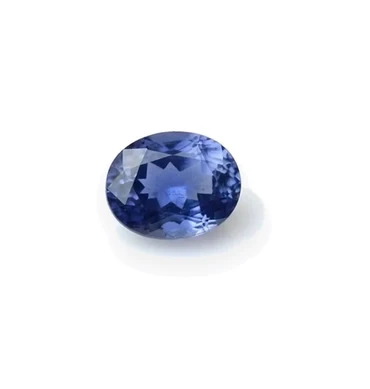
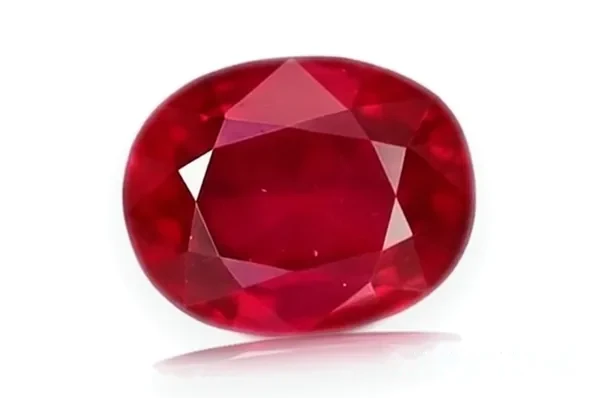
Look for silk, angular colour zoning and small crystals. Curved growth lines with bubbles suggest a flame-fusion synthetic; bubbles with swirls suggest glass. In ruby, coloured flashes along the cracks and flattened bubbles inside them point to lead-glass filling. A perfect "pigeon blood" ruby at a low price is nearly always filled or synthetic. Our ruby guide goes deeper.
Zamurd (emerald, panna)
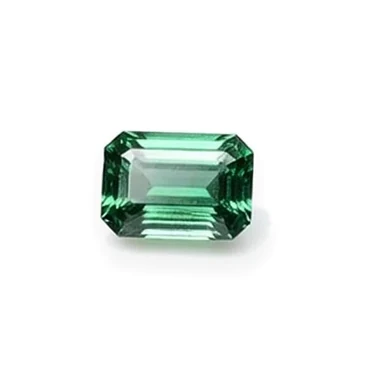
A natural emerald normally has inclusions: fingerprints, crystals and sometimes three-phase inclusions. Oiled fractures can carry a slightly different sheen, and resin-filled ones may flash colour as you tilt the stone. A clean, deep green emerald at a low price is probably synthetic (hydrothermal ones can show chevron growth lines), glass or dyed quartz. See how to identify a natural emerald.
Pukhraj (yellow sapphire)
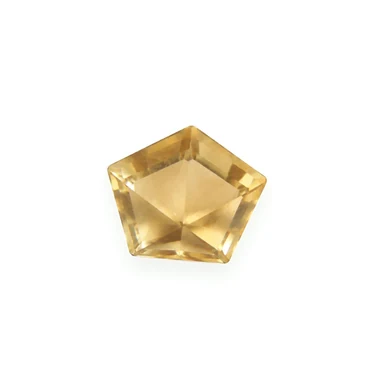
Everything said about corundum above applies here. Fake pukhraj is also commonly citrine, yellow topaz, yellow glass or yellow cubic zirconia. Citrine feels lighter in the hand, glass shows bubbles, and cubic zirconia throws strong rainbow flashes that sapphire does not. You can compare with genuine stones in our pukhraj collection.
Opal
Natural opal shows patches of colour that move and roll as you turn it. Synthetic opal often has a too-regular "lizard skin" or columnar pattern, and glass imitations have fixed, glittery flecks. Always look at the side: a thin slice of opal glued onto a dark backing is a doublet, or a triplet if it also has a clear cap on top, and it should cost far less than solid opal. See the opal collection.
Moti (pearl)
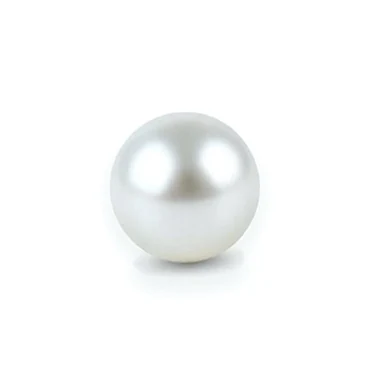
Rub the pearl gently along the edge of your front teeth. Natural and cultured pearls feel slightly gritty because of their layered nacre; most imitations feel smooth. Under a loupe, real nacre shows fine wavy ridges, while imitation coatings look grainy and often flake around the drill hole.
Feroza (turquoise), lapis lazuli and aqeeq (agate)
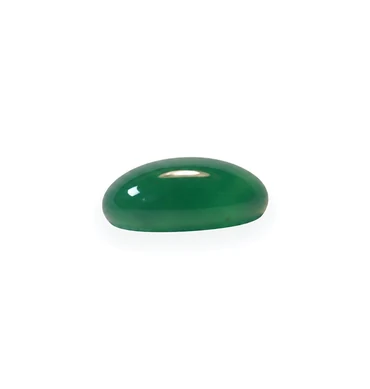
Opaque stones are often dyed, stabilised, rebuilt from powder and resin, or swapped for dyed howlite or plastic. Colour pooling in cracks and pits is a sign of dye. Natural feroza has irregular colour and matrix, while reconstituted material looks too even. Natural lapis lazuli carries metallic pyrite flecks that sparkle under the loupe instead of looking painted on. Natural aqeeq shows soft, slightly wavy bands.
Tests to leave alone
- Scratch tests. They can scar a genuine stone for good, and hard imitations like cubic zirconia and synthetic corundum pass them anyway.
- Flame or heat tests. Heat can crack emerald and opal, change the colour of some stones and damage glass-filled ruby, and it tells you nothing a loupe would not.
- Acids, bleach or strong solvents. These can ruin pearl, turquoise, lapis and other soft or porous stones.
- Tricks from social media. "Water tests", "hair tests" and the like prove nothing either way.
When a lab report is worth it
Get an independent gemmological report stating the species, whether the stone is natural or synthetic, and any treatment, when:
- the stone costs enough that a mistake would really hurt;
- you are buying for astrological wear, where tradition insists on a natural stone;
- the seller is charging extra for a famous origin like Kashmir, Burma or Colombia;
- the stone is sold as unheated or untreated, which pushes the price up.
If you would like a lab report on one of our stones, tell us before you order. How we check stones ourselves is explained on the authenticity page.
What "natural" means at Authentic Gems
We sell natural loose gemstones only. Every stone is checked by us before it is listed, photographed as it is, priced on its own, and any treatment normal for that gem, such as heating or oiling, is stated when known. Pay by Cash on Delivery anywhere in Pakistan; in Karachi parcels usually arrive in 1 to 2 working days, and in other major cities in 2 to 4. You open the parcel and check the stone in front of the rider before you pay, and our 7-day return policy covers you if a stone is not as described. Browse the full collection, or message us about any stone before you order.
References