In this article

Written by Sameer
Reviewed on
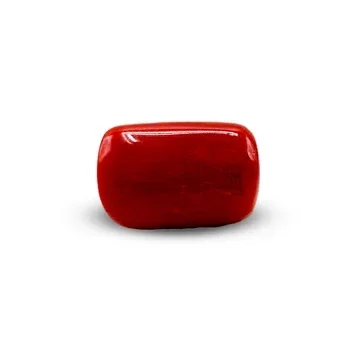
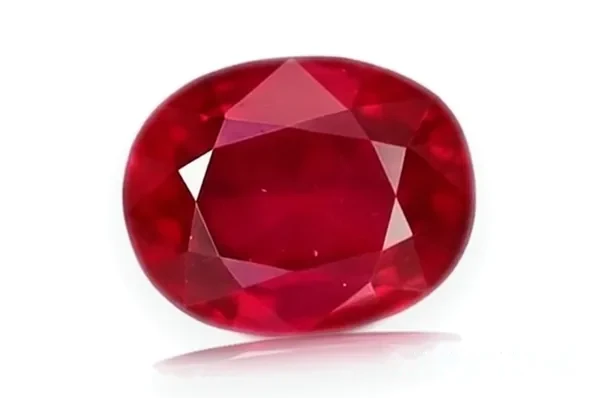
In one line: ruby is red corundum, coloured by traces of chromium, and almost all of its value sits in the colour. What you are hoping to see is a vivid red, pure or leaning slightly purple, at a medium-dark tone. Clarity, cut, size and treatment come next. Heating is everyday practice in the trade and perfectly fine when the seller tells you about it. Lead-glass filling is something else entirely, and a filled stone should never carry a ruby price. Keep those few points in your head and you will avoid most of the mistakes we see buyers make.
Across Pakistan you will hear the stone called yaqoot, the everyday Urdu word, and manik, which comes from the Sanskrit manikya and is the name astrologers use. In this guide we go through what a ruby is, how to judge one properly, where rubies are mined, which treatments you need to ask about, how to tell a real stone from garnet, spinel or glass, and how manik is worn in the Vedic tradition.
The basic facts
| Property | Ruby |
|---|---|
| Mineral | Corundum (aluminium oxide) |
| What makes it red | Traces of chromium |
| Mohs hardness | 9, second only to diamond |
| Specific gravity | About 4.0, so it feels heavy for its size |
| Cleavage | None, which is why it wears so well |
| Fluorescence | Often glows red under UV, most strongly in low-iron stones |
| Usual treatment | Heating; sometimes flux healing |
| Urdu and trade names | Yaqoot, manik |
It helps to know that ruby and sapphire are the same mineral. Corundum is called ruby only when it is red; every other colour is sapphire. Blue corundum is neelam, yellow corundum is pukhraj, and the pale pinkish-red stones fall in a grey area where the trade argues over whether to call them pink sapphire or ruby. The same chromium that colours a ruby also makes many of them fluoresce under ultraviolet light, and that is a big part of why a good stone seems to glow from within when you hold it near a window.
Judging a ruby, most important first
1. Colour sets most of the price
Gemmologists break colour into three parts. Use the same words when you are comparing stones at a counter and you will find sellers take you more seriously:
- Hue: the shade of red. Pure red and slightly purplish red are the ones people pay for. Orange-red and brownish-red sit lower.
- Tone: how light or dark the stone is. Medium to medium-dark is the sweet spot. Go too dark and it looks like garnet under indoor light; too light and it reads as pink.
- Saturation: how strong the colour is. A vivid red with no grey or brown dulling it is what separates a fine ruby from a commercial one of the same weight.
Sooner or later someone will describe a stone to you as pigeon blood. The term means a vivid, pure red with strong fluorescence, and it was first tied to the finest Burmese rubies. A few labs now use it as a formal colour grade, but in ordinary selling it gets attached to far too many stones. Hear it as a claim you still need to check, not as a guarantee.
2. Clarity: some inclusions are normal
A ruby with nothing inside it is very rare. Fine needles of rutile (the trade calls them silk), small crystals, healed fractures that look like fingerprints and straight bands of colour are all signs of a natural stone. A light veil of silk can actually soften and spread the red across the face. What really cuts value is anything that stops light or weakens the stone: open cracks running to the surface, heavy clouds, big dark crystals. A ruby that is clean to the eye and weighs more than about two carats is genuinely hard to find.
3. Cut
A lot of rubies are cut at the mine country with weight in mind, not brightness. When you look at the face of the stone you want even colour and sparkle all over. Watch for a washed-out, see-through patch in the centre (a window) and for large dead, dark zones (extinction). We often find a smaller, well-cut ruby looks better on the hand than a heavier stone that is lumpy and deep.
4. Carat weight
Rubies are priced per carat, and the rate itself goes up as the stones get bigger, because large crystals with good colour and clarity are scarce. That is why two one-carat rubies usually cost far less together than one two-carat ruby of the same grade.
Where the world's rubies are mined
Origin does affect price, but only when a recognised gem laboratory puts it on a report. A seller telling you "this is Burmese" proves nothing on its own.
| Source | What the stones tend to look like | How the market treats them |
|---|---|---|
| Myanmar (Mogok; Mong Hsu) | Vivid red, strong fluorescence, fine silk | The old benchmark; fine unheated Mogok stones are collector pieces |
| Mozambique | Bright red to purplish red, often quite clean | The biggest source today and very good value for the colour |
| Madagascar | Good red, usually heated | Everything from commercial to fine |
| Afghanistan (Jegdalek) | Purplish red in marble, with a glow | Popular in this region; fine pieces are rare |
| Pakistan (Hunza Valley; Azad Kashmir) | Pinkish to purplish red set in white marble | Mostly cabochon and specimen material; facet grade is uncommon |
| Sri Lanka | Lighter, pinkish, lively red | Well liked for jewellery |
| Thailand / Cambodia | Darker, a little brownish, weaker glow | Commercial |
What this means at the counter: a fine Mozambique ruby will beat an average Burmese one every time. Judge the stone in front of you, not the country printed beside it.
Treatments you should ask about
- Heating. Brings up the colour and dissolves some of the silk. It is permanent, standard across the trade and fine as long as it is disclosed. A ruby whose report says there is no indication of heating sells for clearly more.
- Heating with flux. During heating, a flux can melt into small fractures and seal them with a glassy residue. Minor flux healing is acceptable when disclosed, and lab reports normally note the residue.
- Lead-glass filling. Very cracked, low-grade corundum is soaked with high-lead glass so it looks like a clear red stone. These composites are delicate: a jeweller's torch, lemon juice or household cleaners can damage them, and they are worth a small part of what a real ruby costs. Under a loupe you may see flattened gas bubbles in the cracks and a blue or orange flash along them. Astrologers do not accept them.
- Synthetic ruby. Man-made ruby has been around since the early 1900s, when the Verneuil flame-fusion method arrived. Flame-fusion stones show curved growth lines and round gas bubbles. Flux-grown and hydrothermal synthetics are much harder to catch and may need a lab.
At Authentic Gems we state the treatment on the listing whenever it is known. If you need certainty about heating, an independent laboratory report is the way to get it, and we are happy to talk it through before you order.
Real ruby or not? A checklist
- Daylight first. A natural ruby usually has slightly uneven colour and lights up near a window. Glass tends to look flat.
- Use a 10x loupe. Straight silk, angular colour zones and small crystals suggest natural. Round bubbles and curved lines suggest glass or a flame-fusion synthetic.
- Look into the cracks. Coloured flashes and trapped bubbles inside fractures point to lead-glass filling.
- Weigh it in your hand. Corundum is dense. Glass of the same size feels lighter and warms up faster against your skin.
- Shine a UV torch. Many natural rubies glow red. Treat this as a hint only, because some synthetics glow even more.
- Be honest about the price. A big, vivid, clean ruby going cheap is nearly always filled, synthetic or a different stone.
The usual lookalikes
In local bazaars garnet and red spinel are sometimes passed off as yaqoot. Both are lovely stones and worth owning, but under their own names. Garnet is softer, around 7 to 7.5, and does not show the red-and-pinkish shift that ruby shows as you turn it; spinel shows no shift at all. To separate them with confidence you need refractive index readings or a lab. More home checks are in our guide to real and fake gemstones, and how we inspect our own stones is set out on the authenticity page.
What pushes a ruby's price up
Few gems have such a wide price spread. A dark, included commercial ruby and a vivid, clean, unheated one of the same weight live in completely different worlds. Roughly in order of effect, the price climbs with:
- a purer, stronger red;
- better clarity, above all an eye-clean stone;
- more weight, since the per-carat rate rises with size;
- no heating, confirmed by a lab report;
- a well-documented origin;
- a good cut that spreads the colour evenly.
Each stone in our ruby collection is listed on its own with its own price, so you can divide the price by the carat weight and see the per-carat rate for yourself.
Manik in Vedic tradition
Vedic astrology links manik with Surya, the Sun, which stands for authority, energy, self-belief and the father. It is traditionally suggested for those born under Simha (Leo), the sign the Sun rules, and astrologers sometimes advise it for Mesh (Aries), Dhanu (Sagittarius) and Vrishchik (Scorpio) after looking at the whole chart. These are beliefs, and no effect is guaranteed.
| Custom | What tradition says |
|---|---|
| Finger | Ring finger of the working hand |
| Metal | Gold or copper; panchdhatu is also used |
| Day | Sunday morning, near sunrise |
| Weight | Often 3 carats or more, as the astrologer advises |
| Setting | Open back so the stone touches the skin |
| Mantra | "Om Suryaya Namah" |
Tradition calls for a natural stone, so glass-filled and synthetic rubies are ruled out. Our 7-day return policy gives you time to check the stone with your astrologer. Keep it unused and unset until you are sure, because returns have to come back in original condition. For other signs, see gemstones by rashi.
Caring for a ruby
A natural or heated ruby is about as tough as wearable gems get. Warm water, a drop of mild soap and a soft brush are all it needs. A glass-filled stone is a different matter: hot water, acids like lemon juice and the heat of a jeweller's torch can all attack the filler. That alone is reason enough to know exactly what you are buying. The full routine is in our gemstone care guide.
Buying a ruby from Authentic Gems
We sell natural loose rubies only. Every listing is one stone, photographed as it is, with its known treatment stated. If you love red but want to spend less, have a look at our garnet too. We are in Karachi, so orders to Karachi (DHA, Clifton, Gulshan-e-Iqbal and the rest of the city) usually arrive in 1 to 2 working days; Lahore, Islamabad and other major cities usually take 2 to 4. Parcels go by insured, tracked courier with Cash on Delivery and a flat Rs. 500 delivery charge, and you can open the parcel and check the stone in front of the rider before you pay. If you have a question about a particular ruby or want to talk about a silver ring setting, message us on WhatsApp.
References