
In this article

Written by Sameer
Reviewed on
Here is the thing most sellers won't tell you: Yemeni and Iranian aqeeq are the same mineral, chalcedony. In Pakistan, "Yemeni" normally means a translucent stone that is evenly red or liver-coloured, and "Iranian" normally means a stone that was cut, and often engraved, in Iran. There is no home test that proves origin, so judge the colour, the glow, any treatment and the finish instead. Keep our natural aqeeq stones open in another tab as you read.
What the two names really mean in the trade
Aqeeq is the Urdu and Arabic word for agate and its close cousin carnelian. Both are chalcedony, a very fine-grained form of quartz. Chemically, an aqeeq from Yemen is no different from one from Iran, Brazil or India. What changes from one source to the next is colour, translucency, banding, and how the stone has been cut and finished.
In shops across Pakistan, the two labels get used quite loosely:
- Yemeni aqeeq generally means a translucent stone with even colour, in red, deep liver-red (the colour people call kabdi), orange-red, honey or almost white, with little or no banding you can see. Yemen has been famous for this material for a very long time, and it holds a special place in Muslim tradition.
- Iranian aqeeq generally means a stone cut, polished and often engraved in Iran, especially in the workshops around Mashhad. The rough may have come from any of several countries. The colours vary widely, and engraved stones carrying names, duas or verses are what these workshops are known for.
So the honest place to start is this. These names describe a look and a reputation as much as a proven mine. Neither one, by itself, tells you whether the stone is natural or untreated.
A word on the aqeeq tradition
Aqeeq is one of the most respected ring stones in the Muslim world. Several narrations, particularly in Shia collections, recommend wearing an aqeeq ring, and plenty of Sunni families value it too. Yemeni aqeeq is mentioned with special honour in some of these narrations, which goes a long way to explaining why the Yemeni name carries so much weight here. We share this as tradition and don't give rulings. Our page on aqeeq for men and our Islamic gemstones hub go into the custom in more depth.
Telling Yemeni-style from Iranian-style aqeeq
You can't prove at home where an agate was mined. Even gem labs usually can't certify the country of origin for chalcedony. What you can judge is whether a stone has the look the trade links with each name, and whether it is natural.
Colour and glow
Hold the stone up to daylight or shine your phone torch through it. The classic Yemeni look is a stone that lights up evenly from the inside, with a rich red or liver colour that doesn't break into stripes. A lot of stones sold as Iranian are more opaque, more strongly banded, or come in a broader mix of shades. If a stone looks flat and painted, with no inner glow at all, take a closer look whatever name it is sold under.
Bands and pattern
Good Yemeni-style carnelian has soft, cloudy colour with faint banding or none. Strong, sharp parallel bands tell you it is banded agate, which is a lovely stone in its own right; sulemani aqeeq is the banded kind everyone knows. If a trader calls a boldly striped stone "Yemeni", he is using the word loosely.
Cut and engraving
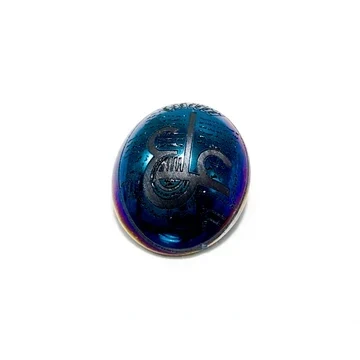
Iranian workshops are known for neat calibrated ovals, flat-topped ring stones and fine hand engraving. Look at the engraving with a loupe or your phone's zoom. Hand-cut letters vary a little in depth and have crisp edges. Machine or laser engraving looks uniform, and sometimes shallow or frosted. Either way, engraving tells you about the workshop, not the mine.
Age and wear
Old Yemeni stones handed down in families often have softly worn edges and a mellow polish. Age and a known history add to a stone's story and its value, but neither can be confirmed from a photograph.
The question that matters more: natural or dyed?
For anyone buying, natural versus treated is far more important than Yemen versus Iran. Most agate in the world comes out of the ground pale grey or white, and is dyed or heated to get strong red, black, green or blue. A great deal of the "Yemeni" red in the bazaar is dyed agate from somewhere else entirely.
- Look into the cracks and bands. Dye collects in fractures and porous layers, so they look darker than the rest of the stone.
- Hold it against the light. Natural carnelian usually shows a slightly uneven, cloudy red. Dyed stones can look unnaturally even, or have a purplish or brownish tint.
- Watch for glass. Glass aqeeq often has tiny round bubbles and swirl lines, and it feels lighter and warmer in the hand.
Our guide to spotting dyed and glass aqeeq takes you through these checks in more detail. Heating to deepen the red is an old and accepted practice. Dyeing goes further and should always be disclosed.
What decides the cost of an aqeeq
We don't publish price lists, and every stone in our shop carries its own price. These are the things that move the price of any aqeeq, Yemeni-style or Iranian-style.
Colour
A deep, even red or liver-red with a warm glow is the colour most men want for a ring. Pale, patchy or brownish stones cost less. Unusual natural colours in fine quality can be valued too.
Translucency
A stone that lets light through evenly and glows is worth more than an opaque one of the same colour.
Natural or treated
Natural colour costs more than heated colour, and heated costs more than dyed. After colour itself, this is the biggest single factor, and the one sellers hide most often.
Clarity and finish
Few cracks, no chips and a high, even polish all add value. A well-shaped, symmetrical stone that sits flat is also easier to set and more comfortable to wear.
Size
Big clean stones are harder to come by, and men's ring stones tend to be medium to large, which shows up in the price.
Engraving
Careful hand engraving of a name, dua or verse takes real skill and time, so it adds to the cost. Machine engraving adds less.
Reputation and history
A well-regarded Yemeni-style stone, or an old family piece with a known past, carries a premium. Just remember the label itself can't be tested, so pay for what you can actually see.
If you want to shop by budget, use our shop filters:
So which should you buy?
Buy the stone, not the label. For the classic look, choose a translucent, evenly red or liver-coloured stone with natural colour, little banding and a good polish. If you want an engraved ring stone, an Iranian-style engraved piece is a fine choice; just judge the engraving and the stone on their own merits. If your family follows a particular tradition about Yemeni aqeeq, ask your scholar or your elders what they consider important, and then hold the stone in front of you up against that.
Other agates worn as ring stones in Pakistan include red agate (surkh aqeeq) and black agate, and our red agate buying guide makes a good next read. Our whole range of aqeeq stones is online, each one photographed on its own.
Setting and care
Agate is tough, around 6.5 to 7 on the Mohs scale, and fine for daily wear. Most men have aqeeq set in silver, and once you have picked your stone we can arrange a silver ring setting over WhatsApp. Clean it with mild soapy water and a soft brush, and keep dyed stones away from strong chemicals, which can lift the colour.
Buying aqeeq from Authentic Gems
Every stone we sell is natural, photographed on its own and listed with its weight and any treatment we know about. We confirm your order by phone or WhatsApp and dispatch within 1 working day by insured, tracked courier. Karachi orders usually arrive in 1–2 working days, Lahore, Islamabad, Rawalpindi and the other major cities in 2–4, and smaller towns within about 7; see our delivery details. With Cash on Delivery you open the parcel and check the stone in front of the rider before paying, and our 7-day returns cover a change of mind on unused stones. You are welcome to have any stone tested at an independent lab. Read how we check every gemstone for the details.
If you aren't sure a stone has the Yemeni look you are after, message us on WhatsApp and we will show it to you in daylight before you order.
Shop the stones: aqeeq · red agate · sulemani agate · black agate.
The beliefs mentioned on this page are traditions, shared for interest. They are not promised outcomes, religious rulings or medical advice.
References