In this article
- Aqeeq prices in our own listings
- Which stone we mean by aqeeq
- Six things that decide what an aqeeq costs
- Per carat, per ratti, per stone: putting quotes on one scale
- Comparing two aqeeq quotes, step by step
- Shortlisting by budget with the shop filters
- The ring is a separate cost, and fairly so
- Aqeeq in tradition
- Buying aqeeq from Authentic Gems
- خلاصہ

Written by Sameer
Reviewed on
Walk down any stone market and ask the price of an aqeeq at three counters. The first man gives you a rate per ratti, the second names a figure for the whole stone, and the third quotes you a finished chandi ring. All three may be honest. The trouble is that you cannot hold those numbers side by side and see which stone is the better buy. This guide is about fixing that, so you can tell a fairly priced aqeeq from one that is priced on a good story.
We start with our own price table for loose aqeeq, then go through what really pushes a price up or down, how per-carat and per-ratti quotes fit together, and how to use the budget filters to build a shortlist online.
Aqeeq prices in our own listings
The table below is drawn from the aqeeq we actually have listed. It shows the lowest, typical and highest price per stone, and the same spread worked out per carat and per ratti. We keep rupee figures out of the article text because they date quickly; the table updates itself each month instead.
| Weight | Weights | Stones | Per carat | Per ratti |
|---|---|---|---|---|
| All Aqeeq in stock | 13.6 – 16.9 ct | 4 | Rs 180 – Rs 210 | Rs 160 – Rs 190 |
Look at the per-carat and per-ratti columns first and the per-stone column last. A big, ordinary stone and a small, fine one can carry the same total price and still be very different value for money. The monthly gemstone price guide lays out every other stone the same way.
Which stone we mean by aqeeq
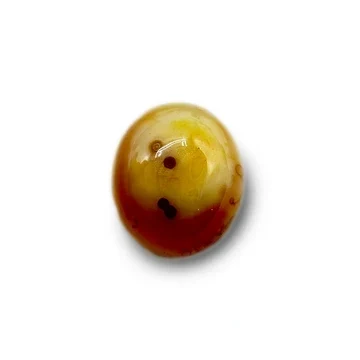
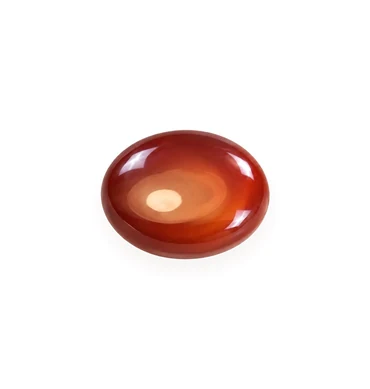
When a Pakistani buyer says aqeeq, he nearly always means carnelian: the orange to blood-red form of chalcedony, which is a fine-grained quartz. The word gets stretched to banded agates of other colours too, which is where names like black aqeeq, Sulemani aqeeq and Shajri aqeeq come from. Here we are talking about the red and orange stone, the one most people picture, and the one you will find in our aqeeq category.
Almost every quote you hear will carry one of two labels: Yemeni or Iranian. These describe a look and a reputation as much as a source, and for any single stone they are very hard to prove without paperwork that goes back years. We explain how people tell the two apart in Yemeni vs Iranian aqeeq. When it comes to price, treat the label as one point on the list, not the reason for the whole number.
Six things that decide what an aqeeq costs
1. Colour
Colour carries most of the price. At the top is a deep, even red with a touch of warmth in it. Clean orange and honey tones sit in the middle, and brownish or blotchy stones come lower down. How evenly the colour sits matters nearly as much as how deep it is. A stone that is rich red at one end and washed out at the other will always be priced below one that keeps its colour right across the face.
2. How it glows against the light
Hold a good aqeeq up to a window and it lights up from the inside, like a coal in a fire. A poor one stays flat and opaque. In the bazaar this quality is called pani, or water. Two stones of the same shade can be far apart in price simply because one glows and the other does not. This is also the easiest point to check for yourself, since a short video against daylight shows it straight away.
3. Natural colour, heated or dyed
A lot of the carnelian in world trade starts life as pale agate that has been heated or dyed red. Heating is an old practice and the colour it gives is stable. Dye can look striking, but it tends to collect along cracks and bands, and a dyed stone is worth much less than one with natural colour. An honest seller tells you which one you are getting. Our guide to spotting dyed and glass aqeeq shows you what to look for.
4. Clarity and finish
Hairline cracks, chips around the girdle and small pits on the surface all bring the price down, and on a ring stone that will take daily knocks they matter even more. A glassy polish without any orange-peel texture tells you the cutter took his time. On engraved stones, look closely at the edges of the letters. Sharp, even cuts cost more than shallow or wobbly ones, and they deserve to.
5. Size and shape
Aqeeq is not a rare mineral, so the rate per carat does not climb with size the way it does for yaqoot or neelam. What does cost more is a large stone that holds an even colour from edge to edge, because big pieces of fine material are harder to find. Shape plays its part as well. An oval cabochon that drops neatly into a standard men's ring mount is easier to sell than an odd shape that needs a setting made from scratch.
6. Engraving and age
Engraved stones, or naqsh, carry the cost of skilled hand work on top of the stone itself. Older stones with real wear and age can fetch more from collectors, but "old" is an easy word to say and a hard one to prove. If age is part of what you are being charged for, ask what backs it up.
Per carat, per ratti, per stone: putting quotes on one scale
Most bazaars in Pakistan quote gemstones by the ratti. The standard gemstone ratti is 0.91 carat, about 0.182 g. Some jewellers use the smaller sunari ratti instead, about 0.1215 g or roughly 0.61 carat, so always ask which one a quote is based on. A per-ratti rate on the sunari scale sounds cheaper even when the total comes to exactly the same.
The working is short:
- Ratti (standard) = carats ÷ 0.91
- Price per ratti = price per carat × 0.91
- Carats = grams × 5
That makes a 13.60 carat aqeeq about 14.9 standard ratti, and a 16.50 carat stone about 18.1 ratti. If you would rather skip the maths, our carat to ratti converter does it for you.
Cheaper aqeeq, especially ready-cut ring stones, is often sold by the piece rather than by the ratti. There is nothing wrong with that, but turn the price back into a per-carat figure yourself before you set it against a per-ratti quote. It is the only way to find out whether the bigger stone at one shop is really cheaper than the smaller stone at the next.
Comparing two aqeeq quotes, step by step
With two prices in front of you, go through these points before you choose.
- Is the unit the same? Bring both to price per carat, and confirm which ratti the seller used.
- Is the weight for the stone alone? It should be the loose stone. A weight taken with the stone in a ring includes the silver and tells you nothing.
- Natural or treated? A dyed stone and a natural-colour stone are different things. Ask for the answer in writing.
- Stone or ring? A ring price bundles silver by weight, making charges and setting. Ask what the stone costs on its own.
- Is it the actual stone? A picture of "something like this" is useless. Ask for a photo and a short daylight video of the stone you will receive.
- What if it is wrong? A return window, and the chance to check before you pay, have real value.
When one quote is far under the rest for a stone that looks the same, the usual reasons are dye, glass, a different ratti, or a weight taken in the mount. Our general guide to checking a gemstone before you buy runs through the warning signs.
Shortlisting by budget with the shop filters
The shop filters let you narrow stones by price. Think of the bands as a starting point, not a quality grade. A well-chosen stone in a lower band is often better value than a weak one further up.
- The lowest price band: smaller ring stones and everyday aqeeq. Look for even colour and at least some glow, and be ready to accept small surface marks.
- The second band: where most men end up for a ring stone. Expect better colour, a cleaner polish and a size that fills a standard mount.
- The third band: bigger stones, a deeper and more even red, strong glow, or engraving.
- The top band: unusual size, outstanding colour or collector pieces. At this level, ask for testing.
The filters work across every category, so use them together with the aqeeq page. Two stones in our current listings show how price follows weight and colour: a 13.60 carat Yemeni carnelian and a larger 16.50 carat Yemeni aqeeq. Work out their per-carat rates, not just their totals.
The ring is a separate cost, and fairly so
Most people buy aqeeq to wear in a silver ring, and that ring has its own price. Silver is charged by weight, the karigar charges for his labour, and setting a cabochon properly takes care. When you see an aqeeq ring going very cheap, ask how much of that figure is actually the stone. Our guides to aqeeq ring prices and silver rings with stones break the cost down, and the stone setting service page explains how we set a stone you buy from us.
One piece of advice we give at the counter all the time: pick the stone first and the ring second. A good stone in a plain, well-made mount looks better and lasts longer than an average stone in a heavy, fussy ring.
Aqeeq in tradition
Many Muslim families in Pakistan wear aqeeq set in silver, often on the right hand, and the stone has a place in narrations and in long-standing custom. Practice differs from one community to another, and for questions of religious practice it is best to ask a scholar you trust. Our page on aqeeq for men describes the silver ring tradition, and Islamic gemstones covers the wider group. None of this changes how a stone should be priced. Colour, glow and honesty about treatment still decide what it is worth.
Buying aqeeq from Authentic Gems
Each aqeeq we list is photographed by itself, as it is, and priced by itself, with the weight of the loose stone. If a stone's colour has been enhanced, we say so. If you would like a second opinion, you are welcome to have the stone tested independently.
We work from Karachi. Once we have confirmed your order by phone or WhatsApp, it goes out within one working day by insured, tracked courier. Here in Karachi, from DHA and Clifton to Gulshan-e-Iqbal and North Nazimabad, it usually reaches you in 1–2 working days. Lahore, Islamabad, Rawalpindi and the other major cities usually take 2–4 working days, and smaller towns up to about seven. Delivery is a flat Rs. 500 per order. With Cash on Delivery you open the parcel in front of the rider, look at the stone, and only then pay. If it is not what you expected, you have 7 days to send it back under our return policy. To ask about a particular stone, message us on WhatsApp or write to hello@authenticgems.pk.
Still deciding? The red agate and Sulemani agate categories are worth a look, and which gemstone to wear helps narrow things down.
Shop the stones: aqeeq.
The beliefs described here are traditions, shared for interest. They are not guaranteed outcomes, religious rulings or medical advice.
References