In this article

Written by Sameer
Reviewed on
Traditional belief vs gemmology: anything on this page about luck, protection, planets, healing or religious tradition describes traditional and cultural beliefs — not proven effects, religious rulings or medical advice. A stone's identity, hardness, treatment and origin are gemmology, which a lab can test; the references at the end of the page cover that side.
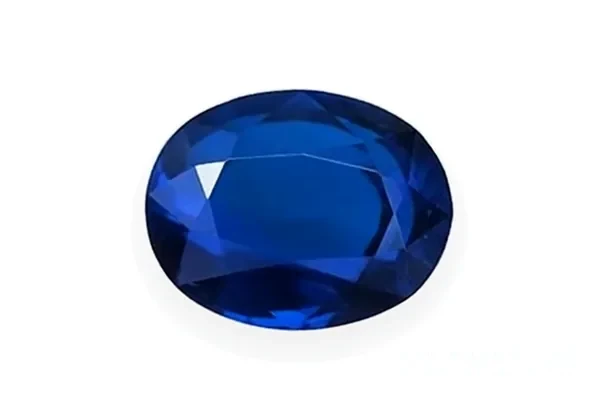
In brief: Vedic astrology gives neelam (blue sapphire) to Shani, the planet Saturn, and the tradition credits it with discipline, focus and protection. It is also regarded as the strongest of the planetary stones, which is why it is supposed to be worn only when an astrologer recommends it. The customary way is a silver, white gold or panchdhatu setting, on the middle finger of the hand you work with, first put on on a Saturday. As a mineral it is natural blue corundum with a hardness of 9, and the stone has to be real: glass, synthetic or glass-filled sapphire has no place in the custom at all.
We get more questions about neelam than almost any other stone, and the advice people have already heard is usually contradictory. So here we keep two things apart: what the tradition says, and what we actually check when a sapphire is on the counter. Then we cover buying one sensibly in Pakistan.
The basic facts
| Question | Answer |
|---|---|
| What is it? | Blue corundum (aluminium oxide) coloured by iron and titanium, the same mineral as ruby (yaqoot) |
| Hardness | 9 on the Mohs scale; only diamond is harder |
| Specific gravity | Around 4.0, so it feels weighty for its size |
| Main sources | Sri Lanka, Madagascar, Myanmar, and historically Kashmir; also Pakistan, Afghanistan, Thailand and Australia |
| Usual treatment | Heating, which is common and acceptable when it is disclosed |
| Vedic planet | Shani (Saturn) |
| Customary finger and metal | Middle finger; silver, white gold, platinum or panchdhatu |
Sapphire is very hard and has no cleavage, so a well-cut stone holds its polish for generations and is perfectly practical in a ring you wear every day. Where it was mined makes a big difference to the price, and we explain that in where blue sapphire comes from. Most of the stones in our blue sapphire collection come from Sri Lanka and Madagascar.
What neelam is believed to do
In Jyotish, Saturn rules discipline, patience, hard work, karma and results that take time. A neelam that suits the wearer is traditionally believed to:
- Build focus and discipline. This is why students, professionals and business people looking for steadiness often wear it.
- Protect. The tradition treats it as a guard against nazar, accidents and people who wish you harm.
- Help through Saturn's hard periods, such as the seven-and-a-half-year Sade Sati, provided the astrologer sees support for it in the chart.
- Work fast. Neelam is said to show its effect, good or bad, sooner than other stones. That reputation is exactly why nobody sensible wears it on a whim.
- Suit Saturn's professions: law, engineering, construction and property, mining, metals and public service.
All of this belongs to a belief system. None of it is a medical, financial or guaranteed outcome, and Authentic Gems does not sell any stone as a cure or a promise.
Who it is usually suggested for
An astrologer normally recommends neelam when Saturn rules the chart or sits well in it. The common guidance by moon sign (rashi) looks like this:
| Guidance | Rashi (moon sign) |
|---|---|
| Most often suggested (Saturn rules the sign) | Makar (Capricorn), Kumbh (Aquarius) |
| Often considered (Saturn is friendly or a yogakaraka) | Vrishabh (Taurus), Mithun (Gemini), Kanya (Virgo), Tula (Libra) |
| Generally avoided unless the chart gives a clear reason | Mesh (Aries), Kark (Cancer), Simha (Leo), Vrishchik (Scorpio), Dhanu (Sagittarius), Meen (Pisces) |
The moon sign is just one piece. A careful astrologer also weighs the ascendant, the running planetary period (dasha) and Saturn's strength across the whole chart. If you are not sure of your rashi, start with gemstones by rashi.
Trying it first
The custom is to test neelam before committing. The stone is kept against the skin for a few days, usually somewhere between three and seven, while you pay attention to sleep, health, mood and how things go generally. A calm or good spell means the stone stays. An unusually troubled one means it is put away.
One practical point. Our 7-day return policy gives you time after delivery to make up your mind, but a returned stone has to be unused and in its original packaging. Talk to your astrologer about how to handle the trial, and don't have the stone set or altered until you are certain.
The customs for wearing it
| Custom | Traditional practice |
|---|---|
| Finger | The middle finger, Saturn's finger, of the working hand; for most people that is the right |
| Metal | Silver, white gold, platinum or panchdhatu; many traditions keep yellow gold away from Saturn |
| Day and time | First worn on a Saturday, often in the evening or in the Saturn hora |
| Setting | Open at the back so the underside of the stone sits on the skin |
| Weight | Astrologers often suggest roughly 2–5 carats depending on the person; for plain jewellery, let budget and design decide |
| Preparation | Rinsing the ring in raw milk or clean water (Ganga jal in Hindu practice) before wearing it, while reciting the Shani mantra, "Om Sham Shanicharaya Namah" |
Most of our customers have neelam set in a silver ring or a pendant. If you want a custom silver setting, message us on WhatsApp and we can talk it through.
Checking that a neelam is real
- Look inside. Under a 10x loupe, natural sapphire often has fine rutile needles (silk), small crystals or healed fractures that look like fingerprints. A spotless stone at a low price is usually synthetic.
- Look at the colour. Natural stones often show straight bands or angular patches of stronger and paler blue. Flame-fusion synthetics show curved lines, and glass looks flat and lifeless.
- Feel it. Corundum is dense and stays cool. A glass stone of the same size is lighter and warms up quickly in your hand.
- Ask about treatment. Disclosed heating is normal. Diffusion-treated, glass-filled and synthetic stones must be declared, and none of them is acceptable for astrological wear.
- Get paperwork for the important ones. For astrological neelam, the ideal is an unheated stone with a laboratory report. And never "test" a stone by scratching it.
There are more home checks in real vs fake gemstones, and the way we inspect our own stones is set out on the authenticity page.
What sets the price
Blue sapphire is sold by the carat, and the per-carat rate climbs fast as quality goes up. These are the things that move it:
- Colour. A vivid medium to medium-dark blue with no grey or green in it is the most valuable.
- Clarity. A stone that looks clean to the naked eye costs more.
- Heating. A report confirming no heat adds a substantial premium.
- Origin. Documented Kashmir and Burmese stones sit at the top, Sri Lankan stones are well respected, and Madagascan stones often give the best value.
- Size. The per-carat rate rises with weight.
Every listing in our neelam collection shows the price for that one stone. And if someone offers you "Kashmiri neelam" at an everyday price, be very doubtful.
Looking after it
Sapphire itself is tough; the setting is usually what gives out first. Take the ring off for heavy work and sport. Clean it in lukewarm water with a little mild soap and a soft brush. Keep it apart from softer stones such as opal or pearl (moti), which it will scratch. If you wear it daily, have the claws looked at now and then. Our gemstone care guide has more.
Buying neelam from Authentic Gems
We sell natural blue sapphire and nothing else under that name. Each listing is one stone, photographed as it is, with its own weight and price, and any treatment we know of is stated. Orders are confirmed with you by phone or WhatsApp and go out within a working day by insured, tracked courier with Cash on Delivery. Karachi usually receives in 1 to 2 working days; Lahore, Islamabad, Rawalpindi, Faisalabad, Multan and Peshawar usually in 2 to 4, and the rest of Pakistan soon after. You open the parcel and look at the stone in front of the rider before paying anything. Browse the blue sapphire collection, or message us with the weight your astrologer suggested.
References