In this article

Written by Sameer
Reviewed on
Quick answer: a genuine ruby is red corundum, hardness 9, so it will scratch glass without a mark on itself. Under a 10x loupe it shows fine natural silk or tiny crystals, never round gas bubbles, and its red is rarely perfectly even. A carat scale helps (ruby is heavier than glass of the same size), but the final word is a lab report that names the mineral and says whether the stone has been glass-filled.
Yaqoot is one of the stones we get asked about most, and one of the stones most often faked. Every few weeks someone in Karachi messages us a photo of a large, glowing red "ruby" they were offered at a very friendly price, and usually it is glass, lab-grown, or cracked ruby patched with lead glass. Here are the checks we use ourselves, in order.
| Check | Natural ruby | Glass or synthetic |
|---|---|---|
| Hardness | Mohs 9; scratches glass and steel | Glass is marked by a steel file |
| Under a loupe | Fine silk, needles, small crystals | Round gas bubbles, or suspiciously flawless |
| Colour | Slightly patchy, pinkish red to deep red | Flat and even, often too bright |
| Weight for size | Dense (SG about 4.0) | Glass feels light; lab ruby weighs the same as natural |
| Asking price | Follows colour, clarity and size | A big clean red stone sold cheaply is glass or glass-filled |
| Paperwork | Lab report names the mineral and any filling | Nothing, or a card printed by the seller |
What "original" actually means
Ruby is the red form of corundum, the same mineral as neelam, and it gets its colour from chromium. At 9 on the Mohs scale it is second in hardness only to diamond. When a buyer asks for an "original" yaqoot, what they mean is a stone that grew naturally in the ground.
Five checks you can do yourself
- Look at the colour in daylight. Good ruby is a strong red with a slight warmth; the most prized shade is the Burmese "pigeon-blood".
- Test the hardness carefully. A ruby will scratch ordinary glass. Glass imitations and softer stones will not, and they pick up scratches on their own facet edges with normal wear.
- Use a loupe. Natural rubies nearly always carry something inside: fine silk-like needles, small crystals, healed fingerprints.
- Hunt for bubbles. Round bubbles, alone or in clusters, point to glass or to glass filling. This is the single most useful sign.
- Get it tested. The checks above catch most fakes. Only a recognised gem laboratory can tell you for certain what you have.
Natural, glass-filled and synthetic: the differences
A glass-filled ruby starts as heavily cracked, low-grade corundum. The cracks are filled with lead glass so the stone looks cleaner and redder. It is cheap and fragile. A synthetic ruby is chemically the same as natural, but grown in a lab, so it is worth only a small part of what a natural stone of similar looks would fetch. Both are common in the market, which is exactly why a lab report matters.
Buying ruby from us
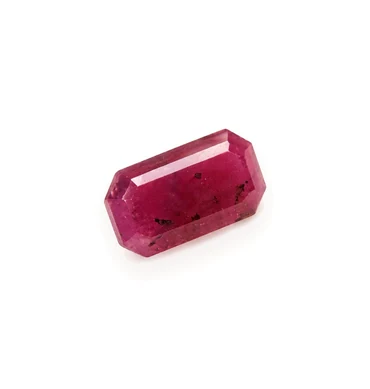
Each Ruby (Yaqoot) we list is a single natural stone, photographed as it is, with its own weight and price. You are welcome to have it checked at an independent lab. If blue is more your colour, compare our Blue Sapphire (Neelam).
Yaqoot in brief
- Other names: ruby, yaqoot; mineral is corundum (aluminium oxide)
- Colour: pinkish red through to deep pigeon-blood red
- Hardness: 9 on the Mohs scale
- Main sources: Myanmar (Burma), Mozambique, Afghanistan, and the Hunza valley here in Pakistan
- Astrology: the stone of the Sun; traditionally linked with Leo and with July as a birthstone
Before you pay: a short checklist
- Get the exact carat weight and origin in writing.
- Understand what sets the price. Colour saturation comes first, and pigeon-blood red carries the biggest premium. After that come clarity, weight, and whether the stone is untreated, heated or glass-filled.
- Ask whether you can have it tested. An honest seller will say yes without hesitation.
- Pay on delivery. Open the parcel in front of the rider, look at the stone, then pay.
- Care for it properly. Ruby takes daily wear well. Clean it with warm soapy water and a soft brush, and keep any glass-filled stone away from ultrasonic cleaners.
What to remember
- No single test settles it. Look at colour, inclusions, weight and treatment together.
- Buy stones listed with their weight, origin and treatment stated plainly, and have them tested if you have any doubt.
- Check the stone in daylight when it arrives, and use the 7-day return window if it does not match the listing.
Common questions
Can I tell if a ruby is original at home?
Up to a point. These checks catch most glass and many fillings. Telling natural from lab-grown, or confirming a stone is unheated, needs a gem lab.
Where can I buy natural gemstones in Pakistan?
We are an online store based in Karachi, selling natural stones with Cash on Delivery across Pakistan and 7-day returns. Our Ruby (Yaqoot) collection is a good place to begin.
Do I need an astrologer before wearing ruby?
If your reason for wearing it is astrological, yes, it is sensible to ask. Our gemstones by zodiac sign page lists the traditional pairings as a starting point.
How long does delivery take?
Karachi orders, whether in DHA, Gulshan-e-Iqbal or North Nazimabad, usually arrive in 1 to 2 working days. Lahore, Islamabad, Rawalpindi and other major cities take 2 to 4 working days, and smaller towns up to about 7. Delivery is a flat Rs. 500 per order, insured and tracked.
Ask us before you buy anywhere
If you have a stone in front of you, or a listing from another seller, send us a daylight photo on WhatsApp through our contact page. We will tell you plainly what it looks like to us and what we would expect such a stone to cost. Buy from us or not, you will know where you stand.
Further reading
- Pukhraj (Yellow Sapphire): Benefits and Who Wears It
- Spotting Real Feroza from Fake
- Buying Gemstones in Pakistan: A Practical Guide
- Ruby or Sapphire: How They Differ
More on yaqoot: browse every Ruby (Yaqoot), come back to this ruby identification guide, compare ruby with sapphire, or find your stone by zodiac sign.
References