In this article

Written by Sameer
Reviewed on
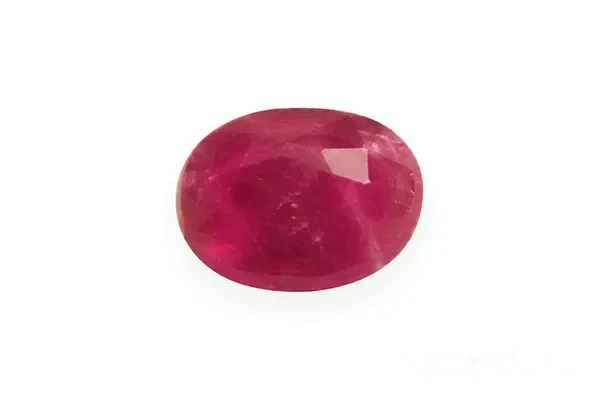
Two yaqoot of the same weight can be miles apart in value, and what separates them is something you can learn to see. Dealers don't grade ruby by carats. They grade the colour, the way the stone glows, what's inside it and what has been done to it. This is how we look at a ruby across the counter.
Colour: hue, strength, darkness
The best rubies are a pure, vivid red, sometimes with a faint purple edge. "Pigeon's blood", the old trade name, refers to that intense red. If a stone leans orange, pink or brown, or is so dark it looks black in low light, it is worth less. Judge saturation (how strong the colour is) and tone (how light or dark) as two separate things. The top stones have strong colour without turning inky.
Glow: what chromium does
Ruby gets its red from chromium, and chromium also makes many rubies fluoresce red in daylight and under ultraviolet. That inner glow is a big part of why a fine ruby looks alive. Marble-hosted rubies, like those from Burma and from the Hunza valley here in Pakistan, are known for it.
Clarity and silk
Nearly every natural ruby has inclusions. Fine needles of rutile, which the trade calls silk, are common, and when they are light they can soften the colour nicely. Big cracks, dark crystals, or cloudiness that kills the sparkle all bring the value down. For most buyers, a sensible target is a stone that looks clean at arm's length.
Treatment: the question that moves price most
- Heating is routine and accepted. It improves colour and clarity, and the result is stable.
- Glass filling is another matter entirely. Low-grade, badly cracked corundum is filled with lead glass. These stones cost far less and don't last as well. Under a loupe you will see blue or orange flashes in the filled cracks, and sometimes gas bubbles.
- Untreated rubies with good colour sell at a premium.
Garnet is the other stone people confuse with ruby. It doesn't fluoresce the same way and often looks darker and browner. Whatever you buy, get the material and treatment in writing.
Cut and toughness
A good cut sends light back evenly across the whole face, without a dull, see-through patch in the middle. Ruby is 9 on the Mohs scale, so it is tough enough for a ring you wear every day.
Price
Colour, treatment and clarity set most of the price, and size multiplies it. Each of our rubies is priced on its own.
Yaqoot in tradition
In South Asian astrology ruby belongs to the Sun (Surya), and people traditionally wear it for confidence, energy and leadership. These are beliefs, and we don't promise any outcome. Decide the weight, metal and finger with your astrologer; our rashi guide sets out the usual pairings.
Before you pay
Make sure the stone is natural, the treatment is in writing and the weight is for the cut stone. We check every ruby ourselves and photograph each one alone. Browse our rubies, or compare tourmaline and cat's eye. Our gem names page lists Urdu and English names. Cash on Delivery goes out from Karachi to Lahore and every other city.
References