In this article

Written by Sameer
Reviewed on
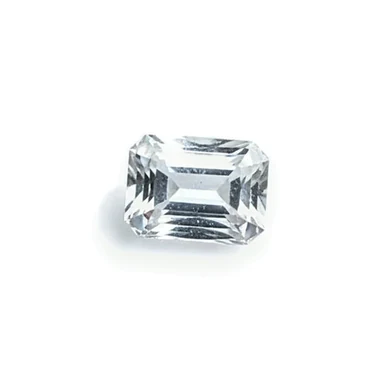
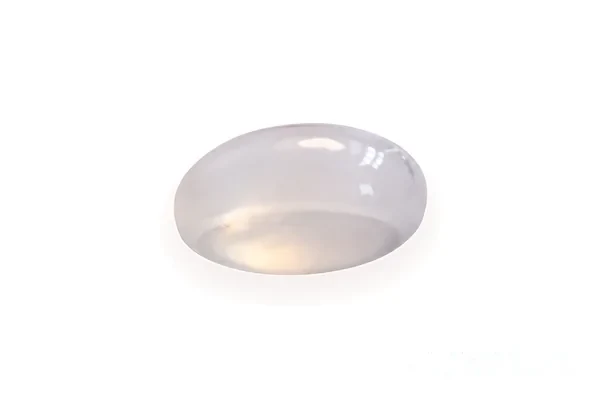
Dur-e-najaf is natural colourless quartz, which gemmologists call rock crystal. Through its link with Najaf it holds deep religious and cultural meaning in the Shia tradition. Its worth lies in being genuine natural crystal, not in being rare, so people are right to worry about glass or cubic zirconia being sold in its place. Fortunately the differences are easy to see once you know where to look.
What the real stone looks like
Natural rock crystal is clear as water but seldom perfect. Under a loupe you will often find soft, wispy "veils", tiny crystals trapped inside, or faint feathery lines. It sparkles brightly but quietly. Against your skin it feels cool, and it stays cool for a moment after you pick it up.
Glass versus dur-e-najaf
- Bubbles: glass often holds perfectly round gas bubbles. Quartz never does.
- Warmth: glass heats up in your palm much faster than quartz.
- Edges: moulded glass has gently rounded facet edges, while cut quartz keeps them sharp.
- Wear: older glass stones pick up scuffs and chips fast. Quartz, at 7 on the Mohs scale, holds its polish.
Cubic zirconia versus dur-e-najaf
Cubic zirconia is far heavier for its size, and it throws bright rainbow flashes, the "fire" that diamond copies are known for. Dur-e-najaf has very little fire; its sparkle is mostly white. If your stone flickers red, green and blue like a cheap fashion ring, it is not rock crystal.
A subtler clue: doubling
Quartz is doubly refractive. In a bigger stone, look through the top facet with a loupe at the facet edges on the far side, and they may appear very slightly doubled. Glass and cubic zirconia never do this. In small stones it is hard to see, so treat it as a supporting sign, not proof on its own.
Keeping it bright
At 7 on the Mohs scale dur-e-najaf can be worn in a ring every day, but a hard knock can chip it, so a bezel setting is worth thinking about. Because it is so clear, it shows every film of soap or hand cream. Warm soapy water and a soft brush bring it back.
A devotional stone
Across the Islamic world, and especially in many Shia families, dur-e-najaf is worn for clarity and protection. These are traditional and devotional beliefs, not promised outcomes.
How we sell it
We look at every stone ourselves and photograph each one separately. You can open the parcel and check the stone before paying Cash on Delivery, and our authenticity page explains how to get independent testing if you want it. See our dur-e-najaf collection, or browse jade and peridot. Urdu and English names are on our names page. We deliver from Karachi to Lahore and all of Pakistan. For astrological pairings, read our rashi guide.
References