In this article

Written by Sameer
Reviewed on
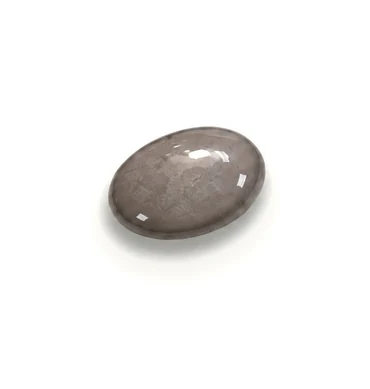
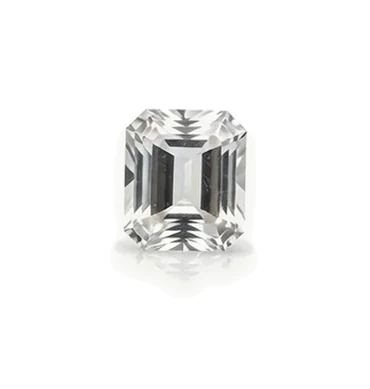
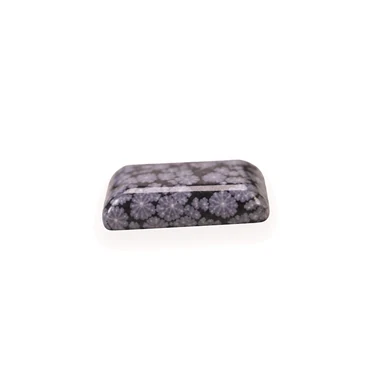
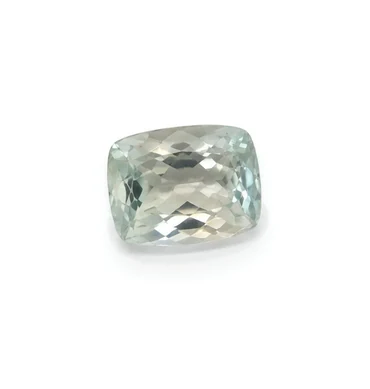
Dur-e-Najaf and Moh-e-Najaf are the same natural quartz with the same hardness. What tells them apart is inside the stone. Dur-e-Najaf is clear, colourless rock crystal, and Moh-e-Najaf has fine needles running through it like hair. Tradition links both to Najaf in Iraq, and both are worn in silver rings, often together with Aqeeq.
The short version
Hold each stone up to the light. Clean, water-clear crystal, maybe with a faint wisp inside, is Dur-e-Najaf. Thin lines crossing through it like strands of hair, in gold, dark or reddish tones, mean Moh-e-Najaf. Chemically both are silicon dioxide, both are 7 on the Mohs scale, and both are respected in Shia tradition because of their connection with Najaf, where Imam Ali's shrine stands.
The names describe what you see. "Dur" comes from the Arabic for pearl, so Dur-e-Najaf is usually explained as "the pearl of Najaf". "Moh", sometimes written "Moo", means hair, which makes Moh-e-Najaf "the hair of Najaf", after the needles inside it.
Compared side by side
| Dur-e-Najaf | Moh-e-Najaf | |
|---|---|---|
| Mineral | Quartz (rock crystal) | Quartz containing needle inclusions |
| Appearance | Colourless and water clear | Clear body with hair-like strands |
| Inside | Very few inclusions; faint veils at most | Fine needles, often rutile or a similar mineral |
| Hardness | 7 | 7 |
| Typical cut | Cabochon or faceted | Mainly cabochon, to show off the needles |
| Usual setting | Silver ring | Silver ring |
| What sets value | Clarity, polish, a clean shape | How dense the needles are, their colour and pattern |
Dur-e-Najaf and its tradition
In Pakistan, Dur-e-Najaf is the more familiar of the two. Shia tradition connects it with the land around Najaf, and many families recite narrations that speak well of wearing it. Some people wear it as a reminder of their love for the Ahl al-Bayt. Others keep it alongside an Aqeeq ring, or switch between the two on different days. Customs vary from family to family and from scholar to scholar, and we don't give religious rulings. If a particular practice is important to you, ask a scholar you trust.
On the practical side, the Dur-e-Najaf sold today is natural colourless quartz from a number of sources. Its value to the person wearing it comes from being real natural crystal, chosen with respect, more than from rarity. Our Dur-e-Najaf page goes into the tradition in more detail.
Moh-e-Najaf and its tradition
Moh-e-Najaf has a closely related tradition. Many families see it as part of the same Najaf heritage, and some actually prefer it because no two stones look alike: the pattern of strands is different every time. It is worn in silver too, mostly by men, and some families keep a loose stone at home. As with Dur-e-Najaf, the beliefs around it are tradition and not a promise of any effect. Our Moh-e-Najaf page has more.
Both belong to a wider group of stones respected in Muslim tradition, which includes Aqeeq and Feroza. You will find them all together on our Islamic gemstones hub.
Where the stones actually come from
Quartz is among the most common minerals in the world and turns up in many countries, our own northern areas included. The name Najaf reflects tradition and devotion, not a promise about which mine a stone came from. Stones sold today as Dur-e-Najaf and Moh-e-Najaf come from a variety of quartz sources, and an honest seller should say so. What counts is that the stone is natural quartz, not glass and not a synthetic. Our gemstone origins page explains how we describe origin across our range.
What makes one stone better than another
You judge these two in opposite ways. With Dur-e-Najaf you are looking for what isn't there. With Moh-e-Najaf you are looking at what is.
Judging Dur-e-Najaf
- Clarity: the clearer and more watery the crystal, the more people value it. A few faint veils are normal.
- Polish: a good polish gives a bright, wet look. A poor one leaves it hazy.
- Shape: an even, symmetrical oval or cushion that sits nicely in a ring.
- No tint: a slight grey or brown cast puts off buyers who want a pure clear stone.
Judging Moh-e-Najaf
- How many needles: some people like a few bold strands, others prefer a thick, silky mass.
- Needle colour: golden strands are the best known, but you'll also see dark, silvery and reddish ones.
- Pattern: straight, crossing or fanning strands all have their fans. Go with the one you like when you see the photo.
- A clear body: the quartz around the needles should stay transparent so the strands show properly.
For both stones, size, cut and polish quality affect the price. You can shop by budget with the filters on our shop page.
Telling them apart in your hand
You don't need any tools to see the basic difference, though a 10x loupe and good daylight make it easier.
Look right through it
Dur-e-Najaf should be transparent, so if you hold a flat-backed stone over printed text you can read it easily. Moh-e-Najaf is transparent as well, but the strands break up the view.
Look at the strands
In Moh-e-Najaf the needles are very thin, straight or slightly curved, and sit at different depths in the stone. Tilt it and they move against one another. Lines painted or etched on the surface don't behave like that.
Look for small marks in clear quartz
Natural Dur-e-Najaf is hardly ever perfectly flawless. Small veils, feathers or tiny crystal grains are normal and actually show the stone is natural. If a large Dur-e-Najaf is completely empty inside and throws rainbow flashes, look harder, because glass and cubic zirconia both get sold in its place.
Common fakes
Both stones are imitated. The usual substitutes are:
- Glass passed off as Dur-e-Najaf: round gas bubbles, soft facet edges, and it warms quickly in your hand.
- Cubic zirconia passed off as Dur-e-Najaf: much heavier for its size and full of rainbow fire.
- Glass with fibres or printed lines passed off as Moh-e-Najaf: lines that all lie on one flat plane, look too neat, or stop abruptly at the surface.
We have a separate guide for each: checking Dur-e-Najaf against glass and zircon and reading the needles inside Moh-e-Najaf. If you want certainty, we can arrange independent lab testing.
So which one is for you?
A lot of buyers simply go with whatever stone their family already wears. If you're choosing for the first time, this may help:
- For a clean, bright look: Dur-e-Najaf. A clear stone looks smart in silver and goes with anything you wear.
- For character: Moh-e-Najaf. Each stone has its own pattern, and many people like knowing their ring is one of a kind.
- For a pair: some men wear Dur-e-Najaf on one hand and Aqeeq on the other, or own both and alternate.
- As a gift: Dur-e-Najaf is more widely recognised, so it is a safe choice for an elder.
They are the same mineral, so physically neither one is "stronger" or "better". It comes down to looks and to personal or family tradition.
Wearing and looking after them
At hardness 7 both handle everyday wear well, but they can chip if you knock them on a stone floor or against metal.
- Clean with lukewarm water, a drop of mild soap and a soft brush, then rinse and dry with a soft cloth.
- Avoid sudden changes of temperature, which can crack quartz that already has fractures.
- Store them away from harder stones like sapphire and softer ones like Feroza, so nothing gets scratched.
- Silver tarnishes, so polish the metal with a cloth instead of dipping the whole ring in cleaner.
Both are normally set in silver, men's rings especially. Our guide to silver vs gold ring settings explains why, and we can arrange a ring setting over WhatsApp. Some families also keep these stones close in the form of a tasbih.
Buying from Authentic Gems
Each stone has its own photos, so the Moh-e-Najaf you see is exactly the one that arrives, needles and all. Everything we sell is natural, never synthetic or lab-grown, and independent lab testing can be arranged on request. We are based in Karachi, where delivery usually takes 1–2 working days, and we send Cash on Delivery to every city in Pakistan. You can open the parcel and look at the stone before you pay the rider, and you have 7 days to return it.
Shop the stones: dur e najaf · moh e najaf · aqeeq · feroza.
The beliefs described here are traditions, shared for interest. They are not guaranteed outcomes, religious rulings or medical advice.
References