In this article

Written by Sameer
Reviewed on
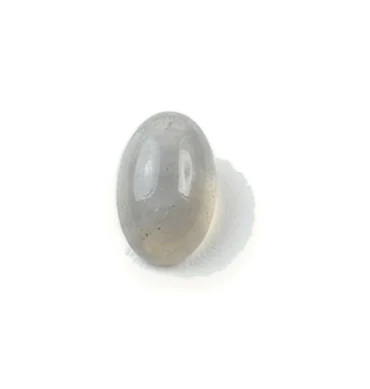
Dur-e-najaf is natural colourless quartz, also called rock crystal. For many Muslim families in Pakistan, and Shia families in particular, it is a stone of devotion as much as a gem, and that makes its pricing unusual. The material is not rare, yet two stones of the same weight can be priced very differently, and bazaar quotes in ratti, tola or "per piece" make comparisons hard.
Here we explain what really moves the price of dur-e-najaf, show our own price range in the table below, and walk through the arithmetic of per-ratti quotes so you can compare sellers fairly. If your worry is glass or cubic zirconia, start with our guide to spotting fake dur-e-najaf.
Our dur-e-najaf prices
This table is built from our own dur-e-najaf listings and refreshed each month. It gives the lowest, typical and highest price per stone, plus the same figures per carat and per ratti, so you can see how weight and quality affect cost.
| Weight | Weights | Stones | Per carat | Per ratti |
|---|---|---|---|---|
| All Dur-e-Najaf in stock | 5.4 – 97.5 ct | 17 | Rs 80 – Rs 490 | Rs 70 – Rs 450 |
A few notes for reading it. The per-ratti column uses the standard gemstone ratti of 0.91 carat, not the smaller jeweller's ratti. The top prices usually belong to large, very clear stones with a fine cut, not to stones with a special story behind them. And the table covers loose stones only; a silver or gold ring adds metal and making charges. For other stones, see our monthly gemstone price guide for Pakistan.
What decides the price of dur-e-najaf
1. Clarity: how "water-clear" it is
Clarity matters more than anything. Natural rock crystal nearly always has something inside: fine wispy veils, tiny crystals or feathery healed cracks. A stone that looks completely clear to the eye, like a drop of still water, costs well above one with visible clouds or white patches. Under a loupe, small natural inclusions are normal and even reassuring, because they help separate quartz from glass.
What brings the price down sharply is a crack reaching the surface or a milky patch across the face. Those are weak points in a ring, not just flaws in the look.
2. Size and weight
Clear quartz grows in big crystals, so dur-e-najaf does not leap in price with size the way sapphire or ruby does. A 20 carat stone is not rare. Still, the per-carat price does creep up for large stones that stay perfectly clear, because big, clean, crack-free pieces take more rough to produce. For a ring, most of our customers choose something between about 10 and 20 carats, such as the 12.70 carat dur-e-najaf or the 20.05 carat dur-e-najaf.
3. Cut and shape
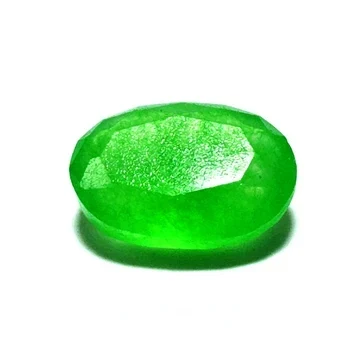
Dur-e-najaf is sold both as smooth cabochons and as faceted stones. A well-proportioned oval cabochon with a good dome that sits flat on its base is the classic ring shape. A faceted stone takes more cutting and more careful polishing, and a good one gives off a bright white sparkle. Uneven shapes, lopsided domes and a thick, heavy base (which adds weight but no beauty) all lower the value per carat.
4. Polish and finish
Rock crystal shows every scratch and every dull patch. A mirror polish with crisp edges is a sign of careful work and adds to the price. A hazy or wavy surface, common on cheaply cut stones, means the stone will never look its best however clear it is inside.
5. Is it natural at all?
This affects your wallet more than anything else. Glass and cubic zirconia are both sold as dur-e-najaf. Glass costs almost nothing to make; cubic zirconia is heavy and throws coloured fire that rock crystal does not. A "dur-e-najaf" priced far below the table above is often one of these. Our comparison of dur-e-najaf and moh-e-najaf also explains how the two Najaf stones differ, since people sometimes mix them up.
6. The story behind it
You will hear stones described as "from Najaf" or "brought back from ziyarat". Many families treasure such stones, and that devotional value is real to them. For pricing purposes, though, rock crystal comes from many deposits, and no gem test can confirm where a piece of quartz was bought or picked up. Pay for what you can see: clarity, size, cut and finish. Treat the story as a blessing, not a grade.
How per-ratti pricing works in the bazaar
Many dealers in Pakistan quote dur-e-najaf per ratti. The total is simply the weight in ratti times the rate. The catch is that two different ratti are in use:
- The standard gemstone ratti: 0.91 carat, about 0.182 grams. This is the one we use.
- The jeweller's (sunari) ratti: about 0.1215 grams, roughly 0.61 carat.
So the same stone counts as more "ratti" on the sunari scale. A 9.10 carat stone is 10 standard ratti but about 15 sunari ratti. If one dealer quotes per standard ratti and another per sunari ratti, the second rate looks lower even when the total comes out higher. Our carat to ratti converter does the sum in seconds.
Three questions for any per-ratti quote
- Which ratti? Standard (0.91 carat) or sunari?
- What is the exact weight in carats? Ask for the loose stone to be weighed in front of you, or shown on a scale in a photo.
- Is that for the stone alone? Some sellers quote a set ring at a per-ratti rate that quietly includes the silver.
Comparing quotes fairly
Turn every quote into a price per carat for a loose stone, then compare like with like:
- Similar size. Compare a 15 carat stone with others between about 12 and 18 carats, not with a 5 carat stone.
- Similar clarity. A water-clear stone and a veiled one are different products. Ask for a daylight photo or video against a plain background.
- Same cut. Faceted and cabochon stones are priced differently.
- Same material, confirmed. A low quote for some unidentified "Najaf stone" cannot be compared with a quote for natural rock crystal.
- Same terms. A price that comes with Cash on Delivery, inspection before payment and a return window is worth more than a slightly lower price with no comeback.
Budget levels: what to focus on
Our shop's price filters group stones into four bands. Check the table above to see where our dur-e-najaf sits, then filter by what you want to spend:
- under 5,000 rupees: focus on natural material and a clean face. Accept small inclusions and a simpler cut.
- 5,000 to 20,000 rupees: look for an eye-clear, ring-sized stone with good polish and a well-shaped dome or even facets.
- 20,000 to 50,000 rupees: large, very clear stones with a fine cut.
- over 50,000 rupees: exceptional size and clarity. At this level, get an independent lab report before the return window closes.
The filters cover the whole shop, so you will see other stones too. Pick dur-e-najaf from the category list, or go straight to our dur-e-najaf collection.
Pricing traps to watch for
- The ring-weight trick. A stone already set is weighed together with its silver, and the combined weight is charged as if it were all stone.
- A "Najaf rate" for unknown material. You pay a premium for the story while the stone itself is glass.
- Ratti switching. The rate is quoted per sunari ratti so it sounds low, but the weight is also counted in sunari ratti, so the total ends up higher.
- Rounding up the weight. A 9.40 carat stone becomes "about 11 ratti" instead of the 10.3 standard ratti it really is.
What the ring adds
Most dur-e-najaf is worn in a silver ring, and the ring can cost as much as the stone or more. It depends on the weight of silver, whether the design is plain or engraved, and the jeweller's making charge. Gold costs far more. Our planned guide to a chandi ring with stone explains how ring prices are built, and our stone setting service page will cover setting a loose stone you already have. Measure your finger first with our ring size guide.
A word on tradition
Many Muslims, and especially Shia families, wear dur-e-najaf out of devotion and in the belief that it brings clarity and protection. Many buy one for Muharram or for a family nikah. These are traditional and devotional beliefs. We do not promise outcomes or give religious rulings, so ask a scholar you trust about how and when to wear it. Our dur-e-najaf in tradition page and the planned Muharram stones guide cover that side, and how to wear dur-e-najaf covers the practical steps.
Buying dur-e-najaf from Authentic Gems
Each stone is listed on its own with a photo, weight and price, and the price is for the loose natural stone. The 16.45 carat and 17.25 carat stones are two examples. If you want independent testing, our authenticity page explains how it works.
We confirm orders by phone or WhatsApp and dispatch within one working day by insured, tracked courier. In Karachi that usually means 1 to 2 working days; Lahore, Islamabad, Rawalpindi and other major cities 2 to 4; smaller towns up to about 7. Pay Cash on Delivery after opening the parcel and checking the stone in front of the rider, and return it within 7 days if it is not what you expected. For help matching a ratti weight, message us on WhatsApp through our contact page.
Shop the stones: dur e najaf.
The beliefs described here are traditions, shared for interest. They are not guaranteed outcomes, religious rulings or medical advice.
References