In this article
- What you are actually buying
- A quick checklist
- Colour: clear should mean clear
- Clarity: perfect is not always better
- Cut: faceted or cabochon
- Size: carats, ratti and the ring
- Treatment: what is normal
- Questions for the seller
- Choosing online in Pakistan
- Setting and wearing it
- Buying dur-e-najaf from Authentic Gems
- خلاصہ

Written by Sameer
Reviewed on
In brief: a good dur-e-najaf is natural colourless quartz, or rock crystal, that looks clear to the eye or shows only fine natural veils. It should have crisp, even facets or a smooth dome, and be big enough to sit well in a ring, often somewhere around ten to twenty carats. It is normally untreated. The real risk is not poor quality but substitution: glass, cubic zirconia or synthetic quartz sold under the same name.
We have already written about how to tell real dur-e-najaf from glass and zircon and how it differs from moh-e-najaf. This guide assumes the stone is genuine and helps you choose a good one: what to look at, what to ask, and how to buy online in Pakistan with confidence. Dur-e-najaf holds a special place in many Shia and Sufi households; we describe those customs as tradition, and for any religious question please ask a scholar you trust.
What you are actually buying
Dur-e-najaf, "the pearl of Najaf", is the name used in Pakistan, Iran and Iraq for clear rock crystal. In mineral terms it is quartz, the same mineral as amethyst and citrine, only without colour. It is 7 on the Mohs scale, hard enough for a daily ring, and it has no cleavage, so it seldom splits.
The name ties the stone to Najaf in Iraq, and by tradition stones found near Najaf were especially prized. In the market, though, "dur-e-najaf" describes the material, not a proven source. Natural rock crystal is mined in many countries, including our own northern areas, where fine clear quartz crystals are found; see gemstones of Gilgit-Baltistan. No lab can confirm that a given piece of quartz came from Najaf.
A quick checklist
| Factor | A good stone | What to avoid |
|---|---|---|
| Colour | Water-clear with no tint, or a very faint natural tint you are told about | A grey, smoky or yellowish cast sold as top quality |
| Clarity | Eye-clean, or fine natural veils that do not cloud the stone | Large white cracks running to the surface |
| Cut | Symmetrical facets or a smooth, even dome; a good polish | Wavy facets, scratches, a lopsided dome |
| Size | In proportion to the hand and the ring | A very large stone in a thin setting |
| Treatment | Untreated, as stated by the seller | Coated or "aura" quartz sold as plain dur-e-najaf |
| Identity | Quartz, confirmed by the seller or a lab | Glass or cubic zirconia under the same name |
Colour: clear should mean clear
A fine dur-e-najaf has no colour whatsoever. Lay it table-down on white paper in daylight. If the paper looks grey, brownish or yellow through the stone, there is a tint. Smoky quartz and very pale citrine are quartz too, and a faint tint is not a fault in itself, but it should not be sold as top-quality dur-e-najaf. If you actually like a grey-brown stone, look at smoky quartz, which is sold for what it is.
Steer clear of stones with a rainbow film on the surface. That is "aura" quartz, coated with a metal vapour, and it is not traditional dur-e-najaf.
Clarity: perfect is not always better
Clarity matters more in dur-e-najaf than in most stones, because there is no colour to draw the eye away. Buyers tend to fall into two camps.
- Eye-clean stones look like a drop of water and are the most wanted for a formal ring.
- Stones with natural veils, wisps or tiny crystals are preferred by some buyers as visible proof that the stone is natural and not glass or a factory product. Fine inclusions do not weaken quartz.
What to avoid is a crack that reaches the surface, or a big white cloud in the middle. Surface-reaching cracks collect dirt, show up more after cleaning and can grow after a knock. And an eye-clean stone that is very large and very cheap deserves more questions, because synthetic quartz and glass are clean too.
Cut: faceted or cabochon
Dur-e-najaf comes in two main styles.
Faceted
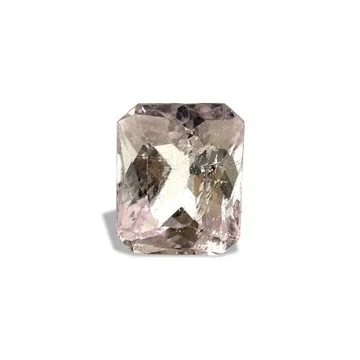
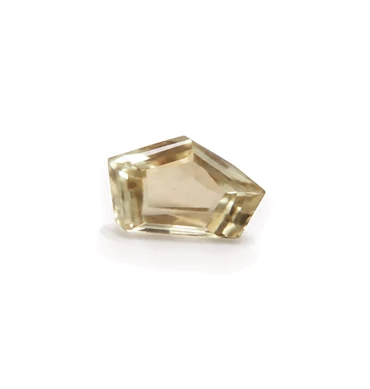
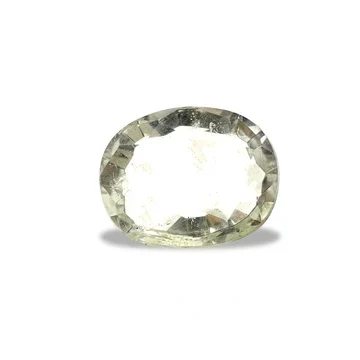
Faceted stones sparkle and throw light. Run a loupe along the facet edges; they should be sharp and meet neatly at the points. Symmetry matters, so an oval should not bulge on one side. A faceted stone with a shallow, wide back can look big from the top but sparkles less, with a "window" in the centre where you see straight through to your finger.
Cabochon (dome)
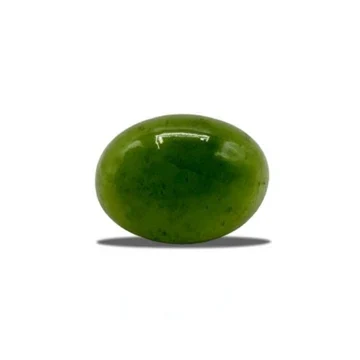
Smooth domed stones are the older, traditional style in many families and are often chosen for men's rings. The dome should be even, with no flat spots or ripples, and the polish should reflect a light bulb as a single clean image. Too low a dome looks dull; a very high one can catch on clothing.
Oval is the favourite shape here for both styles. Rectangular cushions and octagons are also common in men's rings.
Size: carats, ratti and the ring
Quartz is a light stone, so dur-e-najaf is normally bought heavier than ruby or sapphire. Many men's rings use stones of roughly ten to twenty carats. Our dur-e-najaf collection lists each stone's exact weight; for instance the 12.70-carat dur-e-najaf suits a medium ring and the 17.25-carat dur-e-najaf a bolder one.
If a seller quotes in ratti, ask which one. The gem ratti used in Pakistan is 0.91 carat; the jeweller's sunari ratti is about 0.61 carat. So a "twenty ratti" stone could be about 18.2 carats or about 12.2 carats. Run both quotes through the carat to ratti converter before you compare them.
Choose the size to suit the hand, not the number. Hold a coin of similar size against your finger; a stone wider than the finger looks heavy and bumps into things. For ring sizing, see the ring size guide.
Treatment: what is normal
Natural rock crystal is nearly always sold untreated. It has no colour to improve, so there is no reason to heat it. The things to watch for are:
- Coating, which leaves a rainbow or tinted film.
- Crackling and filling, rare in clear quartz, where cracks are created or filled on purpose for effect.
- Synthetic quartz, which is not a treatment but a lab-grown material; it is cheap to make and sometimes sold as natural.
Ask the seller to confirm in writing that the stone is natural, untreated quartz. Authentic Gems states known treatments on every listing, and our dur-e-najaf is natural.
Questions for the seller
- Is this natural quartz, or glass, cubic zirconia or synthetic quartz?
- Has it been treated or coated in any way?
- What is the exact weight in carats, and the size in millimetres?
- Can you send a daylight photo and a short video of the stone turning?
- Where do you think it was mined, and what is that based on?
- Can it be sent for independent testing?
- What is the return policy if I am not happy?
A seller who answers all seven plainly is a good sign. Keep the answers in your WhatsApp chat or on the invoice, so you have them if you get the stone tested later. "Asli Najaf ka hai" with nothing to back it is not an answer to question five.
Choosing online in Pakistan
Buying a clear stone online is harder than buying a coloured one, because photos of colourless stones depend so much on background and light. A few habits help:
- Look for photos on a plain background. A dark one shows clarity; a white one shows any tint.
- Ask for a video. Clear stones show their facets and inclusions far better when they move.
- Compare carat weight with millimetres to check the stone is not unusually shallow or deep.
- Buy with Cash on Delivery where you can, so you inspect the stone before paying.
- Use the return window to have a gemmologist check the stone if you like.
For an idea of prices, see dur-e-najaf price in Pakistan and the monthly gemstone price guide.
Setting and wearing it
Most dur-e-najaf here is set in silver. A clear stone looks brightest with an open back that lets light through. A closed back with a mirror-polished base is an older style some families still prefer. For a man's ring, go for a bezel or a strong four-claw setting; see chandi rings with stone and the stone setting service. Customs about which finger and hand to use are in how to wear dur-e-najaf.
Dur-e-najaf is also popular in tasbih strings and as a gift during Muharram and on other religious occasions; see gemstone tasbih and Muharram and Islamic stones. Its place in Muslim tradition is set out on our dur-e-najaf in tradition page.
Buying dur-e-najaf from Authentic Gems
Every dur-e-najaf we sell is natural rock crystal, photographed on its own and listed with its weight. If you want independent lab testing, ask before you order. We confirm orders by phone or WhatsApp and dispatch within 1 working day by insured, tracked courier. Karachi deliveries, from Saddar and PECHS to North Nazimabad and Gulistan-e-Jauhar, usually arrive in 1 to 2 working days; Lahore, Islamabad, Rawalpindi and other major cities in 2 to 4; smaller towns in up to about 7. Pay Cash on Delivery after opening the parcel and checking the stone in front of the rider, with a flat Rs. 500 delivery charge, and return it within 7 days if it is not right. Message us on WhatsApp with your ring size and the look you want, and we will suggest stones that fit.
Shop the stones: dur e najaf.
The beliefs described here are traditions, shared for interest. They are not guaranteed outcomes, religious rulings or medical advice.
References