In this article

Written by Sameer
Reviewed on
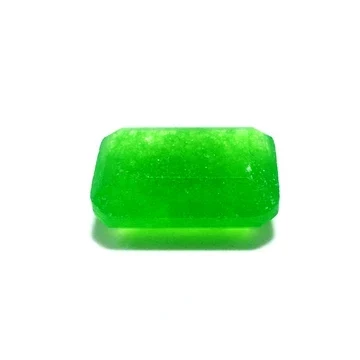
Real peridot (zabarjad) has a soft, slightly oily green somewhere between lime and grass, small disc-shaped inclusions called lily pads, and back facets that look doubled through a loupe. Green glass has none of these. That single check, looking for doubling, sorts out most of the fakes sold in Pakistan, and you can do it at home with an inexpensive 10x loupe.
It is not the full picture, though. Some genuine green stones get sold as zabarjad, a few clever imitations survive a quick look, and the word itself is used loosely in parts of the bazaar. Below we go through the imitations you are likely to meet, the checks you can do yourself, the ones that need a lab, and how to buy so that a wrong stone can go back.
What real peridot is
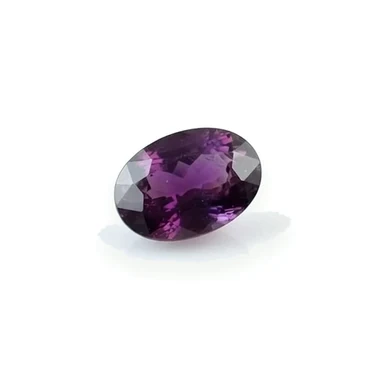
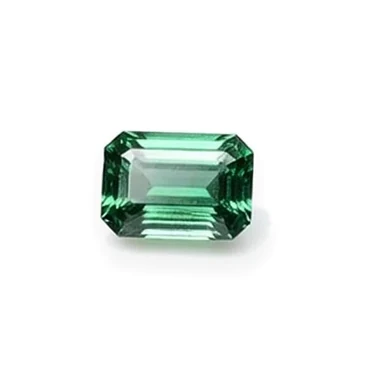
Peridot is the gem form of olivine, a mineral rich in magnesium and iron. Iron gives it its colour, so peridot only ever comes in greens: yellowish lime, grass green and deeper olive. It is never blue, never pink, and never a strong bluish emerald green. At 6.5 to 7 on the Mohs scale its facet edges can wear and chip over years of use.
Pakistan has a special place in this story. The high valleys of Kohistan in Khyber Pakhtunkhwa have produced some of the finest large peridot ever found, as our Kohistan peridot origin page explains. A lot of what is sold in Pakistani markets also comes from Afghanistan and elsewhere. Origin affects how a stone is described and sometimes how it is priced, but nobody can judge it reliably by eye, so take spoken origin claims carefully.
About the name
In older Arabic and Persian writing, zabarjad and zamurd were sometimes swapped, and both words have drifted over the centuries. In the Pakistani trade today, zabarjad means peridot. Some sellers still use it for any yellowish-green stone, and a few call peridot "Pakistani emerald". If a seller says zabarjad, ask plainly: "Is this peridot, the mineral olivine?" Their answer, and whether they will write it on the bill, tells you a lot. Our page of gem names in Urdu and English helps with other trade names.
Imitations you are most likely to meet
Green glass
By far the most common. Glass can be made in exactly the right shade, it costs very little, and it is often sold in bulk lots mixed with real stones. It is singly refractive, so it never shows doubling, and it often holds round gas bubbles or curved swirl lines.
Cubic zirconia and other synthetics
Green CZ is sold in plenty of jewellery shops. It is heavy, very bright and throws strong rainbow flashes (fire). Peridot has only modest fire, so a "peridot" sparkling red and blue under a phone torch is a warning. Green synthetic spinel and other lab-made materials also turn up from time to time.
Other natural green stones
Green tourmaline, diopside, green apatite, green quartz (prasiolite) and pale green beryl can all be passed off as peridot, sometimes without any intent to cheat. They are real gems, just not zabarjad, and they differ in hardness, durability and value.
Synthetic peridot
Lab-grown forsterite, from the magnesium end of the olivine family, exists but is uncommon in our market. Only a lab can identify it with confidence.
Assembled stones
Doublets, with a thin peridot or glass top glued onto a green base, are rare for peridot but do appear. Look at the girdle from the side for a glue line or a change in colour.
Checks you can do at home
You need a 10x loupe, a sheet of white paper, a small torch or phone light, and a little patience. None of these checks harms the stone. Work through them in this order.
1. Look for doubling
Peridot is strongly doubly refractive: light entering it splits into two rays. Look down through the table of a faceted stone at an angle towards the back facets. In real peridot, the back facet edges and any inclusions look doubled, like a slightly blurred double line. It is easiest to see in stones of a carat or more, and when you look at an angle rather than straight down. Glass, CZ and spinel never show it. Some look-alikes, like tourmaline, show a weaker version.
2. Study the inclusions
Peridot's trademark inclusion is the lily pad: a small round feather like a flat disc, often with a dark crystal at its centre. Fine needles and tiny dark crystals also occur. Glass shows perfectly round bubbles and swirls. A completely clean stone does not prove a fake, since good peridot is often eye-clean, but finding a lily pad is strong evidence.
3. Judge the shine and colour
Peridot has a slightly oily or velvety shine, very different from the glassy brilliance of CZ. Its green stays the same in daylight, tube light and under a warm bulb. Put it on white paper and compare it with a known green stone if you have one: emerald looks bluer, green tourmaline often looks darker end-on, and glass tends to look flat and uniform.
4. Check the facet edges
Glass is softer than peridot, and its edges soon round off and scuff, especially on stones that have rattled around a dealer's tray. Peridot keeps fairly crisp edges, though small chips at the corners are common on worn stones.
5. The touch test
Touch the stone to your lip or cheek. Natural crystal stays cool a moment longer; glass warms almost at once. On its own it is a weak test, but it helps alongside the others.
Put the results together rather than trusting one. A stone that shows doubling, a lily pad and an oily shine is very likely peridot. A stone that shows none of them, plus bubbles or rainbow fire, is very likely not.
What not to do: never try scratching it on glass or with a file. That damages a real stone as easily as a fake and proves little. Our broader guide to checking any gemstone before you buy explains why.
What needs a lab
Home checks deal with glass and CZ well. They cannot reliably tell you three things.
- Which green mineral it is. A gem lab measures refractive index and birefringence on a refractometer. Peridot gives readings that very few other green gems share, so this settles it quickly.
- Whether it is synthetic. Lab-grown forsterite matches natural peridot in most simple tests. Detecting it takes magnification by a trained gemmologist and sometimes advanced instruments.
- Whether cracks have been filled. Peridot is usually untreated, but a stone with surface-reaching cracks is now and then filled with oil or resin to hide them. A lab can spot this.
For a high-value stone, or one bought for astrological reasons where identity matters to you, a lab report is worth having. Our authenticity page explains how independent testing works, our guide on reading a gemstone lab certificate explains each line, and our lab-certified peridot page covers the process.
Treatments in peridot
Most peridot on the market is untreated, which is unusual among popular gems. So an untreated peridot is normal, not a premium feature you should pay extra for. The main exceptions are crack filling, as above, and occasionally a surface coating on very pale material to deepen its colour. A coating can wear off unevenly and show as patchy colour near the facet edges. Ask the seller to state in writing whether the stone has been treated in any way.
Warning signs when buying
- Big, flawless and cheap. Clean peridot of several carats with strong colour is uncommon. A large, perfectly clean stone at a small-stone price deserves suspicion.
- Too much sparkle. Rainbow fire suggests CZ.
- A matched lot. A packet of identical, perfectly clean green stones looks more like glass or synthetic than natural rough cut by hand.
- Vague answers. A seller who will not write "natural peridot" on the bill is telling you something.
- Origin as a sales line. "Kohistan" and "Pakistani" are appealing words, but they prove nothing without a lab report.
Buying peridot safely
- Ask for clear daylight photos of the actual stone, not a sample, including a side view.
- Get the weight in carats, and if a ratti figure is quoted, confirm it is the gemstone ratti of 0.91 carat. Our carat to ratti converter helps.
- Have the seller write on the bill that the stone is natural peridot, along with any treatment.
- Buy where you can inspect before paying and where returns are possible.
- For a significant purchase, arrange lab testing before or straight after delivery.
Our own way of working is simple. Each stone in our peridot collection is checked and photographed by itself, such as this 0.85 carat Afghan peridot or this 1.75 carat Afghan peridot. We dispatch within one working day; Karachi orders usually arrive in 1 to 2 working days and other major cities in 2 to 4. With Cash on Delivery you can open the parcel and test the stone with a loupe before paying the rider, and you have 7 days to return it.
Still deciding on size and colour? Our peridot pricing guide explains how colour, clarity and size affect value, and the August birthstone page covers peridot as a birthday gift.
Shop the stones: peridot.
References