In this article
- Why origin matters at all
- Swat emerald: our own
- Zambian emerald: cooler, cleaner, bigger
- Colombian emerald: the yardstick
- The three side by side
- Treatment, whatever the origin
- How origin is really established
- So which should you pick?
- What decides an emerald's price
- Other green stones to consider
- Buying emerald from Authentic Gems
- خلاصہ

Written by Sameer
Reviewed on
In broad strokes: Swat emeralds tend to be small, intensely green and full of inclusions. Zambian emeralds lean bluish green and are often cleaner and bigger. Colombian emeralds are loved for a warm, pure green with a soft glow. Those are tendencies, not rules, and only a laboratory can confirm where a stone came from. Below we compare the three, explain what treatment means for each, and help you choose. Our gemstone origins guide and emerald collection are good companions to this page.
Why origin matters at all
Where an emerald comes from shapes its usual colour, the inclusions it carries and how the market prices it. Emerald is beryl turned green by chromium, vanadium or both, and the mix of those elements, along with iron, changes from one deposit to the next. That chemistry is why a Colombian stone often looks warm and grassy while a Zambian one looks cooler and deeper.
Still, origin only tells you what is likely. Every mine gives fine and poor stones, and a well-coloured Zambian emerald beats a dull, cracked Colombian one. Look at the stone in your hand first and think about origin second. For the basics of zamurd (also called panna), read Emerald (Zamurd) for May, and for identification see How to identify a natural emerald.
Swat emerald: our own
Swat emeralds come from the Swat valley in Khyber Pakhtunkhwa, around Mingora, and they are the emeralds most Pakistanis hear about first. Swat material is known for a deep, saturated green, often with a faint bluish tint, which gemmologists put down to its high chromium content.
The catch is usually size and clarity. Swat crystals are mostly small, and clean stones of any real size are rare. A lot of Swat emerald is heavily included, so much of it is cut into cabochons, beads, or small faceted stones where colour does the work. A small Swat stone with strong colour can look more alive than a bigger, paler emerald from somewhere else.
- Colour: deep, vivid green, sometimes with a slight blue tint.
- Clarity: normally included; clean pieces are uncommon.
- Size: mostly small.
- Why people choose it: it is Pakistani, and the colour is strong.
Our northern areas give us other greens as well. Kohistan peridot (zabarjad) is the best known; see our peridot guide and the peridot collection if a lighter, brighter green appeals to you.
Zambian emerald: cooler, cleaner, bigger
Zambian emeralds are mined mostly in the Kafubu area of the Copperbelt and are among the most widely available emeralds in the trade. They tend towards a bluish green with a slightly darker, cooler tone, which is linked to their higher iron content.
Compared size for size, Zambian stones are often cleaner than Swat or Colombian ones, and larger crystals turn up more often, so a good-sized faceted Zambian emerald is easier to find. Because they are usually less fractured, many need less clarity enhancement, although oiling is still common.
- Colour: bluish green, cooler and often deeper.
- Clarity: often better than the other two at the same size.
- Size: small to large.
- Why people choose it: transparency and size for the money.
Customers who want a clean-looking faceted stone for a ring very often settle on Zambian.
Colombian emerald: the yardstick
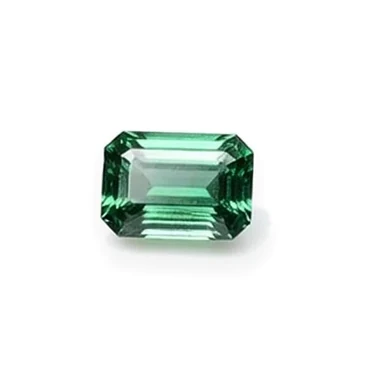
Colombia's mines, Muzo, Chivor and Coscuez above all, have produced the emeralds everyone else is measured against for centuries. The finest Colombian stones have a pure, warm green with a gentle glow from within, partly because their colour comes from chromium and vanadium with very little iron to dull it.
Colombian emeralds are known for one particular inclusion: the three-phase inclusion, a tiny jagged cavity holding liquid, a gas bubble and a small salt crystal. Under magnification it is one of the strongest hints of Colombian origin, though it is not found only there. Colombian stones are also often fractured, and oil or resin filling is routine.
- Colour: pure, warm grass green with glow.
- Clarity: often fractured; three-phase inclusions are typical.
- Size: small to large.
- Why people choose it: the classic colour and the name's reputation.
In Pakistan the word "Colombian" adds to the price, and it gets used loosely. A stone called Colombian without a lab origin report is the seller's opinion, and you should pay for it as an opinion.
The three side by side
| Feature | Swat | Zambian | Colombian |
|---|---|---|---|
| Usual colour | Vivid green, slightly bluish | Bluish green, cooler and deeper | Pure warm green with glow |
| Main colouring elements | High chromium | Chromium with more iron | Chromium and vanadium, little iron |
| Clarity | Usually heavily included | Often cleaner | Often fractured, three-phase inclusions |
| Usual sizes | Small | Small to large | Small to large |
| Clarity enhancement | Oil or resin common | Oil common, often lighter | Oil or resin very common |
| Usual cuts | Cabochon, beads, small faceted | Faceted | Faceted, emerald cut |
Treatment, whatever the origin
Most emeralds from all three places are clarity enhanced. Emerald often grows with cracks that reach the surface, and cutters fill them with a colourless oil, traditionally cedarwood oil, or with resin so they show less. The trade has accepted this for a long time, but the amount matters. A stone with a little oil is a very different thing from one with heavy resin filling, both in how it looks and in what it is worth.
These treatments are not always permanent. Oil can dry out over the years, and ultrasonic cleaners, steam or heat can draw it out so the cracks show again. Never put an emerald in an ultrasonic cleaner. Coloured oil, which adds green, is a different matter and must always be disclosed. Our article on emerald's jardin, oiling and the fakes that fool buyers goes deeper.
How origin is really established
You cannot reliably tell origin by eye, by price, or by trusting what a seller says. Gem labs work it out by combining microscope study of the inclusions with trace-element analysis and spectroscopy, then comparing the results with reference stones of known origin. Even then the answer is a professional opinion, and some stones simply cannot be tied to a country with confidence. A report that says origin could not be determined is an honest result, not a failure.
A basic identification report confirms the stone is natural emerald and notes any treatment found. Origin is usually a separate, extra opinion. If origin matters to you, ask about it before you pay. Our lab-certified gemstones page explains what testing covers, and how we check every gemstone describes our own process.
So which should you pick?
- Swat, if you want a Pakistani stone, care more about colour than size, and are fine with visible inclusions or a cabochon.
- Zambian, if you want a faceted stone with good transparency and more size for your budget.
- Colombian, if you want the classic warm green, the origin itself means something to you, and you are ready to ask for an origin report.
Whichever you choose, judge colour first, then transparency, then size. Even, saturated green, good life when the stone moves, and no large cracks breaking the surface make a sound buy from any of the three.
What decides an emerald's price
Colour affects value most, followed by clarity, size, how much treatment there is and, last, origin. A pure, saturated green that is neither too dark nor too pale is worth the most. Transparency matters more than perfect clarity, because almost every emerald has inclusions; the question is whether they spoil the look or weaken the stone. Big clean stones are rare from every source, so value climbs steeply with size. A little oil is expected, while heavy filling brings value down. A confirmed Colombian origin adds a premium over a similar stone from elsewhere. You can browse by budget with the filters on our shop page.
Other green stones to consider
If a fine emerald is more than you want to spend, or you need something tougher for daily wear, there are honest alternatives. Green tourmaline is hard-wearing and comes in deep greens. Peridot gives a bright, slightly yellowish green. Jade and green agate suit anyone who likes an opaque stone. All of them are on our green gemstones page.
Buying emerald from Authentic Gems
We sell natural stones only, never synthetic or lab-created, and we state known treatments, including how much oiling where we know it. Ask us on WhatsApp what we know about a stone's origin and how that was established, and if you want an independent lab report, our authenticity page explains how to get one. We deliver across Pakistan, with Karachi orders usually arriving in 1 to 2 working days and other major cities in 2 to 4. With Cash on Delivery you open the parcel and inspect the emerald before paying the rider, and unused stones can be returned within 7 days. Delivery is a flat Rs. 500 per order; see our delivery details.
Shop the stones: emerald · peridot · tourmaline · jade.
References