

Gemstone origins
Pakistan's Gemstone Mines: Where Each Stone Comes From پاکستان کی قیمتی پتھروں کی کانیں
In short: Pakistan's gem mines are in its northern mountains. Emerald comes from Swat, ruby from Hunza's marble, peridot from high in Kohistan, aquamarine and topaz from the valleys around Skardu and Shigar, and pink topaz from a single hill near Katlang in Mardan. In the bazaar, an origin name is a claim you should check, not a fact.
Few places on earth pack in as many kinds of gem as Pakistan's northern mountains. Swat gives emerald, Hunza's marble gives ruby, high Kohistan gives peridot, the valleys around Skardu and Shigar give aquamarine and topaz, and a single hill near Katlang in Mardan district gives pink topaz.
Below we go region by region, covering what each is known for and how a stone travels from a mountain pit to a cutter's wheel in Peshawar. We also explain why an origin name in the bazaar is something to check, not something to pay extra for.
- Country
- Pakistan
- Main gem provinces
- Khyber Pakhtunkhwa, Gilgit-Baltistan
- Also
- Balochistan, Azad Jammu and Kashmir
- Known for
- Emerald, ruby, peridot, aquamarine, pink topaz, tourmaline
- Mining
- Small-scale, mostly seasonal
- Main rough market
- Peshawar
- Cutting centres
- Peshawar, plus smaller workshops in other cities
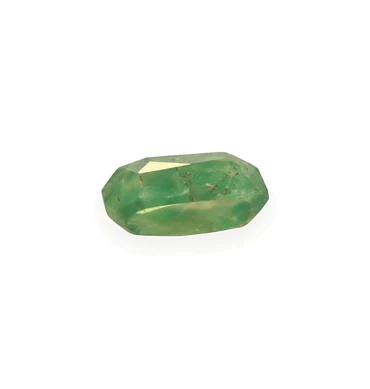
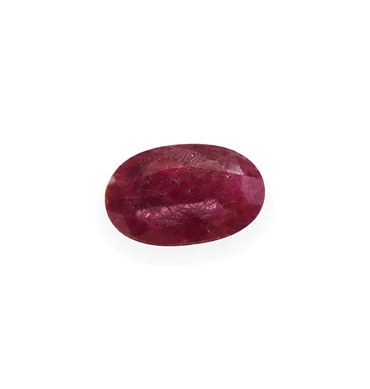
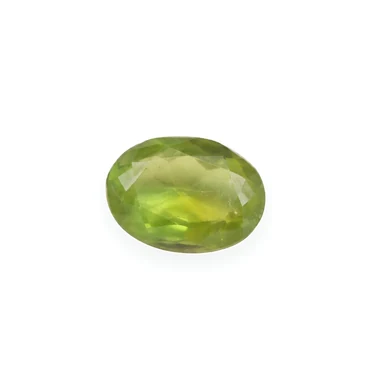
On the tray today
Stones from Pakistan's mountains
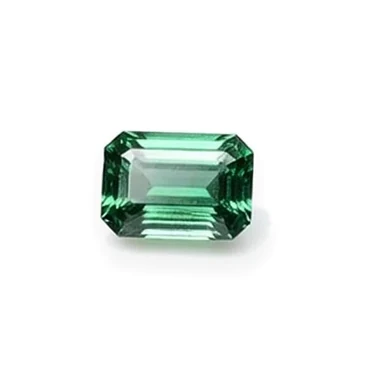
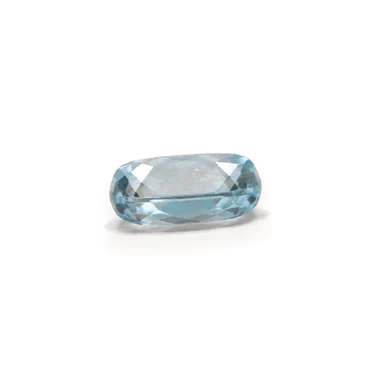
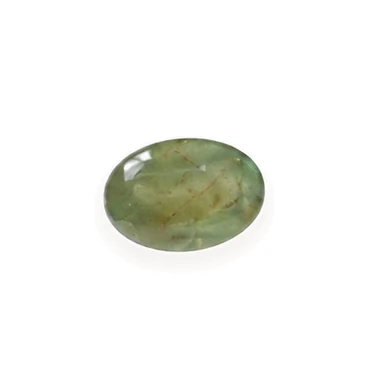
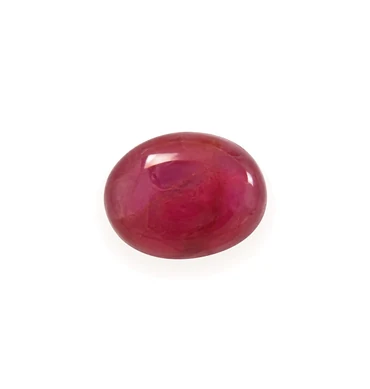
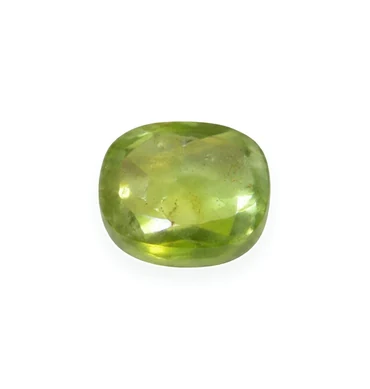
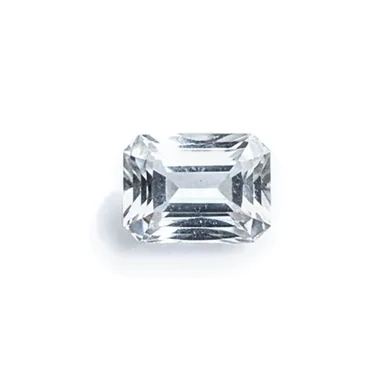
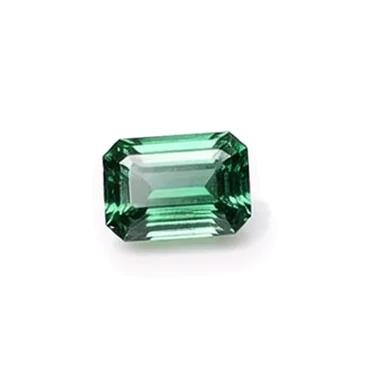
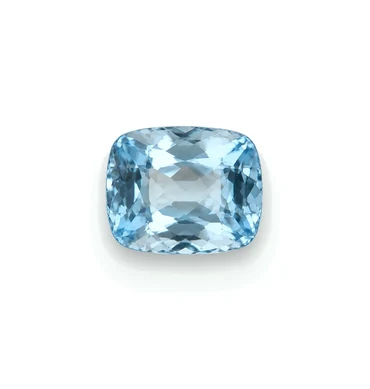

Written by Sameer
Reviewed on
How Pakistan ended up with so many gems
For tens of millions of years the Indian plate has been driving north into Asia, and Pakistan sits right on the seam. That slow-motion crash pushed up the Himalaya, the Karakoram and the Hindu Kush, and it crushed, cooked and fractured the rock trapped in between. Along the way three very different kinds of rock were formed, and each one carries its own set of gems.
- Marble: limestone that was baked under enormous pressure. In Hunza and the Neelum valley, this is the rock that holds ruby and spinel.
- Pegmatite: veins of coarse granite that cooled very slowly and left open cavities behind, where big crystals had room to grow. They give Gilgit-Baltistan its aquamarine, topaz and tourmaline.
- Pieces of ancient sea floor: dark rock, rich in iron and magnesium, shoved up along the major fault lines. Where it has been altered, it hosts Swat emerald; where it is still fresh, it hosts Kohistan peridot.
So in one day's drive up the Karakoram Highway you can pass through several gem deposits that have nothing in common with each other.
The main gem regions
Swat, Khyber Pakhtunkhwa: emerald
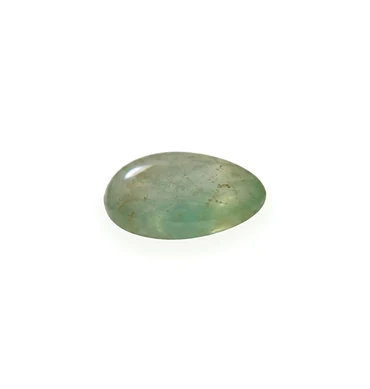
If Pakistan has an emerald country, it is Swat. The best-known workings are on the hillsides around Mingora, and there are other deposits further up the valley and nearby. Swat zamurd is usually small, with a strong green that often has a slight blue lean, and it nearly always has inclusions. A clean stone of decent size is hard to come by. Our full Swat emerald guide goes deeper.
Hunza and Nagar, Gilgit-Baltistan: ruby and spinel
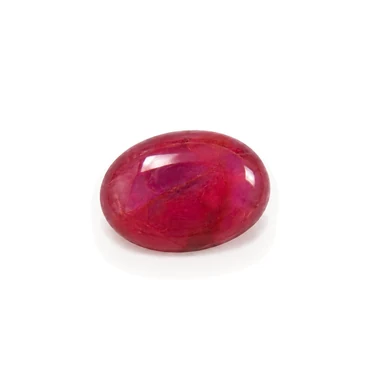
Hunza's yaqoot forms in the white marble on the valley walls. Most of it is pinkish red to purple-red and translucent rather than transparent, so it tends to be cut as cabochons or sold as crystals still sitting in their marble. Spinel comes out of the same rock. See Hunza ruby.
Skardu, Shigar and the Braldu valley: aquamarine, topaz, tourmaline
Baltistan's pegmatites produce long, clear crystals of beruj (aquamarine) in pale to medium blue, together with topaz, tourmaline, garnet and a long list of collector minerals. Skardu is where most of it is traded. See Skardu aquamarine and our broader Gilgit-Baltistan gemstones guide.
Kohistan, Khyber Pakhtunkhwa: peridot
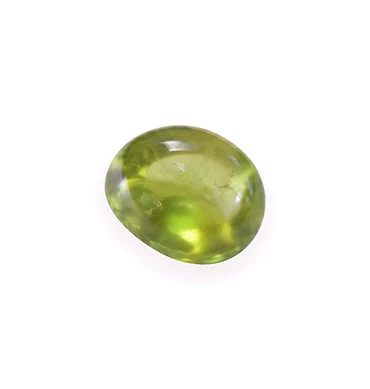
Zabarjad is dug out of workings in Kohistan that sit so high they are buried in snow for much of the year. Pakistani peridot reached the world market in the 1990s and quickly became known for big, clean stones with a lively green. See Kohistan peridot.
Katlang, Mardan: pink topaz
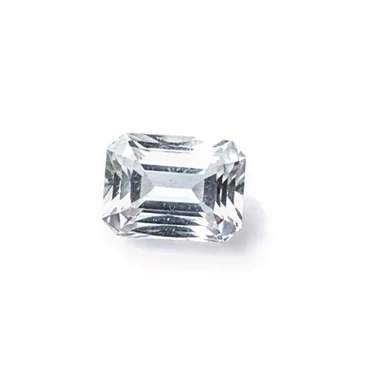
One small hill near Katlang is among the very few places anywhere that produce topaz which is pink straight out of the ground. The crystals are mostly small, so a clean faceted stone of good size is a genuine find. See Katlang pink topaz.
Chitral: smaller pegmatite finds
Chitral shares its geology with the rest of the Hindu Kush and yields quartz, tourmaline, aquamarine and other pegmatite minerals, though in smaller quantities. A lot of it goes out as mineral specimens, and you will rarely hear Chitral named as the source of a cut stone.
Balochistan: onyx marble, serpentine and decorative stone
Balochistan is known more for decorative stone than for gems you would facet. The banded green and honey "onyx" from around Chagai is a calcite used for carvings, bowls and tiles, and it is not the same thing as the black agate sold as onyx in rings. Serpentine, jasper and chromite-bearing rock also come from the province.
Azad Jammu and Kashmir: Neelum valley ruby
Much like Hunza, the Neelum valley has ruby in marble, ranging from pink to red and usually included. One caution: the famous "Kashmir sapphire" of the old trade came from a historic deposit outside Pakistan, so a Pakistani neelam sold as "Kashmiri" deserves very careful checking.
Pakistan's gem regions in one table
| Region | Province | Known for | Shop |
|---|---|---|---|
| Swat | Khyber Pakhtunkhwa | Emerald (zamurd) | Emerald |
| Hunza and Nagar | Gilgit-Baltistan | Ruby (yaqoot), spinel | Ruby, Spinel |
| Skardu and Shigar | Gilgit-Baltistan | Aquamarine (beruj), topaz, tourmaline | Aquamarine, Tourmaline |
| Kohistan | Khyber Pakhtunkhwa | Peridot (zabarjad) | Peridot |
| Katlang, Mardan | Khyber Pakhtunkhwa | Pink topaz | Pink Topaz |
| Chitral | Khyber Pakhtunkhwa | Quartz, tourmaline, specimens | Quartz |
| Chagai and other districts | Balochistan | Onyx marble, serpentine, jasper | Jasper |
| Neelum valley | Azad Jammu and Kashmir | Ruby in marble | Ruby |
What mining really looks like
Nearly all gem mining in Pakistan is done on a small scale. Picture a tunnel or an open cut worked by a few men with hand tools, drills and small charges, usually under a lease or a profit-sharing deal with whoever holds the land. The country has no big mechanised gem mines of the sort you find elsewhere in the world.
It is also seasonal work. The high mines can only be reached after the snow melts, and they shut again when the first heavy snow comes. Rough stone travels down the mountain on foot or by mule, then by road to trading towns like Mingora, Gilgit and Skardu. A great deal of it finally lands in Peshawar, whose gem bazaar has for a long time been the main market for rough from both Pakistan and Afghanistan.
Most cutting is done in Peshawar, with smaller workshops spread across other cities, and much of it is still in the hands of small family workshops. A skilled cutter can raise a stone's value a great deal by picking the right shape and keeping the colour where it belongs; a rushed job throws away weight and sparkle.
Since so much of the digging is informal, nobody can tell you with any confidence how much of a stone a particular mine yields in a year. Be careful with a seller who quotes exact production figures, or who says a mine has "closed forever" to justify the price.
Why a Pakistani label is not proof of a Pakistani stone
There are three reasons origin is hard to prove.
- The geology ignores borders. The same mountain belt continues into Afghanistan, which has its own emerald, aquamarine, tourmaline, ruby and peridot. Stones from either side can look almost identical.
- The markets overlap. Rough from many sources passes through the same bazaars and the same cutting workshops, so a single parcel can easily be a mix.
- Your eye cannot see it. No seller can identify origin just by looking. A gem laboratory can sometimes offer an origin opinion based on inclusions and trace elements, but it is an expert view, it is not possible for every stone, and it costs a lot relative to many stones.
None of that makes Pakistani stones any less worth owning. It just means a stone should justify its price through colour, clarity, cut, size and treatment, and origin is a bonus when there is evidence for it.
Weighing an origin claim fairly
- Ask how they know. "My supplier is from Swat" is a story. A lab origin opinion is evidence.
- Ask about treatment before origin. Oiling in emerald, heating in aquamarine and filling in ruby move the value more than any origin label.
- Compare like with like. Put a Swat emerald next to other emeralds of the same size and clarity, not next to a famous name.
- Get it written down. Have the seller put the claimed origin, the treatment and the weight on your receipt.
- Test when the money is serious. On an expensive stone, independent testing earns its cost. See lab-certified gemstones and how to read a lab certificate.
For prices, our monthly gemstone price guide explains what moves them. In Pakistani bazaars weight is often given in ratti; the standard gem ratti is 0.91 carat, and the carat to ratti converter will do the maths for you.
How we deal with origin at Authentic Gems
We sell only natural stones and we tell you about any treatment we know of. When a listing mentions an origin, that is the origin our supplier gave us. If origin matters to you, message us on WhatsApp before buying; we can provide a certificate on request and arrange independent lab testing. You can pay cash on delivery anywhere in Pakistan, from Karachi to Gilgit, and open the parcel before the rider is paid.
For origins outside Pakistan, such as Ceylon sapphire and Nishapuri feroza, see our main gemstone origins guide.
References
Related
- Gemstone Origins: Where Our Favourite Stones Are Mined
- Swat Emerald: The Zamurd From Our Own Hills
- Hunza Ruby: Yaqoot Grown in Karakoram Marble
- Kohistan Peridot: Zabarjad from Pakistan's High Peaks
- Skardu Aquamarine: Beruj from the Valleys of Baltistan
- Katlang Pink Topaz: Pakistan's Naturally Pink Topaz
- Gilgit-Baltistan Gemstones: What the Northern Mountains Give Us
- Gemstones Delivered to Peshawar
