In this article
- The traditional finger: the index finger
- Right hand or left?
- Gold, panchdhatu or silver
- The day and the hour
- How heavy should it be?
- Open back or closed back?
- Settings that suit pukhraj
- Picking the stone you will wear
- Stones tradition keeps away from pukhraj
- Looking after pukhraj day to day
- Taking it off, and stopping
- Buying with Cash on Delivery
- خلاصہ

Written by Sameer
Reviewed on
Traditional belief vs gemmology: anything on this page about luck, protection, planets, healing or religious tradition describes traditional and cultural beliefs — not proven effects, religious rulings or medical advice. A stone's identity, hardness, treatment and origin are gemmology, which a lab can test; the references at the end of the page cover that side.
Ask most jewellers or astrologers in Pakistan how to wear pukhraj and you will get the same quick answer: right hand, index finger, gold, and put it on first on a Thursday morning. That is the tradition in one line. But when customers sit with us choosing a yellow sapphire, the questions that really shape the ring come after that: how heavy the stone should be, whether the back is open, what holds the stone in, and how to keep it looking good once it is on your finger.
We go through those questions one at a time here. The customs are described as customs, because that is what they are. The setting and care advice is practical and applies to any yellow sapphire, whatever your reason for wearing it. If you have not picked your stone yet, have a look through our yellow sapphire collection, where each pukhraj is photographed and priced individually.
The traditional finger: the index finger
In South Asian practice, pukhraj belongs on the index finger more than any other. Vedic astrology gives each finger to a planet, and the index finger, tarjani, belongs to Jupiter, known here as Brihaspati or Mushtari. Yellow sapphire is Jupiter's stone, so the two go together.
In Pakistan you will hear a few versions of this:
- Right index finger: what most astrologers advise, and the standard answer across the jewellery counter.
- Ring finger: some families, and astrologers from other schools, put pukhraj on the ring finger instead. It is less common, but it is out there.
- Pendant: where a ring is impractical, say for someone working with their hands all day, some advisers accept a gold pendant that sits against the skin.
If an astrologer recommended the stone for you, wear it on the finger they name. Practitioners do differ, and the advice is meant to suit your own chart. If you simply love the colour and are wearing it for that, put it on whichever finger feels right.
Right hand or left?
The usual choice is the working hand, which for most people is the right, and that is what most guidance in Pakistan says. Some astrologers tell left-handed people to use the left hand, on the idea that the active hand carries the stone's influence. Others say women should wear it on the left. None of this is settled, so treat it as something to ask your adviser rather than a fixed rule.
In practical terms, the working hand gets knocked more. The sapphire can take it, but the metal around it cannot always, so a ring for the right hand needs a stronger setting.
Gold, panchdhatu or silver
Gold is the classic metal for pukhraj. Its colour suits the stone, and astrology links gold itself with Jupiter. Many families have their pukhraj ring made in 21 or 22 karat, the normal jewellery standard in our bazaars.
Two other metals come up a lot:
- Panchdhatu: a traditional five-metal alloy. Some astrologers prefer it, and others accept it as a substitute when gold is out of reach.
- Silver: many Pakistani men avoid gold for religious reasons, and silver is the obvious alternative. Some astrologers accept silver for pukhraj and some do not. If the religious side matters to you, ask a scholar you trust. On the practical side, see silver versus gold ring settings and our page on chandi rings with stones.
One thing we always mention: high-karat gold is soft. Claws in 22 karat bend more easily than claws in 18 karat or in silver alloyed for strength. If you want 22 karat, ask the setter to make the claws or the bezel slightly heavier.
The day and the hour
Thursday is Jupiter's day, so the custom is to wear the ring for the first time on a Thursday, usually in the morning, from sunrise to about two hours afterwards. Many people also look for a Thursday in the bright half of the lunar month, while the moon is waxing.
Some households do a small preparation the night before: the ring sits in water, milk or a mixture of the two, and is rinsed and dried in the morning. Some people recite prayers from their own faith as they put it on. Every home does this a little differently. These are traditions, not requirements, and nothing about the stone itself changes if you skip them.
A practical tip from our side: if the ring has soaked overnight, rinse it thoroughly. Milk left trapped under a closed back goes sour and leaves the stone looking dull.
How heavy should it be?
In Pakistan weight is usually quoted in ratti. The standard gemstone ratti is 0.91 carat, so a 5 ratti stone comes to about 4.55 carats. There is also the smaller jeweller's ratti, the sunari ratti, at about 0.61 carat, and mixing the two up is one of the commonest mistakes we see. Always ask which ratti the seller or astrologer means, and check the figure with our carat to ratti converter.
Astrologers often give a minimum weight, and some work it out from your body weight. Methods vary a great deal, so we will not suggest a number here. Get it from your adviser, ideally in writing, and confirm which ratti they used.
Comfort matters too, especially for a first ring. A big pukhraj on the index finger sits high and snags on things. Something between about 3 and 6 carats sits comfortably on most hands. Above that, think about a lower setting or a pendant.
Open back or closed back?
A lot of astrologers want the stone to touch the skin, which means an open back: a hole in the underside of the ring, right below the stone. We like it for practical reasons as well:
- light comes in from behind, so the stone looks brighter;
- soap and lotion rinse straight out instead of building up underneath;
- you can see the back of the stone, which helps if you ever want it checked.
A closed back hides the underside and tends to collect dirt. If you do go for a closed back, ask whether a small inspection hole can be added.
Settings that suit pukhraj
Yellow sapphire is 9 on the Mohs scale and has no cleavage, so it sits happily in claws or a bezel. Which you choose depends on what your hands do all day.
Claw (prong) setting
Four or six claws show off the most stone and let light in from the sides. Four claws suit ovals and cushions; six suit rounds. Check the claws every few months, because a bent claw is the most common way stones go missing.
Bezel setting
A collar of metal circles the whole stone. It guards the girdle and suits anyone who works with their hands, rides a motorbike through traffic or plays sport. It covers a little of the stone, which matters less with a deeply coloured pukhraj.
Half-bezel and low settings
These sit in between, with metal protecting the sides most likely to take a knock and the ends left open. They work well for a large stone on a man's index finger.
If you buy a loose stone from us, our stone setting service page explains how setting is arranged. For sizing, use our ring size guide. The index finger is usually a size or two bigger than the ring finger, so measure the finger you will actually use.
Picking the stone you will wear
Three things decide how a pukhraj looks once it is on your hand:
- Colour: a clean yellow without brown or green looks best in gold. Very pale stones can almost vanish in yellow gold, and white gold or silver flatters them more.
- Cut: a well-cut stone stays bright across its face. A poorly cut one shows a dull window in the middle, and you notice that on a ring you look at every day.
- Treatment: heated stones are common and stable. Many astrology buyers ask for unheated stones specifically, and beryllium-diffused stones should always be declared. Our article on identifying original yellow sapphire explains what to check.
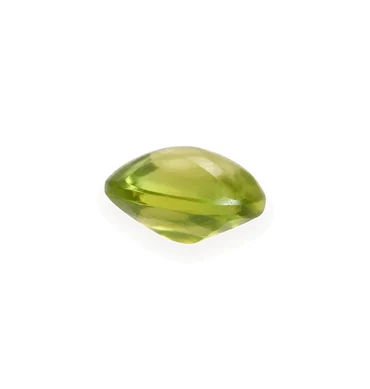
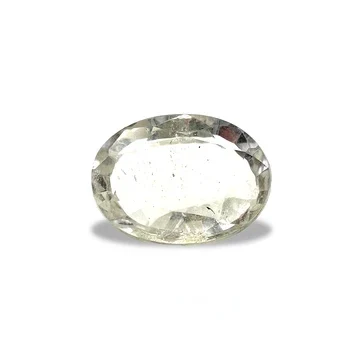
Two stones from our collection show the difference size makes: a 2.25 carat Ceylon pukhraj suits a slimmer ring, and a 2.85 carat yellow sapphire has a bit more presence. If you want written confirmation, see lab-certified yellow sapphire.
Stones tradition keeps away from pukhraj
Vedic astrology treats some planets as unfriendly to Jupiter. Because of that, many astrologers advise against wearing pukhraj together with blue sapphire (neelam), diamond, hessonite (gomed) or cat's eye (lehsunia) unless your chart has been checked for that pairing. Ruby, red coral, pearl and emerald are generally seen as compatible, though advice differs. Our nine planetary stones page lays out the classical pairings.
Looking after pukhraj day to day
Yellow sapphire is one of the toughest stones you can wear every day. Most of the care is really for the ring, not the stone.
- Wash it once a week: soak it in lukewarm water with a drop of washing-up liquid, brush gently with a soft toothbrush, especially underneath the stone, then rinse and dry. A greasy film of skin oil and soap is the main reason a pukhraj looks dull, and Karachi humidity makes that film build faster.
- Take it off for heavy jobs: gym weights, gardening, car repairs and building work can bend claws, even though the stone will be fine.
- Keep chemicals off the metal: bleach and strong cleaners harm gold alloys and silver. Take the ring off before cleaning the house.
- Store it on its own: sapphire scratches softer stones and other gold pieces, so give it its own pouch.
- Check the setting: every few months, hold the ring near your ear and tap it lightly. If it rattles, the stone is loose, and it needs a jeweller.
If the stone is glass-filled or diffused, keep it away from jewellers' torches and acid baths during any repair, and tell the jeweller what it is before they start. Our gemstone care guide goes further into cleaning.
Taking it off, and stopping
Some people take the ring off to sleep or bathe; others never remove it. Tradition has no single view here either. If you feel uneasy wearing it, or simply go off the ring, many astrologers say it is fine to stop. If the stone was recommended for a particular reason, check with your adviser first. Put it away clean and dry.
Buying with Cash on Delivery
We are in Karachi, and orders here usually arrive in one to two working days; Lahore, Islamabad, Rawalpindi and the other big cities usually take two to four. Every parcel goes by insured, tracked courier. With Cash on Delivery you open the parcel and look at the stone before paying the rider, and you have 7 days to return it. A certificate is available on request, and independent lab testing can be arranged. If you would like help with weight or setting, send your ring size and your adviser's instructions to us on WhatsApp. For the traditional meaning of the stone, read our guide to yellow sapphire benefits, and for budgets see pukhraj ring prices in Pakistan.
Browse the stones: yellow sapphire.
The beliefs in this article are traditions, shared for interest only. They are not guaranteed outcomes, religious rulings or medical advice.
References