In this article
- Learn the main kinds first
- Ethiopian or Australian, and why you should care
- Play-of-colour: where the value lives
- Body tone and transparency
- Cracks and other flaws
- Cut, shape and size
- Treatments and assembled stones
- Spending wisely at every budget
- Questions to send before you pay
- Buying opal online
- After you buy: setting and care in our climate
- خلاصہ

Written by Sameer
Reviewed on
A good opal flashes brightly from most angles, is solid natural opal rather than a thin glued-on layer, and has no cracks. Brightness counts for more than size, and the type of opal decides how careful you have to be with it. If you only remember that much, you will dodge most bad buys.
Our opal benefits post covers tradition and everyday care. This one is about choosing: how to read play-of-colour from photos and video, why Ethiopian and Australian opal behave differently, which treatments to ask about, and what to check when the parcel reaches you, wherever you are in Pakistan.
Learn the main kinds first
Opal is hydrated silica, and the word covers several quite different stones. Sellers here don't always say which one they mean, so it helps to know the names.
- Precious opal: shows play-of-colour, those moving flashes of spectral colour. This is what most people are after.
- Common opal: has body colour, pink, blue or green for example, but no flashes. Pleasant, and much cheaper.
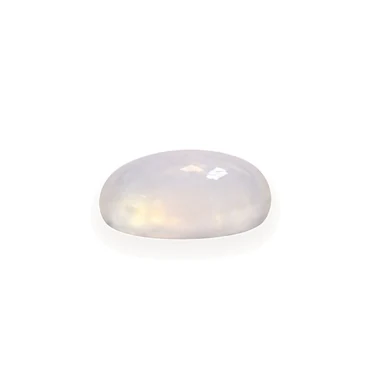
- White or light opal: precious opal on a pale, milky body.
- Crystal opal: transparent to semi-transparent, with the flashes floating inside.
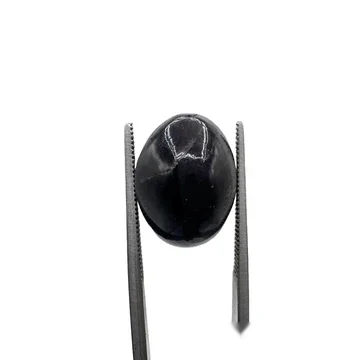
- Black or dark opal: precious opal on a dark body, which makes the colours look stronger. Fine black opal is the most valuable kind.
- Boulder opal: a thin seam of opal left on its natural ironstone backing.
- Fire opal: transparent orange to red opal, often faceted, with or without flashes.
If a listing just says "opal", ask which of these it is.
Ethiopian or Australian, and why you should care
Most opal sold in Pakistan is Ethiopian or Australian, and the difference affects care as much as price.
Ethiopian (Welo) opal
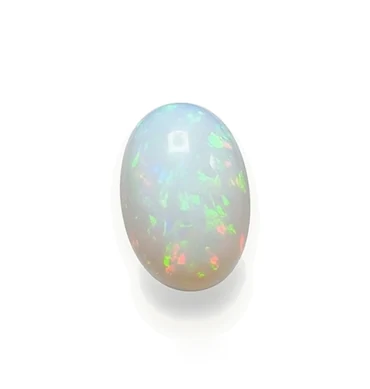
Most Ethiopian opal is hydrophane, meaning it can soak up water. Wet, it may go clearer, lose its flashes or shift colour for a while, then come back as it dries. That is normal for this material, not a defect, but it does mean keeping it away from water, oil and soap. Ethiopian opal often gives bright, broad flashes at a friendlier price, which is why it dominates the market here. Several of our listings are Ethiopian, such as the 1.50 carat Ethiopian opal and the 1.90 carat Ethiopian opal.
Australian opal
Australian opal is usually non-hydrophane and more stable in daily wear. It includes the classic white, black and boulder types, and a good Australian stone costs more for similar flash. Our Australian opal buying guide goes further.
Neither one is "real" while the other is "fake"; both are natural. Choose by how you'll wear it and what you can spend.
Play-of-colour: where the value lives
Judge the flashes on four points.
Brightness
The single most important factor. A bright opal shows strong colour even in ordinary room light; a dull one only wakes up under a torch. Ask for a video in normal indoor light as well as the studio photo.
Which colours appear
Blue and green flashes are the commonest. Orange and red are rarer, and a stone that shows red alongside the others usually ranks higher.
Pattern
Pattern is the shape the flashes make: pinfire (tiny points), broad flash (big sheets), harlequin (a patchwork of squares), and plenty of others. Some of it is personal taste, though large, well-defined patterns tend to be valued above a faint scatter.
Directionality
Turn the stone. Some opals flash from every angle; others only from one direction and look blank from the rest. One that shows colour all round is the better buy, especially in a ring, which gets seen from every side.
Body tone and transparency
Body tone is how light or dark the background is, from white through grey to black. A darker body makes the same flashes look more intense, which is why dark opal is so prized. Transparency matters too: crystal opal glows from within, while milky opal has a softer look. Neither is wrong. Decide which look you prefer, then compare stones of that kind.
Cracks and other flaws
With opal you look for cracks more than inclusions. Check closely for:
- Crazing: a web of fine surface cracks, usually from drying or heat. A crazed opal has lost most of its value and may get worse.
- Potch lines: streaks of colourless common opal running through the precious opal. A little is fine; a lot breaks up the pattern.
- Sand or matrix spots: small bits of host rock. They lower the value if they sit in the middle of the face.
Cracks can hide in a photo. Ask the seller outright whether there are any cracks or crazing, and look again in daylight when the stone arrives.
Cut, shape and size
Most opal is cut as a cabochon so the dome can show off the flashes. Look for a smooth, even dome with no flat spots, and a base that hasn't been left very thick just to add weight. Ovals are standard, and free-form shapes are common because cutters follow the colour bar in the rough.
Size comes last. A bright 1.5 carat opal looks better on the hand than a dull 4 carat one, and our 1.60 carat opal shows how much presence a well-cut small stone can have. Opal is light for its size, so a given carat weight looks bigger than a sapphire of the same weight.
If an astrologer has given you a weight in ratti, check which ratti. The standard gem ratti in Pakistan is 0.91 carat; the sunari ratti is about 0.61 carat. Run it through the carat to ratti converter before comparing listings.
Treatments and assembled stones
| What it is | How to spot it | What it means |
|---|---|---|
| Doublet | Side view shows a flat join and a dark backing | Thin opal on a backing; worth far less than solid opal |
| Triplet | A clear glassy cap on top of a doublet | Cheaper still; never soak it |
| Smoke or sugar treatment | Very dark, even body, sometimes speckled | Darkens light opal to imitate black opal; must be disclosed |
| Dyed opal | Colour sitting in patches or cracks | Lowers value; must be disclosed |
| Synthetic opal | Very regular "snakeskin" or column pattern | Lab-made, not natural opal |
| Opalite | Bluish glow with no true flashes | Glass, not opal at all |
Our posts on real and fake opal and Ethiopian opal fakes go deeper into each test.
Spending wisely at every budget
Opal prices are spread very wide, so decide where your money goes before you start scrolling. At the lower end, spend it on brightness and accept a smaller stone or a milky body; a lively little Ethiopian opal is a far better buy than a big, sleepy one. In the middle, look for flashes from every angle and at least some orange or red. At the top, body tone, pattern and a complete absence of cracks start to separate one stone from the next, and a lab report becomes worth having. Our shop filters let you start with stones under 5,000 rupees or 5,000 to 20,000 rupees, and the monthly gemstone price guide shows current ranges.
Questions to send before you pay
- Is it solid natural opal, not a doublet, triplet, synthetic or glass?
- Is it Ethiopian, Australian or from somewhere else, and how do you know?
- Has it been smoked, dyed or treated in any other way?
- Are there any cracks, crazing or potch lines?
- Can I see a video in ordinary indoor light, turned slowly?
- Is the weight for the finished stone, in carats?
- Can I get an independent lab report if I want one?
With us, just ask before you order if you want a lab report on a particular opal, and stones that already have one are listed on the lab-certified opals page.
Buying opal online
Opal is the hardest stone to judge from one photo, because its whole value is in the movement. Ask for video, and buy from a seller who photographs the exact stone. We confirm each order by phone or WhatsApp and send it from Karachi within one working day by insured, tracked courier. Karachi usually receives in 1 to 2 working days, Lahore, Islamabad and the other big cities in 2 to 4, and smaller towns within about 7.
With Cash on Delivery you open the parcel before paying the rider. When you do:
- Turn the stone slowly under a ceiling light and then near a window; the flashes should match the video.
- Look at it side-on to make sure there is no glued layer.
- Check the surface for fine cracks.
- Don't wet an Ethiopian opal to test it.
If it isn't as described, you have 7 days to send it back under our returns policy.
After you buy: setting and care in our climate
Opal is 5.5 to 6.5 on the Mohs scale, so it scratches more easily than quartz. Pendants and earrings are the easiest way to wear it, and for a ring a bezel setting protects the edges. Pakistani summers bring heat, and some cities get very dry air, so never leave an opal on a car dashboard or near a heater, and keep it out of hot water. Wipe it with a soft, slightly damp cloth, and never use ultrasonic or steam cleaners. The how to wear opal post covers finger, metal and tradition.
In Vedic practice opal is linked with Shukra (Venus), and some families choose it for Libra or Taurus. It is also one of the October birthstones. These are traditions, not promises.
Browse our natural opals or start with the natural opal listing. The opal price guide explains what moves the cost.
Shop the stones: opal.
The beliefs mentioned on this page are traditions, shared for interest only. They are not guaranteed outcomes, religious rulings or medical advice.
References