In this article

Written by Sameer
Reviewed on
Feroza is graded on features you can see without any tools, which makes it one of the easier gems for a buyer to judge once you know what each one means. It is also one of the most copied stones in any bazaar, so checking quality and checking authenticity tend to happen together.
Colour: the sky blue everyone wants
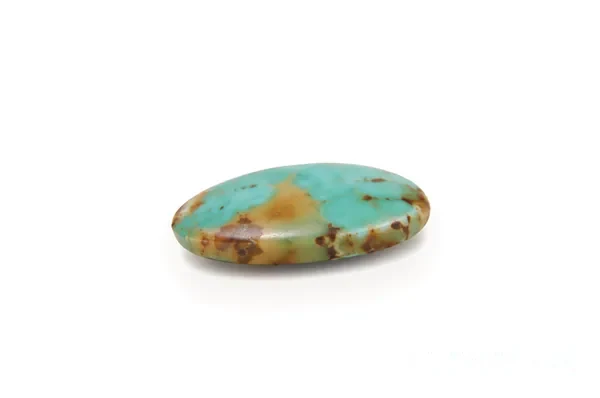
In Pakistan and Iran the long-standing favourite is an even, saturated "sky" or "robin's egg" blue, the shade people connect with Nishapur feroza from Iran. Greener blues and pale or chalky tones usually sit lower, although some buyers actually prefer them. The key is that the colour runs evenly across the stone and has some depth to it, instead of looking flat or powdery.
Matrix: the veins running through it
Many turquoises carry veins of the host rock in brown, black or gold, called matrix. A fine, even "spiderweb" matrix can be attractive and valuable on its own terms. In the traditional market here, though, most people choosing a ring stone want clean blue with little or no matrix.
Hardness and porosity
Natural turquoise sits at 5 to 6 on the Mohs scale and is porous. Denser, harder material polishes better, holds its colour longer and is worth more. Soft, chalky turquoise drinks in skin oils and can drift towards green over the years.
Natural, stabilised or treated?
Since so much turquoise is soft, a large share of it is stabilised: soaked in resin to harden it and lock in the colour. Stabilised turquoise is still real turquoise and a sensible pick for everyday jewellery, but naturally hard, untreated stones cost more. Dyed turquoise, where colour has been added, sits a step lower again. Ask the seller which one you are getting; we state treatments wherever we know them.
Imitations you should recognise
- Dyed howlite or magnesite: a white stone dyed blue. The dye collects in the veins and cracks, and a scratch on the back may show white underneath.
- Reconstituted turquoise: powder bound with resin, often with a look that is too regular.
- Plastic: very light, warm to the touch, and a fingernail can dent it.
Looking after feroza
Feroza is soft and porous, so keep it away from perfume, oils, soap residue and chemicals, and never put it in an ultrasonic cleaner. A dry or slightly damp cloth is all the cleaning it needs. It suits pendants and earrings better than a ring worn all day, or wear it as a ring you take off before washing up and cooking.
The traveller's stone
In South Asian tradition feroza is tied to Jupiter (Brihaspati) and has long been worn for protection on journeys. These are traditional beliefs, not guaranteed results; our rashi guide lists the pairings.
Buying feroza from us
We check and photograph every stone in our feroza collection on its own, so what you see is the actual colour and matrix. You might also want to compare kunzite or red agate. Urdu names are on our names page. We deliver with Cash on Delivery from Karachi: Karachi usually within 1 to 2 working days, then Lahore and every other city.
References