In this article

Written by Sameer
Reviewed on
Traditional belief vs gemmology: anything on this page about luck, protection, planets, healing or religious tradition describes traditional and cultural beliefs — not proven effects, religious rulings or medical advice. A stone's identity, hardness, treatment and origin are gemmology, which a lab can test; the references at the end of the page cover that side.
Cat's eye, called lehsunia in Urdu and Hindi, is traditionally worn on the middle finger or little finger of the right hand, set in silver or panchdhatu, and first put on in the evening or at a time an astrologer chooses. It is the stone of Ketu, the shadow planet of Vedic astrology, and that link brings more caution than most gems carry. Many astrologers ask for a trial period before a cat's eye is worn for good.
The practical side matters just as much. A cat's eye is always a domed cabochon, and the way it is set decides whether its line of light shows up clearly on your hand or disappears into the metal. This page covers both, with tradition clearly marked as tradition.
In short
- Finger: the middle finger most often; many astrologers name the little finger instead.
- Hand: usually the right.
- Metal: silver or panchdhatu; gold is also used.
- Day: traditions differ. Tuesday, Wednesday, Thursday and Saturday are all named by different teachers, often in the evening.
- Trial: many astrologers suggest keeping or wearing it for a few days first.
- Setting: a bezel or strong claws that leave the dome clear, with the eye running across the finger.
Lehsunia and Ketu in tradition
In the navaratna system each of the nine planets has its own gem, and cat's eye belongs to Ketu, the south node of the moon. In the old texts Ketu has no body; it is a shadow, linked with detachment, sudden events and protection from unseen trouble. Cat's eye is traditionally worn to ease a difficult Ketu period, for protection, and in some families for sudden gains.
Because Ketu is seen as unpredictable, astrologers usually advise against wearing lehsunia on a whim, and that is where the trial custom comes from. None of this promises any result, and we make no such promise. To see how the nine planetary stones fit together, visit our page on the navagraha stones. A planned article on cat's eye benefits will go into the beliefs further.
The trial custom
Many families in Pakistan follow a simple trial before committing to a cat's eye. The stone is tied in a piece of cloth on the arm, or kept under the pillow, for three to seven nights. If the wearer feels unsettled, sleeps badly or notices a string of small mishaps, the stone is put away. If nothing troubling happens, it goes into a ring.
This is folk practice; we cannot test it or vouch for it. It does the stone no harm, though, and it gives you a few days to look at the gem in different lights before it is set, which is useful anyway. Our 7-day returns fit around the custom nicely: a loose stone kept for a trial can still be sent back unset under our returns policy if you decide against it. One more reason to set the stone only after the trial, never before.
Which finger and which hand
Ketu shares many rules with Saturn, so the middle finger, Saturn's finger, is the most common advice. A large school prefers the little finger, and a few name the ring finger. The right hand is the usual choice. As with any planetary stone, if you are wearing lehsunia on an astrologer's advice, ask them to name the finger and hand, and do not improvise.
Practically, the middle finger is the most exposed to knocks. A high-domed cabochon there takes the first hit whenever you put your hand on a table or into a pocket. If you have a choice, a lower dome and a bezel suit the middle finger best.
Silver, panchdhatu or gold
Silver is the metal most often suggested for Ketu's stone, and it is the usual choice in Pakistan. Some astrologers prefer panchdhatu, the traditional five-metal alloy. Gold is also used and many find it perfectly acceptable. Honey and green cat's eyes look warm in yellow gold; grey and black stones look sharper in silver.
For durability, a silver bezel should be thick enough not to bend. Silver tarnishes and its edges wear over the years, so have a jeweller look at the setting now and then. Our guide to silver and gold ring settings compares the two in more detail.
Day and time of first wearing
This is where tradition varies most. Some astrologers say Tuesday, some Wednesday or Thursday, others Saturday, Saturn's day. Many prefer the evening or a time after sunset, in keeping with Ketu's shadowy nature, and a few link it to particular lunar mansions. Rinsing the ring in raw milk or clean water before wearing is a common family custom, and it is harmless to a cat's eye as long as you dry it afterwards.
With so much variation, the honest advice is to take the day and time from whoever recommended the stone. If the religious side of wearing a planetary stone worries you, ask a scholar you trust.
Weight in ratti
Astrologers usually ask for cat's eye by ratti. The gemstone ratti in Pakistan is 0.91 carat, so a "5 ratti" stone should weigh about 4.55 carats. The sunar's ratti is smaller, about 0.61 carat, and mixing the two up causes a lot of confusion. Our carat to ratti converter does the sums.
Cutters often leave extra weight on the underside of a cat's eye to keep the eye centred, so two stones of equal weight can look quite different in size from above. Ask for a side photo and the face-up measurements, and judge the size by the face, not by weight alone.
Know which cat's eye you have
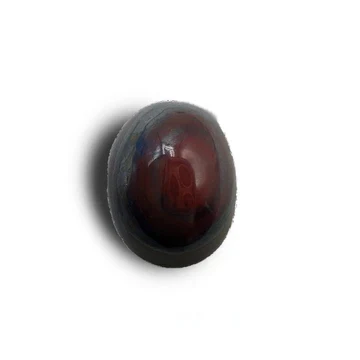
Classical lehsunia is chrysoberyl cat's eye, usually honey yellow to greenish and very hard at 8.5 on the Mohs scale. Plenty of other minerals can show an eye, including quartz, tourmaline and apatite, and darker "black cat's eye" stones are popular in Pakistan for their strong contrast. Our current listings include several, like this 11.10 carat black cat's eye and this 12.10 carat black cat's eye.
Astrologers disagree on whether a cat's eye that is not chrysoberyl can serve as lehsunia. If the stone is for astrological use, ask which mineral it is and check that your adviser accepts it. Hardness matters for wear too: a softer stone needs more protection. Our guide to lehsunia grading explains how the eye, the colour and the milk-and-honey effect are judged.
Setting a cat's eye so the eye shows
The line of light is the whole point of the stone, and a careless setting can hide it.
Orientation
The eye runs along the length of an oval cabochon. Most people like the oval set lengthwise along the finger, so the eye crosses the finger from side to side, which shows best as you move your hand. Settle this before the setter starts work.
Leave the dome clear
- Bezel: a smooth rim gripping the base of the stone and leaving the dome free. The safest choice for daily wear.
- Claws: four or six sturdy claws let in more light and can sharpen the eye. They suit hard chrysoberyl better than softer stones.
- Avoid a bezel that climbs up the dome; it cuts off the ends of the eye.
Open back
Many astrologers want the stone to touch the skin, so open backs are common. With a cat's eye that is fine: the eye is lit from above, so an open back does not weaken it, and it makes cleaning easier. Just make sure the thick underside does not press uncomfortably on the finger.
If you would like us to arrange the ring, message us on WhatsApp about our stone setting service.
Looking after it
- Wash it with soap and water. Lukewarm water, a drop of mild soap and a soft brush, especially behind an open back where soap film dulls the eye.
- Keep the polish up. A dull surface blurs the line of light. A soft cloth after cleaning brings it back.
- Mind the dome. Domes take knocks. Take the ring off for sport, heavy lifting and DIY.
- Wudu is fine for chrysoberyl and quartz cat's eye. Dry the ring afterwards.
- Store it on its own. Chrysoberyl scratches softer stones in a shared box, and softer cat's eyes get scratched by harder ones.
Our gemstone care guide covers cleaning and storage in more depth.
Before the ring is made: a checklist
- Confirm the finger, hand, metal, weight and day with your astrologer, in writing if you can.
- Ask which mineral the stone is, and whether your adviser accepts it.
- Convert ratti to carats at 0.91 carat per ratti.
- Keep the stone loose for a few days if you follow the trial custom.
- Agree the eye's orientation and a setting that leaves the dome clear.
Browse our cat's eye collection, where each stone is photographed on its own so you can judge the eye before ordering. We deliver across Pakistan, with Karachi orders usually arriving in 1 to 2 working days and other major cities in 2 to 4. With Cash on Delivery you open the parcel and check the stone before paying, and our authenticity page explains independent testing if you want it.
Shop the stones: cat eye.
The beliefs described here are traditions, shared for interest. They are not guaranteed outcomes, religious rulings or medical advice.
References