In this article
- What Moh-e-Najaf actually is
- Our current Moh-e-Najaf prices
- What decides the price
- Things that barely move the price
- How the per-ratti quote works in the bazaar
- Comparing quotes fairly
- Tasbih beads are priced another way
- Three pricing traps
- Budget bands, using our price filters
- Budgeting for the setting
- Where to start
- خلاصہ

Written by Sameer
Reviewed on
Walk through Saddar or along Tariq Road asking about Moh-e-Najaf, and three shops can give you three prices that are miles apart for stones of much the same weight. That is not always a con. Moh-e-Najaf, the rutilated quartz people love for its golden "hairs", is priced almost entirely on how it looks, and two stones of the same size can be very different once you study the needles inside them.
In this guide we explain what pushes the price up or down, show our own current listings per stone, per carat and per ratti, and give you a simple way to compare quotes so that you pay for the stone and not for the sales pitch.
What Moh-e-Najaf actually is
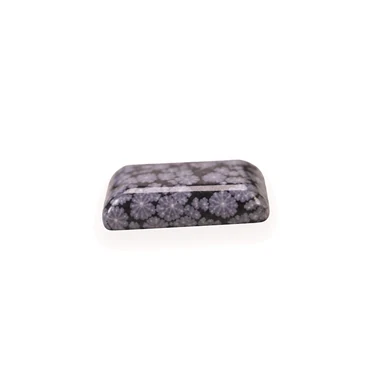
Moh-e-Najaf means "hair of Najaf". It is quartz that formed around very fine needles of a mineral called rutile. The needles are usually golden, and sometimes copper-red, silver or black. Many Shia and Sufi families hold the stone in respect because of its connection with Najaf, and it is a favourite for rings and tasbih beads. We describe this as tradition; for religious questions, please ask a scholar you trust. The background is on our page about Moh-e-Najaf in tradition and trade, and Dur-e-Najaf vs Moh-e-Najaf explains how it differs from its clear cousin.
Quartz itself is common. The money goes on a beautiful spread of needles inside clean, bright crystal.
Our current Moh-e-Najaf prices
This table is built from our own Moh-e-Najaf listings. It gives the lowest, typical and highest price per stone, plus the same figures per carat and per ratti, so you can hold any quote up against it whatever the size.
| Weight | Weights | Stones | Per carat | Per ratti |
|---|---|---|---|---|
| All Moh-e-Najaf in stock | 3.5 – 9.6 ct | 13 | Rs 370 – Rs 450 | Rs 340 – Rs 410 |
The per-ratti column uses the gemstone ratti of 0.91 carat, which is the standard for stones in Pakistan. If a jeweller quotes in sunari ratti, about 0.61 carat, convert it before you compare. Our carat to ratti converter does that instantly, and the gemstone price guide has the same kind of table for other stones.
What decides the price
1. The colour of the needles
Golden needles are the classic, and they are what most customers ask us for. Deep, bright gold usually sits above pale straw. Copper-red needles are less common and fetch more when the colour is strong. Silver and black needles have their admirers, but people usually treat them as a different style rather than a step up in price.
2. How dense the needles are, and the pattern they make
This matters more than anything else. Buyers pay most when the needles fill the stone evenly, cross in pleasing bursts or fans, and look alive from every angle. A stone with a few stray hairs off to one side sells for far less than one with a full, balanced pattern. Go too dense, though, and the stone turns dark, so the finest pieces balance plenty of needles with plenty of brightness.
3. How clear the quartz is
The quartz around the needles should be clear. Cloudy or milky patches, cracks and large feathers all pull the value down. Smoky rutilated quartz, with a grey-brown body, is usually priced below water-clear stone unless the contrast between body and needles is especially striking.
4. Cut and finish
Most ring stones are cut as cabochons, because a smooth dome shows the needles clearly. Faceted stones sparkle more but break the needle pattern into pieces. A well-proportioned stone with a good polish costs a little more than a lumpy cabochon with a flat top, or one with a thick, heavy base that adds weight and nothing else.
5. Size
Size matters less here than with many stones, since quartz crystals are often big. Price does rise with weight, but a smaller stone with a fine pattern will often cost more than a bigger, plainer one. Keep an eye out for deep bases: they raise the carat weight you are paying for and add nothing once the stone sits in a ring.
6. Natural or imitation
Glass with fibres set inside it is the most common fake we come across in Pakistan. It is cheap, and it should be priced as cheap. Natural rutilated quartz is rarely treated, though now and then a stone is filled to hide cracks. Our article on reading the needles inside shows how to tell glass from quartz in a few seconds.
Things that barely move the price
- Origin. Most rutilated quartz on the market comes from Brazil, with other sources in Africa and Asia. Unlike zamurd or yaqoot, origin hardly changes the price of Moh-e-Najaf.
- The word "Najaf". The name comes from the tradition, not the mine. If a seller wants extra because a stone is "from Najaf", ask them to prove it.
- A certificate on its own. A certificate confirms that the stone is natural quartz. It says nothing about how beautiful the needles are. Pay for the stone, not the paper.
How the per-ratti quote works in the bazaar
A lot of dealers in Pakistan quote Moh-e-Najaf by the ratti rather than by the stone. They name a rate per ratti and multiply by the weight. That makes a big stone sound affordable until you see the total, and it hides the fact that the rate itself ought to change with quality. Three habits help:
- Ask which ratti. Gemstone ratti (0.91 carat) or sunari ratti (about 0.61 carat)? The difference is roughly a third, which changes the total a great deal.
- Ask for the weight in carats as well. Carats are the international unit, and a digital scale reading in carats leaves no room for argument.
- Ask for the total price of the stone. Compare totals first, then divide by the weight yourself.
Comparing quotes fairly
When you have two or three stones in front of you, lay them side by side and go through this list:
- Same unit. Bring every quote to a price per carat.
- Same quality. Compare needle colour, density and clarity, not just weight. A lower rate on a plainer stone is not a saving.
- Same item. Is the price for the loose stone or for the stone in a ring? Silver, labour and design can be a big share of the total.
- Same honesty. Will the seller write "natural rutilated quartz" on the bill and tell you about any filling?
- Same protection. Can you check the stone before paying, and send it back if it is not as described?
Paying slightly more to a seller who lets you check the stone at your door and return it within a week is often the better deal.
Tasbih beads are priced another way
A Moh-e-Najaf tasbih is a different purchase from a ring stone. Thirty-three or ninety-nine beads have to come from material that shows needles throughout, and then they have to be drilled, matched and strung. The price depends less on any one bead and more on how well the whole set matches: even colour, similar needle density, round and equal beads, clean drill holes and a strong thread. A tasbih is normally sold as one piece rather than by ratti, so ask for the bead size, the number of beads and the total. Sets where a few beads are glass or plain quartz are a known shortcut, so turn every bead in the light before you pay. Our guide to choosing a tasbih stone compares Moh-e-Najaf with aqeeq, Dur-e-Najaf and others.
Three pricing traps
- The heavy base. A cabochon with a thick, bulging underside can weigh a third more than a well-cut stone with the same face size. On a per-ratti rate, you pay for that hidden weight. Ask for a photo from the side.
- "Ring included". A low total that includes a ring may be hiding a thin, light silver mount or a plain stone. Ask for the stone weight and the silver weight separately.
- The sudden discount. If the price drops sharply the moment you hesitate, the first price was never real. Judge the stone against the table above, not against the opening figure.
Budget bands, using our price filters
You can filter our shop by budget, which is the quickest way to see what each level buys across all stones:
- The lowest price band: entry-level stones, often smaller cabochons or ones with lighter needles.
- The second band: everyday ring stones with fuller, brighter needles.
- The third band: bigger stones and fine, balanced patterns.
- The top band: exceptional patterns, rare colours or large showpieces.
Not every band will have Moh-e-Najaf in it at any given moment; the table above shows where our current stones really fall.
Budgeting for the setting
Most people buy Moh-e-Najaf to wear in a silver ring, so plan for the ring on top of the stone. A plain silver bezel costs least; heavy, engraved or handmade designs cost more. Our stone setting service page explains how it works, and the upcoming how to wear Moh-e-Najaf guide covers finger and metal customs. For a men's ring, see the silver ring with stone page.
Where to start
Every stone in our Moh-e-Najaf collection is photographed on its own and priced on its own, so the needles in the picture are the needles you receive. Try comparing the 3.50 carat Moh-e-Najaf with the 4.05 carat Moh-e-Najaf, and notice how needle density separates them as much as weight does. The upcoming Moh-e-Najaf buying guide goes deeper into choosing a stone.
We confirm each order on WhatsApp or by phone and dispatch within one working day by insured, tracked courier. In Karachi, from Gulshan-e-Iqbal and North Nazimabad to Bahria Town Karachi, delivery usually takes 1 to 2 working days; Lahore, Islamabad, Rawalpindi and the other big cities about 2 to 4; smaller towns up to about 7. Delivery is a flat Rs. 500 per order. Pay Cash on Delivery: open the parcel in front of the rider, look at the needles in your own light, and pay only if you are happy. Unused stones can be returned within 7 days under our returns policy.
Shop the stones: moh e najaf.
The beliefs mentioned on this page are traditions, shared for interest only. They are not promised outcomes, religious rulings or medical advice.
References