In this article

Written by Sameer
Reviewed on
Traditional belief vs gemmology: anything on this page about luck, protection, planets, healing or religious tradition describes traditional and cultural beliefs — not proven effects, religious rulings or medical advice. A stone's identity, hardness, treatment and origin are gemmology, which a lab can test; the references at the end of the page cover that side.
Moh-e-Najaf is generally worn in a silver ring on the right hand, usually on the ring finger or the little finger, and many families put it on for the first time on a Friday or on a date that holds religious meaning for them. These customs come from Shia family practice and from the wider Muslim tradition of wearing rings, not from astrology, which makes this stone quite different from neelam or pukhraj.
The stone itself is rutilated quartz: clear quartz threaded with fine golden, reddish or dark needles. How it is set decides whether those needles show well on the hand. Below we cover the customs, the ring and the care, and leave the religious questions where they belong, with a scholar you trust.
In brief
- Hand: the right hand, by the most common custom.
- Finger: ring finger or little finger. Many families avoid the index and middle fingers for rings.
- Metal: silver, almost always, and particularly for men.
- Day: Friday is common; some choose a date tied to the Ahl al-Bayt.
- Setting: a silver bezel with an open back, the needles turned to their best side.
- Care: soap and water for the stone, and polish the silver separately.
Where the custom comes from
Moh-e-Najaf, "the hair of Najaf", takes its name from the holy city in Iraq that holds the shrine of Imam Ali, and from the hair-like needles inside the stone. It is a close relative of Dur-e-Najaf, which is the same mineral without the needles; our comparison of Dur-e-Najaf and Moh-e-Najaf explains the difference. Its standing in Pakistani homes comes mostly from that link to Najaf and from family custom, rather than from specific narrations about the stone itself. Our page on Moh-e-Najaf in tradition and trade covers this background.
People wear it as a reminder of devotion, and many hope it brings steadiness and protection. Those are beliefs. We don't promise any result, and we give no religious rulings. If you want to know what a particular narration says or how it applies to you, please ask a scholar you trust.
Which hand
The right hand is the custom in most Shia families, and many Sunni families prefer it for a stone ring as well. It is what you will hear from nearly every elder in Pakistan who wears Moh-e-Najaf. Some people wear rings on both hands, aqeeq on one and Moh-e-Najaf on the other, for example. Practice differs between families and schools of thought, so follow your own tradition and ask a scholar if you aren't sure.
Which finger
Many Muslims avoid rings on the index and middle fingers, citing hadith, and wear them on the ring finger or little finger instead. Both of those are common for Moh-e-Najaf. The ring finger usually carries a bigger oval stone better, while the little finger suits a smaller stone and keeps it out of the way of knocks.
The practical questions are size and comfort. Stones for men's rings are often several carats, and a big dome on the little finger can feel bulky. Measure the exact finger with our ring size guide before the ring is made, ideally in the evening when fingers are a little fuller, and remember it is the stone's face-up size, not its weight, that decides how it sits.
Silver, and why gold is rare
Silver is the traditional metal for Moh-e-Najaf. Most Muslim scholars hold that men shouldn't wear gold jewellery, so men's Najaf rings are nearly always silver; if that question matters to you, ask a scholar you trust. For women, gold is allowed in most views and is sometimes used, but silver is still the usual pick because it suits the stone. Golden rutile needles look warm and clear against white silver, whereas yellow gold can make them disappear into the band.
Most silver rings here are 925 sterling, which is strong enough to hold a stone. A thicker, heavier band suits the bold men's style that is common for Najaf rings. For a plain guide to choosing a band, see our page on the chandi ring with stone.
The day, and the first wearing
There is no one fixed day. Friday, the day of Jumu'ah, is the most common. Some families choose a date linked with Imam Ali or the Ahl al-Bayt, such as 13 Rajab, while others like to put on new Najaf stones before or after Muharram; our guide to stones and Muharram covers the customs around that time. Many people simply say Bismillah or a short prayer of their own and put the ring on after wudu.
Some families wash a new ring in clean water before wearing it for the first time, which does the stone no harm at all. Whatever you choose, these are family customs, and a scholar is the right person for any question of religious practice.
Wudu, prayer and daily wear
Quartz doesn't mind water, so wudu and hand washing do the stone no harm. Dry the ring afterwards so soap and water don't leave a film behind an open-back stone. Whether a ring should be moved or taken off for wudu or ghusl, or whether rings engraved with names should be worn in certain places, are religious matters, so ask a scholar you trust.
Plenty of men wear their Najaf ring every day for years. Quartz at 7 on the Mohs scale copes with that well, but it isn't indestructible, as the care section below explains.
Wearing it with aqeeq and Dur-e-Najaf
Moh-e-Najaf is often worn alongside other stones from the same tradition. A common pairing is aqeeq on one hand and a Najaf stone on the other, or two rings on the same hand, ring finger and little finger. Some men keep several rings and rotate them through the week. Custom has no rule against combining them, though some families have their own preferences. If you are putting together a set, our pages on aqeeq for men and Dur-e-Najaf will help you choose the companion stones.
One practical warning: two rings on neighbouring fingers rub against each other. Quartz will scratch softer stones and wear down silver, so leave a little gap or choose low settings.
Setting it so the needles show
The needles are what you are paying for, and the setting can either show them off or bury them.
Pick the face
Before setting, hold the stone up to a window and turn it. The needles lie at different depths and angles, and one face usually shows them better: richer colour, a nicer spread, or a pleasing fan or star. Point that side out to the setter so it faces up.
Cabochon or faceted
Most Moh-e-Najaf is cut as a smooth cabochon, which magnifies the needles and gives a clean, traditional look. A faceted top adds sparkle and shows the needles from more angles, but it can make a busy pattern look cluttered. Let the stone in front of you decide.
An open back for light
Rutilated quartz relies on light passing through it. An open back, or at least a generous window under the stone, keeps it bright; a closed back can make it look grey on the hand. Many families also prefer the stone to touch the skin.
A strong bezel
A smooth silver bezel protects the edges and suits the traditional men's design. Make sure it is thick enough not to bend with daily wear. For a stone bought from us, our stone setting service page explains how setting can be arranged; message us on WhatsApp to talk it through.
Engraving
Some people ask for names or short phrases engraved on the band or the back of the stone. A skilled hand can engrave quartz, but needles that reach the surface can make the work uneven, so ask the engraver to look at the stone first.
Looking after it
- The stone: warm water, a drop of mild soap and a soft toothbrush, especially behind an open-back setting. Rinse and dry.
- The silver: a silver polishing cloth on the band. Don't dip the whole ring in silver cleaning liquid, which can leave residue in any tiny surface pits around the needles.
- Knocks: quartz can chip from a sharp blow, especially on a high dome. Take the ring off for heavy work, sport and the gym.
- Heat: sudden heat can crack quartz that holds needles. Keep it away from the stove, and don't let a jeweller solder near the set stone.
- Storage: give it its own pouch or compartment, away from harder stones and from softer ones it could scratch.
Choosing the stone
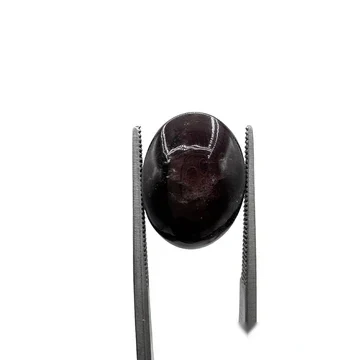
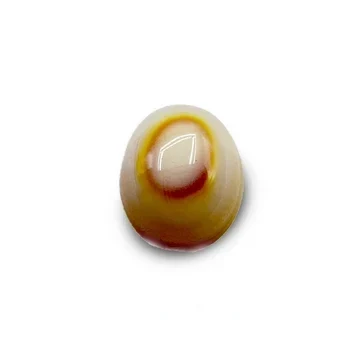
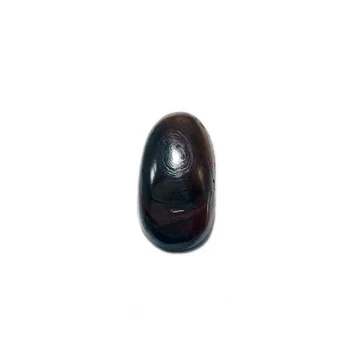
Look for well-coloured needles spread evenly through clear quartz, and a nicely polished dome. Those matter more than size. Every stone in our Moh-e-Najaf collection is photographed on its own, like this 3.50 carat Moh-e-Najaf or this 4.05 carat Moh-e-Najaf. Before buying from anyone, read our article on Moh-e-Najaf or glass to learn how the needles give a fake away.
We send from Karachi with Cash on Delivery. Karachi addresses usually receive in 1 to 2 working days, Lahore, Islamabad and the other big cities in 2 to 4, and the rest of Pakistan within about a week. Open the parcel and check the stone before paying, with 7-day returns. For help choosing a stone and a ring, message us on WhatsApp.
Shop the stones: moh e najaf.
The beliefs mentioned on this page are traditions, shared for interest only. They are not guaranteed outcomes, religious rulings or medical advice.
References