In this article
- What moonstone actually is
- Moonstone in Vedic astrology
- Folk and popular beliefs
- Is there an Islamic tradition around moonstone?
- Who usually wears moonstone
- What it does well
- Where it has limits
- Moonstone or pearl? A practical comparison
- Moonstone as a gift
- Choosing a moonstone you'll enjoy
- Moonstone from Authentic Gems
- خلاصہ

Written by Sameer
Reviewed on
Traditional belief vs gemmology: anything on this page about luck, protection, planets, healing or religious tradition describes traditional and cultural beliefs — not proven effects, religious rulings or medical advice. A stone's identity, hardness, treatment and origin are gemmology, which a lab can test; the references at the end of the page cover that side.
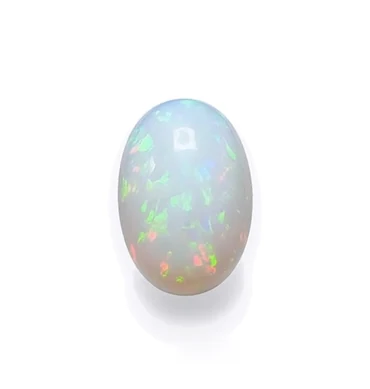
Moonstone is the stone with a light that moves inside it. Tilt it and a soft blue or silvery glow drifts across the surface, like moonlight on water, and that is where both its English name and its old name here, chandrakant, come from. The glow has earned it a long list of traditional meanings: calm, sleep, affection, and a link with the Moon in Vedic astrology. It has also earned it a reputation as a gentle, everyday alternative to moti.
Below we explain what those traditions say, who usually wears moonstone, and what it can and can't do as a piece of jewellery. The beliefs are described as beliefs. The practical parts are described as facts, because a stone you plan to wear for years has to suit your life before it suits your horoscope.
What moonstone actually is
Moonstone is a feldspar, from the same mineral family as labradorite and sunstone. Inside it are extremely thin, alternating layers of two kinds of feldspar. When light goes in, those layers scatter it and create the floating sheen gemmologists call adularescence. The finer and more even the layers, the bluer and sharper the glow; coarser layers give a broader, whiter sheen.
In Pakistan you will find several kinds sold as moonstone:
- Blue-sheen moonstone: almost colourless with a blue glow. The most prized.
- White and grey moonstone: a milky body with a silvery or white sheen. Common, and good value.
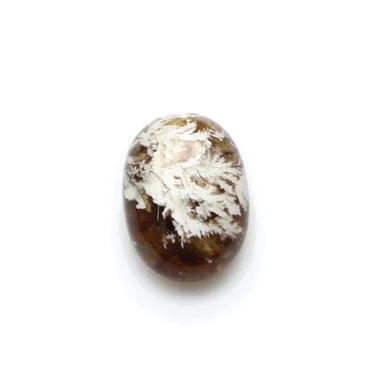
- Peach and brown moonstone: a warm body colour with a softer sheen.
- "Rainbow moonstone": a white stone with flashes of blue and other colours. Strictly speaking it is a type of labradorite, but nearly everyone sells it as moonstone. For the darker, stronger version, see our labradorite collection.
Moonstone in Vedic astrology
In Vedic astrology the Moon (Chandra) stands for the mind, the emotions, the mother, rest and the home. Moti is the classical Moon stone, and moonstone is the most common substitute (uparatna). Astrologers often suggest it for people who have been advised pearl but want a harder stone, a bigger stone for the same money, or simply like the look better.
The customs that usually go with it:
- Metal: silver, which tradition also ties to the Moon.
- Finger: the little finger or ring finger, usually on the right hand.
- Day: Monday, often in the evening or on a night of the waxing moon.
Astrologers disagree on these details, and on whether the stone suits a particular chart. If you follow an astrologer, agree the stone, weight and finger with them before a ring is made. Our planets and gemstones page lists the common pairings, and the Cancer gemstones page covers the sign the Moon rules in Western astrology.
Folk and popular beliefs
Outside formal astrology, moonstone has picked up meanings in many cultures. In popular gem lore it is called:
- A stone of calm: plenty of people keep it for a quieter mind and steadier moods. Our calm and focus page lists it with other stones chosen for the same reason.
- A stone for sleep: some keep it by the bed or wear it at night.
- A stone of affection: it is a common gift between couples and at engagements, and it appears on our love and harmony page.
- A traveller's stone: old European folklore tied it to safe travel at night.
- A women's stone: because of the Moon's link with cycles, many families give it to daughters and new mothers.
These are beliefs handed down, not promises, and moonstone is not a treatment for any medical or emotional condition. If you are having trouble with sleep or mood, please see a doctor. A stone can be a reminder to slow down, but it isn't care.
Is there an Islamic tradition around moonstone?
Not in the way there is for aqeeq, feroza or Dur-e-Najaf. Moonstone isn't among the stones named in the devotional reports usually quoted in Pakistan. Plenty of Muslims wear it simply because they like it, as they would any other gem. If you want a stone from the Islamic tradition, our Islamic gemstones guide covers them, and for any religious question please ask a scholar you trust.
Who usually wears moonstone
- People whose astrologer advised pearl but who want a harder or larger stone.
- June birthdays, since moonstone shares the month with pearl. Our June birthstone page compares the two.
- Cancer-born wearers who follow the Western zodiac.
- Women who like a soft, pale stone in a pendant, ring or earrings.
- Anyone after a light-coloured stone that goes with silver and everyday clothes. Our white gemstones page has similar options.
What it does well
It looks different every time you move
The sheen follows the light, so the stone never looks flat. A domed cabochon shows it best, with the glow sitting in the middle when you look straight down.
Big stones are easy to find
Moonstone grows in good-sized pieces, so a ring stone of ten carats or more is normal rather than rare. That suits people who want a stone you can see, and people whose astrologer has named a weight in ratti. Remember the standard gem ratti is 0.91 carat, and use our carat to ratti converter to check any quoted weight.
Harder than pearl
At 6 to 6.5 on the Mohs scale, moonstone is much harder than pearl, which sits at about 2.5 to 4.5. It stands up to everyday scuffs far better and minds sweat and perfume much less.
Where it has limits
Moonstone is harder than pearl but softer than quartz, and it has cleavage, meaning directions along which a sharp knock can split it. So:
- a ring needs a protective bezel, or a setting that guards the edges;
- take it off for the gym, gardening, cricket or heavy housework;
- ultrasonic and steam cleaners aren't safe for it.
Our full moonstone care guide covers cleaning and storage, so we won't repeat it all here. In short: lukewarm water, mild soap, a soft brush, and a pouch of its own.
Moonstone or pearl? A practical comparison
The two share the Moon in astrology and June in the birthstone calendar, so people often weigh one against the other. Tradition treats them as related; as materials they could hardly be more different.
| Point | Moonstone (chandrakant) | Pearl (moti) |
|---|---|---|
| Origin | A mined feldspar mineral | Grown inside a mollusc |
| Hardness | 6 to 6.5 Mohs | About 2.5 to 4.5 Mohs |
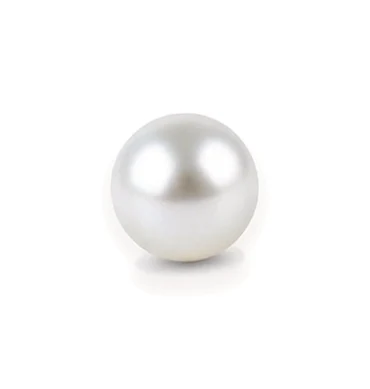
| Look | A floating blue or white sheen | A soft surface lustre |
| Sweat and perfume | Copes with them reasonably | Easily dulled by acids and cosmetics |
| Typical ring size | Large stones are common | Large fine pearls are scarce |
| Vedic role | Substitute (uparatna) for the Moon | The main Moon stone |
Put simply, pearl is the classical choice and moonstone the practical one. Someone who works with their hands, sweats through a Karachi summer, or wants one ring to wear every day often finds moonstone easier to live with. Someone who wants the main traditional stone and is happy to look after it carefully usually goes for pearl. Our upcoming guide to pearl benefits sets out the pearl side the same way.
Moonstone as a gift
Moonstone is a popular family gift in Pakistan, because its meanings are gentle and it doesn't need a horoscope to justify it. People give it to a daughter at her wedding, to a new mother, to a friend having a stressful year, or to a couple at their engagement. A pendant is the safest gift, since it avoids the knocks a ring takes and needs no ring size. If you do give a ring, our ring size guide explains how to measure without spoiling the surprise.
Choosing a moonstone you'll enjoy
Whatever your reason for buying, the stone you'll be happiest with has a clear, centred sheen and a body as transparent as your budget allows.
- Tilt it under a single light. The glow should glide smoothly across the surface. If it doesn't move at all, the stone may be glass or opalite.
- Look at the body. Clearer stones show the sheen more strongly. Cracks reaching the surface are a weak point in a ring.
- Check the dome. A well-shaped, symmetrical cabochon keeps the sheen in the centre.
- Ask about the type. Blue-sheen, white, peach and rainbow are all good choices, but they are priced differently.
The upcoming guide to real and fake moonstone goes further into imitations, and how to wear moonstone covers settings and fingers in detail.
Moonstone from Authentic Gems
Every stone in our moonstone collection is photographed on its own, so you can judge the sheen before you order. For example, this 13.25 carat chandrakant suits a man's ring, while this 10.65 carat moonstone sits nicely in a smaller ring or a pendant. For what affects the cost, see moonstone price in Pakistan.
We deliver with Cash on Delivery anywhere in Pakistan, so you can open the parcel in front of the rider and tilt the stone under a light before you pay. We confirm orders by phone or WhatsApp and dispatch within 1 working day by insured, tracked courier. Karachi deliveries usually take 1–2 working days, Lahore, Islamabad and other major cities 2–4, and smaller towns up to about 7. You have 7 days to return an unused stone. For help choosing, message us on WhatsApp.
Shop the stones: moonstone.
The beliefs mentioned here are traditions, shared for interest. They are not promised outcomes, religious rulings or medical advice.
References