In this article
- What a pearl is
- Moti in Vedic astrology
- Moti in Muslim tradition
- Folk beliefs and family custom
- Who traditionally wears a pearl
- What living with a pearl is really like
- Looking after a pearl
- Making sure the moti is genuine
- Pearl or moonstone for the Moon?
- Picking colour and shape for a traditional ring
- Choosing a pearl from Authentic Gems
- خلاصہ

Written by Sameer
Reviewed on
Traditional belief vs gemmology: anything on this page about luck, protection, planets, healing or religious tradition describes traditional and cultural beliefs — not proven effects, religious rulings or medical advice. A stone's identity, hardness, treatment and origin are gemmology, which a lab can test; the references at the end of the page cover that side.
Few gems mean as much in Pakistani homes as the moti. You find it in a grandmother's earrings, in a bride's set, and in the small silver ring an astrologer suggests for a restless mind. People ask about pearl "benefits" for all sorts of reasons, and the answers come from several traditions that do not always agree with each other.
Here we set out what those traditions say, clearly marked as belief rather than fact, and then move to the practical side: who traditionally wears a pearl, what it is like to live with, and how to keep it lustrous for years. If price is your question, read what decides a pearl's price instead. Our pearl collection shows each moti with its own photo and weight.
What a pearl is
A pearl grows inside a living mollusc, built up from thin layers of nacre around an irritant. That makes it an organic gem, like coral and amber, and very different from mined stones such as sapphire. Its glow comes from light bouncing between the layers of nacre, which is why a good pearl seems to shine from inside.
Most pearls on the market are cultured: a person placed the nucleus, and the mollusc did the rest. Natural pearls, formed without any help, are rare. Both are real pearls; glass and plastic imitations are not. When traditions talk about moti they assume a genuine pearl, natural or cultured, and many astrologers prefer natural where the budget stretches to it.
Moti in Vedic astrology
Vedic astrology makes pearl the gem of Chandra, the Moon, one of the nine planets in the navaratna arrangement. The Moon is traditionally connected with the mind, emotions, the mother and sleep, and astrologers in this tradition may suggest a pearl when they read the Moon as weak or troubled in a birth chart. Our Navagraha page has more on the nine planetary stones.
Benefits traditionally linked with wearing moti include:
- a calmer temperament and less anger, according to many practitioners;
- better sleep and a more even mood, in the traditional view;
- closer family bonds, particularly with the mother;
- support for people whose work involves dealing with the public.
These are beliefs within the tradition. They are not medical claims, and a pearl is no replacement for a doctor if you are unwell or not sleeping. Many families also believe the right stone depends on the whole chart, so they see an astrologer before buying.
Moti in Muslim tradition
The Qur'an mentions pearls in its descriptions of paradise and its people, and in a verse about the two seas from which pearl and coral come. Because of this, many Muslim families think of the pearl as a pure, honoured gem and choose it as a gift at nikah, at Eid and when a child is born.
Whether men may wear pearl jewellery, or what particular verses mean, are questions for religious scholarship. We do not give rulings; please ask a scholar you trust. Our Islamic gemstones page covers the stones most often worn in Muslim tradition, and nikah and wedding gemstone gifts has ideas for giving moti.
Folk beliefs and family custom
Outside formal astrology, plenty of pearl beliefs are handed down within families. Some say a pearl cools a hot temper; others that it brings peace to a home. A pearl is often given to a new bride or a new mother, and older women sometimes pass a single moti on to a daughter or granddaughter.
In Western tradition pearl is June's birthstone, shared with moonstone, and is linked with purity and loyalty. Our June birthstone page and the guide to choosing pearl or moonstone cover that side.
Who traditionally wears a pearl
These are the groups most often advised to wear moti within the traditions above. Read it as background, not a prescription.
- Kark (Cancer) rashi. The Moon rules Cancer, so pearl and moonstone are its traditional stones. See Cancer gemstones.
- People with a weak Moon in their chart, as read by a Vedic astrologer.
- People who simply want a calm, gentle stone, often chosen from our calm and focus stones.
- Brides and new mothers, by family custom.
Some astrologers advise against wearing pearl together with certain other planetary stones, such as hessonite (gomed) or cat's eye (lehsunia), while others see no problem. If you already wear a planetary stone, ask your astrologer about combining them.
How moti is traditionally worn
In Vedic practice a pearl is normally set in silver and worn on the little finger of the right hand, often first put on on a Monday, the Moon's day, while the moon is waxing. Some astrologers suggest a weight based on body weight; others just recommend a size the wearer is comfortable with. Silver is a practical choice anyway, since it suits the pearl's soft white. Our guide on how to wear a pearl goes into finger, metal and timing in more detail.
What living with a pearl is really like
Whatever the tradition says, a pearl is soft. At about 2.5 to 4.5 on the Mohs scale it scratches more easily than any mined stone you are likely to have in a ring. Nacre also reacts with acids, and that includes sweat, perfume, hairspray, lemon juice and many cleaning products.
That does not rule out daily wear. It means a pearl suits a setting that protects it and a wearer who takes it off for rough work. A few practical points:
- Setting. A bezel or deep cup protects the edge better than open claws. Pearls are often glued onto a post as well as held by metal, and a good setter does both.
- Ring or pendant. A pendant or earrings take far less punishment than a ring. If you want a ring for everyday wear, pick a sturdy setting.
- Colour. White, cream and light rose tones suit most skin tones here and go well with silver.
- Size. A bigger pearl shows off lustre better, but a smaller one sits more comfortably on the little finger.
For the setting itself, see silver or gold settings and our stone setting service.
Looking after a pearl
Lustre is the whole point of a pearl, and it is lost through small habits rather than accidents. These habits protect it:
- Last on, first off. Put the pearl on after perfume, attar, cream and hair products, and take it off before washing, wudu or cooking where you can.
- Wipe it after wearing. A soft, slightly damp cloth removes sweat and oil. Let it dry before putting it away.
- No ultrasonic or steam cleaning, and no detergents, bleach or vinegar.
- Store it apart from harder stones in a soft pouch, so diamonds, sapphires and even quartz cannot scratch it.
- Do not seal it away completely. Pearls hold a little water, and years in a sealed plastic bag or a hot, dry cupboard can dull or crack the nacre.
- Restring strands every year or two if you wear them often, because silk stretches and frays.
Our general gemstone care guide covers storage for the rest of your stones.
Making sure the moti is genuine
Every tradition above assumes a real pearl. Glass and plastic imitations are common in the markets, and coated beads can look convincing in a photo. A real pearl usually feels a little gritty when rubbed gently along the edge of a tooth, while imitations feel smooth. Up close, a real pearl has small surface marks; a perfectly flawless bead is a warning sign. Our guide to real and fake pearls goes through the checks in more depth.
Pearl or moonstone for the Moon?
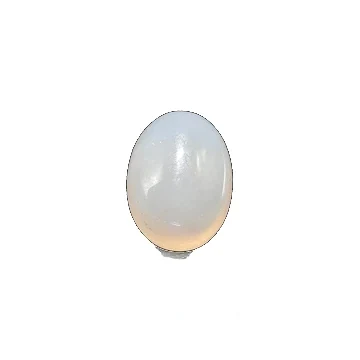
Pearl and moonstone are both traditionally tied to the Moon, and some astrologers accept moonstone as a substitute when a natural pearl is out of reach or the wearer wants something harder. Others say only a pearl will do. The practical difference is plain: moonstone is harder, at about 6 to 6.5 on the Mohs scale, and copes better with daily wear, while pearl has a warmer, softer glow. If you cannot decide, our guide to choosing pearl or moonstone compares them side by side.
Picking colour and shape for a traditional ring
For a ring worn for traditional reasons, most families go for a white or cream pearl with a clean surface and bright lustre. Round is the classic choice, but a well-shaped oval or button pearl sits lower on the finger and is less likely to knock against things. Strong lustre matters more than size: a smaller pearl with a sharp, mirror-like shine looks better than a bigger, chalky one. If a seller cannot tell you whether a pearl is natural or cultured, ask for testing before you buy.
Choosing a pearl from Authentic Gems
Each pearl we list has its own photo and weight, for example our 10.50 carat pearl and 12.05 carat pearl. If you would like a Moon stone with a different look, our moonstone collection is the traditional alternative.
Cash on Delivery covers all of Pakistan, and you open the parcel and check the pearl before paying. We confirm orders by phone or WhatsApp and dispatch within 1 working day by insured, tracked courier. In Karachi, whether you are in Clifton, DHA or Gulshan-e-Iqbal, parcels usually arrive in 1 to 2 working days; Lahore, Islamabad and other major cities usually take 2 to 4, and smaller towns up to about 7. Delivery is a flat Rs. 500 and returns are accepted within seven days. For help choosing a size for a ring or pendant, message us on WhatsApp.
Shop the stones: pearl.
The beliefs described here are traditions, shared for interest. They are not guaranteed outcomes, religious rulings or medical advice.
References