
In this article
- Our red agate prices
- Red agate or aqeeq: why the name moves the price
- What decides the price
- Per carat, per ratti or per piece
- Comparing two quotes
- Budget bands in the shop filters
- Rings, tasbih and other uses
- What a fair listing should tell you
- Wear and long-term value
- Red agate in tradition
- Buying red agate from Authentic Gems
- خلاصہ

Written by Sameer
Reviewed on
Red agate is one of the cheapest natural stones you can buy in Pakistan, and oddly enough that is what makes its pricing so confusing. When a stone starts out inexpensive, small quality differences can double its price, and every shop draws its own line between red agate and aqeeq. Two stones that look almost the same on a tray can end up with different names and very different price tags.
Below we explain how red agate is priced, share our monthly price table, and give you a straightforward way to turn any quote into a number you can actually compare.
Our red agate prices
This table is built from our own red agate listings and updated every month. It shows the lowest, typical and highest price per stone, per carat and per ratti.
| Weight | Weights | Stones | Per carat | Per ratti |
|---|---|---|---|---|
| 3 – 6 carat | 4.9 – 5.8 ct | 4 | Rs 150 – Rs 160 | Rs 140 – Rs 150 |
| 6 – 10 carat | 6.7 – 8.9 ct | 3 | Rs 150 – Rs 150 | Rs 140 – Rs 140 |
| Over 10 carat | 10.2 – 26.6 ct | 16 | Rs 110 – Rs 220 | Rs 100 – Rs 200 |
Look at the per-carat figures first. For the wider market across all stones, our monthly gemstone price guide uses the same layout.
Red agate or aqeeq: why the name moves the price
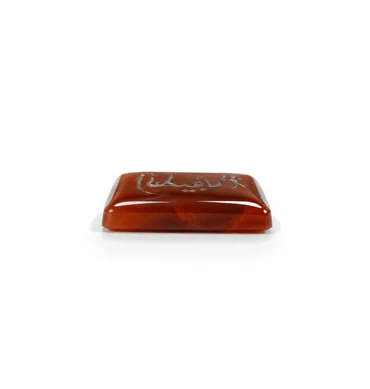
As minerals, red agate and carnelian are both chalcedony coloured by iron. Agate is the banded form. Carnelian, which most Pakistani buyers simply call aqeeq, is usually more even in colour and lets more light through. In real life the boundary is fuzzy, and one shop's "red agate" is the next shop's "aqeeq".
The name matters because "aqeeq", and "Yemeni aqeeq" above all, carries a reputation that can push the price up. Sold under its plain name, red agate is usually cheaper. Neither label is dishonest in itself, but you should be judging the stone, not the word on the tag. Hold a red agate quote up against stones in our aqeeq category and our aqeeq price guide, and ask what makes one worth more than the other.
What decides the price
Colour
A warm, rich red is what everyone wants, followed by orange-red and brick red. Brownish or washed-out stones come lower. A bit of variation in shade is normal for agate; what pulls the price down is muddy colour or big pale areas on the face.
Glow
Hold the stone up to a window. A good red agate lights up and looks alive, while a poor one stays flat and dead. Translucency does more than anything else to separate a pleasant everyday stone from a fine one, and it is easy to check in a backlit photo or video.
Bands and pattern
Some buyers want even colour with hardly any banding. Others like soft, curved bands that show it is agate. Neat, attractive bands sitting centred on the face can add value; messy bands, or ones slicing across the middle at an awkward angle, take it away.
Natural, heated or dyed
Plenty of red agate on the market has been heated or dyed. Heating is an old, stable way of deepening the red. Dye can give a painted, perfectly even colour and should be priced well below natural. Our first-time buyer's guide to red agate shows how to spot dye, and a fair seller will tell you either way.
Finish and soundness
A glassy polish without pits, chips or cracks puts a stone at the top end of what is otherwise a cheap category. Cracks matter more on a ring stone, because it takes knocks every day.
Size and shape
Red agate is plentiful, so the per-carat rate only creeps up with size. A large stone with even colour and good glow still costs more, simply because such pieces turn up less often. Standard ring shapes, mostly ovals and cushions, are easier to set and keep costs down.
Per carat, per ratti or per piece
In our bazaars, ring stones are often priced per ratti, or just per piece. The standard gemstone ratti is 0.91 carat, about 0.182 g. Some jewellers use the sunari ratti, around 0.1215 g or roughly 0.61 carat, and on that scale the same stone weighs more ratti and the per-ratti price sounds lower. Always ask which ratti a quote is in.
- Price per carat = total price ÷ carat weight
- Price per standard ratti = price per carat × 0.91
- Weight in standard ratti = carats ÷ 0.91
Purely as a weight example, a 10.20 carat red agate is about 11.2 standard ratti, and a 13.75 carat stone about 15.1 ratti. The carat to ratti converter does it instantly.
For cheap stones, selling by the piece is perfectly normal. But before you set a per-piece price against a per-ratti one, convert both to per carat. It is the only fair way to see which is the better deal.
Comparing two quotes
- Same unit? Convert to price per carat and check the ratti.
- Same kind of stone? If one is sold as red agate and the other as aqeeq, compare colour, glow and finish directly instead of trusting the names.
- Natural or dyed? Get it in writing. Dyed should be cheaper.
- Loose weight? A weight taken with the stone in a ring includes the silver and tells you nothing about the stone.
- The actual stone? Ask for daylight photos and a short video of that exact stone, including one shot against the light.
- A safety net? Checking before you pay and a return period both cut your risk.
When one stone is far cheaper than every comparable quote, it is usually dyed, glass, or priced in a different ratti. Our guide to checking a gemstone before you buy shows how to tell.
Budget bands in the shop filters
The price filters in our shop are handy for shortlisting. They mark price bands, not quality grades, so still judge each stone on colour and glow.
- Under 5,000 rupees: where most red agate ring stones sit. Look for warm colour and some glow; small surface marks are acceptable at this level.
- 5,000 to 20,000 rupees: bigger stones, deeper and more even colour, stronger glow and a cleaner polish.
- 20,000 to 50,000 rupees: unusual for red agate. Expect exceptional size, carving or colour, and ask what justifies the price.
- Over 50,000 rupees: very rare for this stone. Ask for testing and a proper explanation.
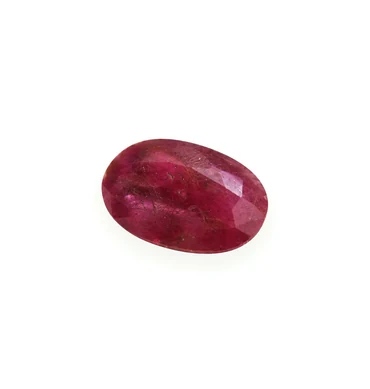
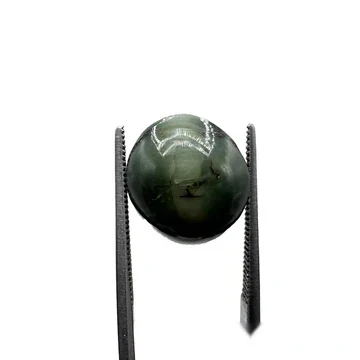
From our current listings, a 10.20 carat red agate and a 13.75 carat red agate show how size and colour change the price of a stone. The full range sits in the red agate category, and our guide to natural gemstones for a small budget lists other good-value options.
Rings, tasbih and other uses
Most red agate is bought as a ring stone, and the ring has its own costs: silver by weight, making charges and setting. Ask for the stone's price separately so you can compare it with loose stones. Our guides to aqeeq ring prices and silver rings with stones explain those extras, and the stone setting service page covers how we set stones.
Red agate is also made into tasbih beads. A string is priced on how well the colour and polish match across every bead, so compare tasbih with tasbih, not with ring stones. The tasbih guide explains what to look for.
What a fair listing should tell you
Before comparing prices, make sure each listing gives you enough to go on. A useful red agate listing should state:
- the mineral name, so you know it is agate and not glass or dyed quartzite;
- the loose weight in carats, or in ratti with the type of ratti named;
- the size in millimetres and the shape, so you can check it suits your ring;
- whether the colour is natural, heated or dyed;
- photos of the actual stone, ideally including one against the light;
- the return policy, and whether you can check it before paying.
If something is missing, ask. A seller who fills the gap quickly is usually pricing honestly. One who dodges the treatment question is telling you something as well.
Wear and long-term value
Red agate is 6.5 to 7 on the Mohs scale and takes daily wear well. Clean it with mild soap and water, keep harsh chemicals away (they can affect dyed stones), and store it apart from harder gems. Looked after, it keeps its polish for years, and with an inexpensive stone, that durability is a big part of what you are paying for.
Red agate in tradition
Astrology-based traditions connect red agate with Mars and with the signs Aries and Scorpio, and many people in Pakistan wear red stones for courage and protection. These are traditional beliefs, not promises, and for religious questions please ask a scholar you trust. None of it should change how a stone is priced.
Buying red agate from Authentic Gems
We photograph and price every red agate on its own, give its loose weight, and tell you when the colour has been enhanced. After we confirm your order by phone or WhatsApp, it leaves Karachi within one working day by insured, tracked courier. Karachi addresses usually get it in 1 to 2 working days, Lahore, Islamabad, Rawalpindi and the other major cities in 2 to 4, and smaller towns in up to about 7. Open the parcel, check the stone, then pay the rider, and if it isn't what you expected you have 7 days to return it. Questions? Message us on WhatsApp or email hello@authenticgems.pk. If you like the colour, red coral and garnet are other red stones worth a look, or browse all red gemstones.
Shop the stones: red agate.
The beliefs mentioned on this page are traditions, shared for interest only. They are not guaranteed outcomes, religious rulings or medical advice.
References