In this article
- What Dur-e-Najaf actually is
- Right hand or left?
- Which finger?
- Which metal?
- Customs about the day and time
- Engraving the stone
- Wudu, prayer and everyday wear
- How big a stone to choose
- Settings that show clear quartz at its best
- As a pendant or a tasbih
- Looking after it while you wear it
- With Moh-e-Najaf and aqeeq
- Buying Dur-e-Najaf from Authentic Gems
- خلاصہ

Written by Sameer
Reviewed on
Traditional belief vs gemmology: anything on this page about luck, protection, planets, healing or religious tradition describes traditional and cultural beliefs — not proven effects, religious rulings or medical advice. A stone's identity, hardness, treatment and origin are gemmology, which a lab can test; the references at the end of the page cover that side.
Ask most Pakistani families who keep Dur-e-Najaf how it should be worn and you will get the same short answer: in a silver ring, on the right hand, on the little finger or the ring finger. It is especially common in Shia households, and it is where nearly every question about the stone begins. The finer points, like which day to put it on first, whether to engrave it, or what to do with it during wudu, change from one family to the next.
Here we go through those customs as people actually follow them, and then get practical: what size of stone to pick, which setting makes clear quartz look its best, and how to keep it bright when you wear it daily. When a question is religious rather than practical, we explain the tradition and point you to a scholar you trust. We do not give rulings.
What Dur-e-Najaf actually is
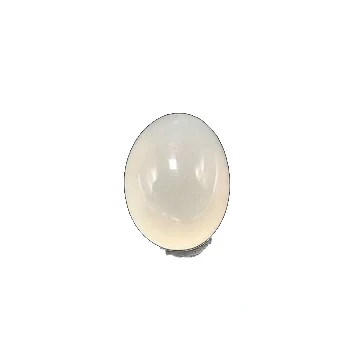
Dur-e-Najaf is natural colourless quartz, which gemmologists call rock crystal. The name means "pearl of Najaf". Tradition links the first stones with the land around Najaf in Iraq, and over time the name has come to cover clear quartz from many places. People value it out of devotion, not because it is rare, so what matters when you buy one is that it is real natural crystal and not glass. For the background, see our page on Dur-e-Najaf in Muslim tradition. To check a stone, read Dur-e-Najaf: rock crystal, glass or zircon?
Right hand or left?
Most people choose the right. Many Shia families follow sayings attributed to the Imams that recommend a ring on the right hand, and that custom has spread across Pakistan more broadly, which is why most Dur-e-Najaf rings you notice are on the right. Some people wear one ring on each hand, quite often aqeeq on one side and Dur-e-Najaf on the other. Scholars and families do not all weigh the narrations the same way or agree on what is preferred, so if the choice matters to you for religious reasons, speak to a scholar you trust.
Which finger?
Little finger (chhungli)
In Muslim custom, the little finger of the right hand is the classic place for a man's ring. Many men wear Dur-e-Najaf there, just as they do aqeeq. A small or medium stone sits comfortably on it.
Ring finger
The ring finger is also very common, especially for a bigger stone or for a woman's ring. A larger crystal simply looks better balanced there.
Fingers people usually avoid
Following narrations that many families observe, the index and middle fingers are generally not used for rings in Muslim tradition. Here too, practice varies, and a scholar can guide you.
Separately, some South Asian astrologers use clear quartz (sphatik) as a gentle stand-in for diamond, which is a Venus stone, and then recommend it on the ring or middle finger. That is a different tradition from the devotional one, and what it claims are beliefs rather than promises.
Which metal?
Silver is the normal choice for Dur-e-Najaf, and for men it is the customary one. Men in Muslim tradition generally stay away from gold, which is why chandi rings are everywhere. Silver also flatters a colourless stone. Its white tone does not tint the crystal, and a polished silver base under the stone throws light back up through it. Women can choose either gold or silver. Yellow gold gives clear quartz a faint warmth, while white metals keep it looking icy.
For help deciding on metal, see our planned guide to chandi rings with stones and the article on silver vs gold settings.
Customs about the day and time
Many families prefer to put on a new devotional ring on a Friday, often after Jumu'ah, or on a day that means something to them personally or religiously, such as the birthday of one of the Imams or a day in Muharram. Some recite a dua or a short surah the first time they wear it. These are family customs, not obligations, and there is no set hour. If you want to follow a particular practice, ask your elders or a scholar you trust. Our planned page on Muharram and Islamic stones touches on the stones people wear during that month.
Engraving the stone
Dur-e-Najaf is often engraved, commonly with names of the Ahl al-Bayt, "Ya Ali", a short dua or a phrase such as "Bismillah". The engraving usually goes on the flat back or on the table of the stone, and a flat or gently domed cut takes a cleaner engraving. Out of respect, many people with sacred names on their ring take it off before going into the washroom, or turn the stone to face inwards. Customs differ here as well, so ask a scholar if you are not sure.
Quartz sits at 7 on the Mohs scale and engraves nicely, but deep cutting weakens a thin stone. If you plan to engrave, pick a stone with enough depth, and get the engraving done before the stone goes into its setting.
Wudu, prayer and everyday wear
People often ask whether a tight ring keeps water from reaching the skin during wudu. The usual practical answer is to turn or slide the ring while you wash your hands. If the ring is so tight it will not move at all, it is worth having it resized. The religious side of the question belongs with a scholar you trust. Many families value wearing Dur-e-Najaf while praying, and you will often see it on hands holding a stone tasbih.
How big a stone to choose
- Little finger: about 8 to 12 carats usually looks right on a man's little finger.
- Ring finger: 12 to 20 carats for a bolder men's ring. Women often go for 5 to 10 carats.
- Pendant: any size works, and the stone stays out of harm's way.
Clear quartz is light for its size, so a 15-carat Dur-e-Najaf looks noticeably bigger than a 15-carat sapphire. Before ordering, check the millimetre measurements against your finger and our ring size guide. From our current stones, the 12.70 carat Dur-e-Najaf is a sensible size for a man's little-finger ring, and the 17.25 carat Dur-e-Najaf suits the ring finger.
Settings that show clear quartz at its best
- Closed back with polished silver: the traditional way. The mirror finish behind the stone sends light back through it and makes it look brighter. Keep that inner surface clean, because a dull or tarnished base turns the stone grey.
- Open back: lets daylight pass through and shows off the stone's natural clarity. The catch is that skin oil collects behind it, so it needs cleaning more often.
- Bezel or thick claws: quartz can chip if it hits a hard edge. A bezel around the girdle gives good protection for daily wear.
- Cabochon or faceted: a domed cabochon is the traditional cut and stands up well to wear. Faceted stones sparkle more but show scratches and chips sooner.
To have a loose stone set, see our planned stone setting service page. For common designs, see gemstone rings for men.
As a pendant or a tasbih
Not everyone wants a ring. On a silver chain as a pendant, Dur-e-Najaf stays clear of knocks and soap, so it keeps its brightness longer and needs less cleaning. A domed cabochon or a plain oval in a bezel works well, and engraved stones are often worn this way with the engraving facing inwards. Many women prefer a pendant or a small pair of earrings to a large ring.
Dur-e-Najaf is also strung into a tasbih. Clear quartz beads feel cool and smooth between the fingers and are hard enough to last years of use. Make sure the beads are natural crystal and not glass by checking for round bubbles under a loupe, and look for clean drill holes. Our guide to choosing a tasbih stone compares Dur-e-Najaf with aqeeq and other options.
Looking after it while you wear it
A clear stone shows every smear. A thin layer of soap, lotion or ghee on the back of a Dur-e-Najaf turns it grey, and people often think the stone itself has gone dull. It has not. It just needs a wash.
- Take the ring off for heavy work, the gym, cooking with oil and doing the laundry.
- Once a week, soak it in lukewarm water with a little mild soap, brush gently behind the stone with a soft toothbrush, rinse, and dry with a lint-free cloth.
- Clean the silver with a polishing cloth rather than a dip cleaner, which can leave residue around the stone.
- Keep it in its own soft pouch, away from harder stones like sapphire that can scratch it.
- Every few months, check that the claws or bezel are still tight.
For more on cleaning and storage, see our gemstone care guide.
With Moh-e-Najaf and aqeeq
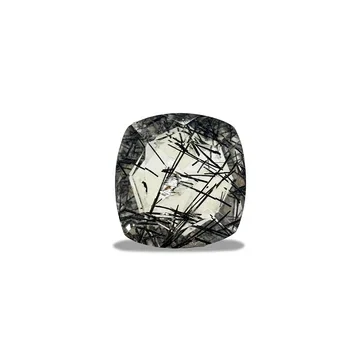
Plenty of people wear Dur-e-Najaf together with aqeeq or feroza, sometimes one on each hand. Moh-e-Najaf is the same quartz with fine golden needles inside, and it is worn the same way. Our comparison of Dur-e-Najaf and Moh-e-Najaf explains the differences, and aqeeq for men covers the tradition of the silver aqeeq ring.
Buying Dur-e-Najaf from Authentic Gems
Every stone in our Dur-e-Najaf collection is natural rock crystal, photographed by itself and priced by itself. You are welcome to have any stone tested at an independent lab. We confirm your order by phone or WhatsApp and dispatch within one working day by insured, tracked courier. Here in Karachi it usually arrives in 1 to 2 working days. Lahore, Islamabad, Rawalpindi and the other big cities take 2 to 4, and smaller towns up to about a week. Delivery is a flat Rs. 500 per order. You pay cash on delivery after opening the parcel in front of the rider and checking the stone, and unused stones can be returned within 7 days. Not sure what size suits your finger? Message us on WhatsApp and we will help.
Shop the stones: dur e najaf.
The beliefs described here are traditions, shared for interest. They are not guaranteed outcomes, religious rulings or medical advice.
References