
In this article
- Why tradition ties amethyst to Saturn
- Which finger: the middle-finger custom
- Which hand
- Silver, gold or panchdhatu
- Day, time and first wearing
- Weight and size
- Should it touch the skin?
- Settings that suit amethyst
- Styles for men and women
- Mistakes we see often
- Caring for it while you wear it
- Wearing amethyst with other stones
- Check the stone before you wear it
- Choosing your jamunia
- خلاصہ

Written by Sameer
Reviewed on
Traditional belief vs gemmology: anything on this page about luck, protection, planets, healing or religious tradition describes traditional and cultural beliefs — not proven effects, religious rulings or medical advice. A stone's identity, hardness, treatment and origin are gemmology, which a lab can test; the references at the end of the page cover that side.
Amethyst, which we call jamunia after the purple jamun fruit, is one of the easiest gemstones to wear. Good sizes are affordable, it is hard enough for a daily ring, and it sits comfortably in silver. The questions customers bring us are seldom about the stone itself. They are about customs: which finger, which hand, silver or gold, which day to start, and whether it has to touch the skin.
Below we answer those the way tradition answers them, point out where traditions disagree, and then give the practical advice a jeweller would: which setting protects amethyst, how to keep its colour, and what to avoid while wearing it. Beliefs are described as beliefs. If you follow an astrologer, their word comes first; for religious questions, ask a scholar you trust.
Why tradition ties amethyst to Saturn
Vedic astrology treats amethyst as an uparatna, a substitute stone, for blue sapphire, the gem of Saturn (Shani). Blue sapphire is expensive and carries a strong, sometimes unpredictable reputation, so astrologers often suggest jamunia as a gentler, cheaper Saturn stone. Most of the customs for wearing amethyst therefore follow those for neelam. Our guide to neelam's traditional benefits explains Saturn's role, and the signs most often linked with amethyst are Capricorn and Aquarius.
Outside astrology, amethyst is February's birthstone and has a folk reputation, going back to the ancient Greeks, as a stone of calm and sober judgement. People who wear it for these reasons usually follow fewer rules.
Which finger: the middle-finger custom
The most common Vedic custom puts amethyst on the middle finger, which tradition gives to Saturn. It is the same finger used for blue sapphire.
You will hear other advice too:
- Ring finger: some practitioners allow it, especially when the stone is worn for calm rather than for Saturn.
- Little finger: now and then suggested for small stones worn as everyday jewellery.
- Pendant: many people who do not follow astrology simply wear amethyst at the throat or chest, which also keeps it away from knocks.
If the stone is for astrological reasons, the middle finger is the safe default unless your astrologer says otherwise.
Which hand
Tradition usually names the working hand: right for right-handed people, left for left-handed people. Some schools say right for men and left for women, and some leave it to the wearer. In practice many people pick the hand that suits their work, since a ring on the working hand takes more knocks.
Silver, gold or panchdhatu
Saturn stones are traditionally set in silver, panchdhatu (a five-metal alloy) or alloys containing iron, and silver is by far the most common choice for jamunia in Pakistan. It also suits amethyst's cool purple and keeps the ring's cost in proportion to the stone.
Most traditions do not forbid gold, and both white and yellow gold look good with deep purple. Many Muslim men prefer silver for rings anyway; if that is a religious question for you, ask a scholar you trust. Our comparison of silver and gold ring settings covers wear, colour and cost, and the planned silver ring with stone page shows popular designs.
Day, time and first wearing
Customs for first wearing amethyst follow Saturn:
- Day: Saturday, Shani's day, is the usual choice.
- Time: often the evening, or a time the astrologer picks.
- Preparation: many people wash the ring in clean water, sometimes with a little milk, and say a prayer or mantra from their own practice before putting it on.
These are traditions. If you are wearing amethyst simply because you like it, there is no wrong day to start.
Weight and size
Astrologers usually suggest at least a few ratti for a planetary stone. In Pakistan the gemstone ratti is 0.91 carat, while the sunar's ratti is smaller, about 0.61 carat. So a "5 ratti" stone means a different size depending on who is talking; always ask which ratti they mean. Our carat to ratti converter handles the arithmetic.
Amethyst is one of the few stones that stays affordable in larger sizes, so many people go well past the minimum. Something around 8 to 12 carats makes a bold men's ring; 3 to 6 carats suits a slimmer ring or a pendant.
Should it touch the skin?
Many astrologers ask for an open-backed setting so the underside of the stone touches the finger. Jewellers like open backs for practical reasons too: more light gets into the stone so it looks brighter, and it is easier to clean. A closed back traps soap and dust, which makes a dark amethyst look darker still. If you want a closed back for strength, ask for a small opening at the base.
Settings that suit amethyst
At 7 on the Mohs scale amethyst resists everyday scratches but can chip from a hard knock. The setting should protect its corners and girdle.
Bezel
A rim of metal around the whole stone. It gives the most protection and suits men's rings and anyone who works with their hands.
Four or six prongs
Prongs show more of the stone and let in more light, which helps medium and lighter purples. Choose sturdy prongs and have them checked once a year or so.
Half bezel or V-tip prongs
For pear, marquise or emerald cuts, V-shaped tips or a half bezel guard the points, which is where chips usually begin.
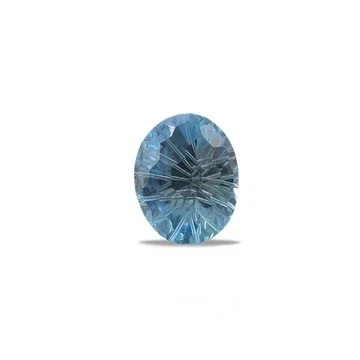
Laser-cut amethyst, with patterns cut into its surface, looks best in a setting that leaves the top completely open. If you buy a loose stone, our stone setting service page explains the process, and the ring size guide helps you get the size right the first time.
Styles for men and women
For men, the classic Pakistani jamunia ring is a big oval or cushion stone in a heavy silver bezel, worn on the middle or ring finger. Square and rectangular step cuts look neat in a flat-topped signet style. Laser-cut stones have become popular with men who want something less plain. Our planned guide to the gemstone ring for men shows the main shapes.
For women, smaller ovals and pears in prong settings, often ringed with small white stones, work well for everyday wear, and amethyst earrings or a pendant avoid the knocks a ring takes. Light lilac stones look softer in rose or yellow gold; deep purple stands out in silver or white gold. Amethyst also makes a thoughtful gift for a February birthday or Eid; see our gemstone gifts guide.
Mistakes we see often
- Picking a stone that is too dark. Very deep amethyst can look nearly black indoors. Look at it under ordinary room light, not just in sunshine, before you buy.
- Setting it too high. A tall setting snags on clothes and takes knocks. A lower profile is safer for daily wear.
- Ignoring the back. A closed back fills with soap and dust and makes the stone look dull within weeks.
- Forgetting to ask which ratti. Buying "5 ratti" without checking can leave you with a smaller stone than your astrologer meant.
Caring for it while you wear it
The biggest risk to amethyst is not scratches but fading. Its purple comes from iron and natural irradiation inside the quartz, and strong heat or long hours of bright sun can slowly lighten it.
- Keep the ring out of the sun. A car dashboard or a windowsill in a Karachi summer is the classic mistake.
- Have the stone removed before soldering or resizing. A jeweller's torch can change the colour in seconds.
- Take the ring off for rough work, like the gym, gardening or shifting furniture.
- Clean it once a week in lukewarm water with a drop of mild soap, brushing gently behind the stone.
- Store it on its own in a closed box, away from harder stones like sapphire and softer ones like pearl.
- Take it off for washing up or detergents. Water does not harm amethyst, but soap film dulls it over time.
Our amethyst care guide covers cleaning and storage step by step.
Wearing amethyst with other stones
Because amethyst is a Saturn stone, astrologers often advise against wearing it with ruby, red coral or pearl, the stones of the Sun, Mars and Moon, which some traditions see as unfriendly to Saturn. Emerald, opal and diamond are usually considered compatible. Practitioners differ, so check before combining stones. Many people sidestep the question by wearing amethyst on one hand and other stones on the other.
Check the stone before you wear it
In tradition, a planetary stone only counts if it is natural. Lab-grown amethyst is common and cheap to make, and it usually looks too clean and too evenly coloured. Natural amethyst tends to show colour zoning, bands of slightly darker and lighter purple you can see when you tilt it over white paper. Our planned real or fake amethyst guide covers more checks, and the lab-certified amethyst page explains testing.
Choosing your jamunia
Browse our amethyst collection, where every stone is photographed on its own. The 10.35 carat laser-cut amethyst and the 11.30 carat laser-cut amethyst are good examples of the larger sizes that suit a men's ring. For colour and value, see our February amethyst guide and the amethyst benefits article.
We deliver across Pakistan, with Karachi orders usually arriving in 1 to 2 working days and other major cities in 2 to 4. Pay Cash on Delivery after opening the parcel and checking the stone in front of the rider, and return unused stones within 7 days.
Shop the stones: amethyst.
The beliefs described here are traditions, shared for interest. They are not guaranteed outcomes, religious rulings or medical advice.
References